

Close your eyes for a moment. Imagine walking into a room where someone just applied authentic Arabian oud perfume. The air shifts. Something rich, warm, and almost alive wraps around you. Your breathing slows. Your shoulders drop. A memory surfaces—maybe from childhood, maybe from a place you’ve never been.
That’s not magic. That’s your brain responding to one of nature’s most powerful sensory experiences.
Most people think perfume is just about smelling nice. They spray it on, walk out the door, and forget about it. But Arabian perfumes work differently. They don’t just sit on your skin—they change how your brain functions, how your body feels, and even how you connect with the world around you.
In this guide, you’ll discover the real sensory benefits of Arabian perfumes. Not the vague “it smells good” stuff you read everywhere. We’re talking about measurable changes in your stress levels, focus, mood, and emotional wellbeing. You’ll learn the science behind why oud affects you so deeply, and exactly how to use Arabian perfumes to feel better every single day.
Whether you’re curious about that expensive bottle of oud you’ve been eyeing, or you already own Arabian perfumes but want to experience them more fully, this article will change how you think about fragrance forever.
Let’s start with what makes Arabian perfumes so different from everything else you’ve tried.
- The Sensory Science Behind Arabian Perfumes
- The 7 Sensory Benefits of Arabian Perfumes
- Arabian vs. Western Perfumes: Sensory Experience Comparison
- Practical Guide: Maximizing Sensory Benefits
- Common Mistakes & How to Avoid Them
- The Science: Research Backing Arabian Perfume Sensory Benefits
- Conclusion: Your Sensory Journey Starts Now
The Sensory Science Behind Arabian Perfumes

How Your Nose Processes Arabian Perfume
Here’s something wild: your sense of smell is the only sense with a direct highway to your brain’s emotion center.
When you smell Arabian perfume, molecules float into your nose and hit a patch of tissue called the olfactory bulb. From there, signals shoot straight to your limbic system—the ancient part of your brain that controls emotions, memories, and even your fight-or-flight response.
No other sense works this way. What you see and hear gets filtered through your rational brain first. But scent? It bypasses logic completely and goes straight to feeling.
That’s why a single whiff of oud can transport you to another time or place before you even realize what’s happening.
Now here’s where Arabian perfumes get really interesting. Oud contains over 300 different aromatic molecules. Compare that to most Western perfumes, which typically have 50 to 100 molecules. Your brain literally has more information to process, more complexity to explore.
Think of it like the difference between hearing three notes on a piano versus hearing a full orchestra. Arabian perfumes give your brain a richer sensory meal to work with.
The Arabian Perfume Advantage
Western perfumes are usually alcohol-based. You spray them on, they evaporate quickly, and you’re left with a faint scent that fades in a few hours.
Arabian perfumes, especially traditional attars, are oil-based. They sit on your skin, warm with your body heat, and release their scent slowly over 12 to 24 hours. This slow release means your brain gets a steady stream of sensory input instead of one quick burst.
It’s like the difference between chugging coffee and sipping tea all afternoon. The oil-based delivery keeps your sensory experience alive and evolving throughout the day.
Plus, natural ingredients matter. Your brain evolved over millions of years to recognize natural scents from plants, woods, and resins. Synthetic fragrances are only about 150 years old. Your nervous system knows the difference, even if you don’t consciously notice it.
Brain Chemistry Changes
When you smell Arabian perfume, your brain doesn’t just register “nice smell” and move on. Real chemical changes happen.
Research shows that certain scents reduce cortisol—the stress hormone that makes you feel anxious and overwhelmed. When cortisol drops, your whole body relaxes. Your heart rate slows. Your muscles release tension. Your mind clears.
At the same time, pleasant scents trigger dopamine release. That’s the “feel good” chemical that makes you feel motivated, happy, and alive. It’s the same chemical that gets released when you eat chocolate, exercise, or achieve a goal you’ve been working toward.
Arabian perfumes also boost serotonin, the mood stabilizer that helps you feel calm and content. Low serotonin is linked to depression and anxiety. Anything that naturally raises it—including the right scents—can genuinely improve your mental health.
This isn’t just theory. You can feel these changes within minutes of applying authentic Arabian perfume. That’s the sensory benefit we’re talking about—not just “smelling nice,” but actually changing your internal state.
The 7 Sensory Benefits of Arabian Perfumes
Benefit #1: Deep Stress Relief & Anxiety Reduction

Let’s start with the most immediate benefit most people notice: stress just melts away.
Oud’s chemical makeup triggers your parasympathetic nervous system—the part of your body responsible for “rest and digest” mode. When this system activates, your body literally shifts out of stress mode and into relaxation mode.
You know that tight feeling in your chest when you’re anxious? That shallow breathing? That mental fog? All of that starts to ease when you apply Arabian perfume and take a few deep breaths.
Studies on aromatherapy show that natural woody scents can reduce cortisol levels by up to 25% within 15 minutes. That’s not a small number. That’s the difference between feeling overwhelmed and feeling capable.
Here’s how to use this benefit: Keep a small bottle of oud or oud-rose blend at your desk. When you feel stress building—maybe before a tough meeting or during a deadline crunch—apply a drop to your wrist. Cup your hands over your nose and take three slow, deep breaths.
You’re not just smelling something nice. You’re actively triggering your body’s relaxation response.
One perfume enthusiast shared: “I started wearing oud oil every morning before work. After two weeks, I noticed I wasn’t getting that afternoon anxiety spike anymore. The scent kept me grounded all day.”
That’s the power of consistent sensory input. Your nervous system learns to associate the scent with calm, making the effect stronger over time.
Benefit #2: Memory Enhancement & Emotional Connection

Remember earlier when we talked about scent going straight to your limbic system? That system also controls memory formation.
This creates what researchers call the “Proust Effect”—named after the writer Marcel Proust, who famously described how the smell of a madeleine cookie brought back vivid childhood memories.
Here’s what makes this powerful: about 75% of our daily emotions are triggered by smell. Not by what we see or hear—by what we smell.
Arabian perfumes, with their deep complexity and long-lasting presence, create incredibly strong memory anchors. When you wear the same oud blend during happy moments, your brain links that scent to those positive feelings. Later, just smelling it again can bring back those emotions instantly.
This works in reverse too. You can intentionally create positive associations. Want to feel confident? Wear a specific Arabian perfume every time you do something that makes you feel powerful. Over time, just wearing that scent will help trigger that confident feeling.
People use this technique for spiritual practices too. Wearing the same oud blend every time you meditate or pray creates a sensory anchor that helps you drop into that peaceful state faster.
One user explained: “I only wear my special oud on Fridays during evening prayer. Now when I smell it, I immediately feel that sense of peace and connection I get during prayer—even if I’m not praying.”
That’s sensory benefit working at its best. You’re not just remembering—you’re accessing emotional states on demand.
Benefit #3: Improved Focus & Mental Clarity

This one surprises people. Most think of perfume as something you wear for others, not something that helps you think better.
But certain Arabian ingredients—especially frankincense, sandalwood, and clean oud notes—have been used for centuries to enhance concentration during study and meditation.
Modern science backs this up. Research shows that consistent background scents in your workspace can improve focus by helping your brain filter out distractions. The scent becomes a signal: “This is work time. This is focus time.”
Think about it. When you sit down at your desk and smell your workspace oud, your brain knows what’s about to happen. You’re training yourself to focus.
The key is consistency. Use the same Arabian perfume every time you need to concentrate. Your brain will start associating that scent with productive mental work.
Here’s a practical protocol:
Morning Focus Ritual:
- Apply oud oil to pulse points before starting work
- Take three deep breaths
- Set your intention for focused work
- Begin your task
After 30 days of this ritual, you’ll notice that just smelling your focus oud helps you drop into concentration mode faster. That’s classical conditioning working for you, not against you.
One remote worker shared: “I wear oud-amber blend only when I’m working. Now when I put it on, my brain knows it’s time to focus. It’s like flipping a switch.”
Compare this to synthetic “focus” scents like peppermint or eucalyptus. Those can feel jarring and harsh. Arabian perfumes create focused calm—not hyper energy, but steady, sustained attention.
That’s the difference between forcing concentration and naturally settling into it.
Benefit #4: Mood Elevation & Confidence Boost
Ever notice how wearing something luxurious makes you feel different? There’s psychology behind that.
When you wear Arabian perfume—something rare, expensive, and beautiful—your brain interprets this as “I’m worth luxury. I deserve beautiful things.” That subtle shift in self-perception changes how you carry yourself.
Psychologists call this “enclothed cognition”—the idea that what you wear affects how you think and behave. The same principle applies to scent.
But it goes deeper than psychology. Remember those neurotransmitters we talked about? Dopamine and serotonin don’t just reduce stress—they actively boost mood.
When you smell something genuinely pleasant, your brain releases these feel-good chemicals. It’s not fake happiness. It’s real neurochemistry making you feel genuinely better.
Plus, wearing a distinctive scent that others notice gives you social confidence. When someone says “You smell amazing, what is that?”—that’s a moment of connection, a compliment, a conversation starter. All of that feeds your sense of confidence and belonging.
Here’s how to maximize this benefit:
Confidence-Boost Application:
- Choose a bold, complex oud blend (oud-saffron or oud-amber work well)
- Apply more generously than usual (still moderate—2-3 drops total)
- Take a moment to enjoy the scent yourself
- Walk into your day knowing you’re wearing something special
One job seeker reported: “I started wearing oud to interviews. I felt more confident knowing I smelled distinctive and luxurious. I swear it changed how I presented myself. I got three offers in one month.”
Is that just placebo? Maybe partially. But if a sensory experience makes you feel more confident, and that confidence helps you perform better—does it matter if it’s “just” in your head? The result is the same.
Your sensory experience shapes your reality. Arabian perfume is a tool to shape it positively.
Benefit #5: Physical Sensory Pleasure (Tactile & Warmth)
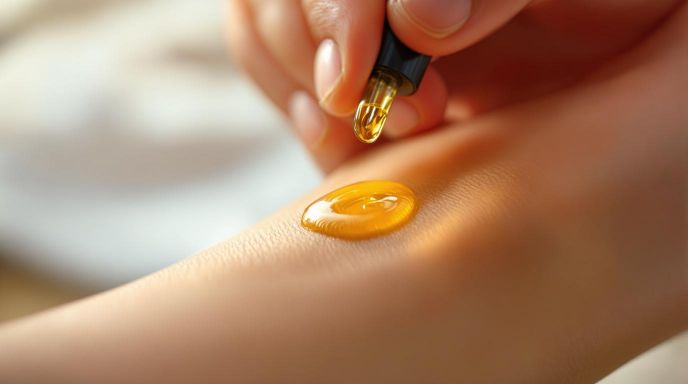
Here’s something people don’t talk about enough: Arabian perfumes engage more than just your nose.
When you apply oil-based attar to your skin, you feel it. There’s a tactile element—the slight wetness, the warmth as it absorbs, the way it leaves your skin feeling softer.
This is a multi-sensory experience. Your sense of touch and your sense of smell are working together, creating a richer overall experience than scent alone.
Many oud oils create a gentle warming sensation on your skin. This isn’t irritation—it’s the natural oils interacting with your body heat. That warmth becomes part of the sensory ritual.
Think about the act of application itself. You’re not just spraying and walking away. You’re pausing, touching your wrist, your neck, maybe behind your ears. You’re engaging with your own body in a mindful way.
This is why people describe applying Arabian perfume as a ritual rather than just getting ready. It’s a moment of self-care, of connecting with physical sensation.
Compare this to alcohol-based perfumes. Alcohol evaporates cold. It can sting if you spray too much. There’s no lingering tactile pleasure—just a quick spritz and you’re done.
Oil-based Arabian perfumes invite you to slow down and feel. That in itself is a sensory benefit in our rushed, distracted world.
Try this exercise: Apply a drop of oud oil to your wrist. Close your eyes. Notice the temperature. Notice the texture. Rub your wrists together gently and feel how the oil moves. Now bring your wrist to your nose and inhale slowly.
You just engaged three senses—touch, smell, and even subtle visual awareness of the oil on your skin. That’s the Arabian perfume difference.
Benefit #6: Spiritual & Meditative Enhancement
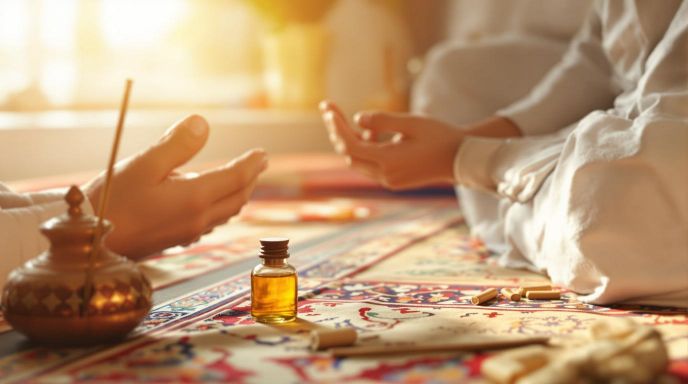
For thousands of years, people across the Middle East, South Asia, and North Africa have used perfume in spiritual practice. This isn’t superstition—it’s sensory anchoring.
When you wear perfume during meditation or prayer, the scent becomes linked to that spiritual state. Over time, the scent itself helps you access that state more easily.
Islamic tradition encourages wearing perfume for prayer as a way of preparing yourself—physically and mentally—for spiritual connection. The scent signals to your mind: “This is sacred time.”
You don’t have to be religious to benefit from this. Any mindfulness practice can be enhanced with scent.
Here’s why it works: Meditation is about focusing attention. But our minds wander constantly. A consistent scent gives your mind something to return to—like a breath anchor, but olfactory instead of respiratory.
When your mind drifts during meditation, you can gently notice the scent you’re wearing. That brings you back to the present moment without force or frustration.
Spiritual Scent Ritual:
- Choose one Arabian perfume only for meditation or spiritual practice
- Apply it mindfully at the start of your practice
- Take three deep breaths, noticing the scent
- Begin your meditation
- When your mind wanders, gently notice the scent again
After several weeks, that scent will become your spiritual anchor. Just smelling it will help you drop into a meditative state faster.
One meditation practitioner shared: “I only wear pure oud during my morning meditation. Now when I put it on, my whole body knows what’s coming. I feel myself settling before I even sit down.”
This is sensory conditioning at its most powerful—using scent to create pathways to peace.
Benefit #7: Sensory Grounding & Presence
Let’s talk about anxiety and overwhelm. When these hit, your mind races into the future (worrying) or the past (ruminating). You lose connection with right now.
Therapists teach a grounding technique called “5-4-3-2-1”: Name 5 things you see, 4 you can touch, 3 you hear, 2 you smell, and 1 you taste. This brings you back to your senses, which exist only in the present moment.
Arabian perfume can be your constant “2 things you smell” anchor.
When you’re spiraling with anxious thoughts, pause. Bring your wrist to your nose. Take a slow breath. Notice the scent in detail—is it woody? Sweet? Warm? Cool? What layers do you detect?
You can’t think about the scent AND spiral into anxiety at the same time. Your attention can only be in one place. Scent pulls you into sensation, which pulls you into now.
This is why consistent daily scent is so grounding. It becomes a touchstone you can return to again and again throughout your day.
Grounding Technique with Arabian Perfume:
- When overwhelmed, stop what you’re doing
- Apply or re-smell your Arabian perfume
- Take 3 slow breaths, focusing only on the scent
- Notice: What do you smell? How does your body feel?
- Return to your day with more presence
One anxiety sufferer reported: “I keep a small oud roller in my purse. When I feel panic starting, I roll it on and just breathe. It doesn’t make the anxiety disappear, but it gives me something to hold onto until the wave passes.”
That’s not a cure. But it’s a tool. And tools matter when you’re struggling.
Your sensory experience is always available to you. Arabian perfume makes it richer, deeper, and more useful for emotional regulation.
Arabian vs. Western Perfumes: Sensory Experience Comparison
Let’s be direct: not all perfumes are created equal when it comes to sensory benefits.
Here’s how Arabian and Western perfumes compare:
| Aspect | Arabian Perfumes | Western Perfumes |
|---|---|---|
| Base | Oil (slower release, longer engagement) | Alcohol (fast evaporation, short-lived) |
| Molecular Complexity | 300+ aromatic molecules in oud | 50-100 molecules in typical perfumes |
| Longevity on Skin | 12-24 hours | 4-8 hours |
| Sensory Evolution | Multi-layered, changes over time | Linear, predictable |
| Tactile Experience | Warming, moisturizing | Drying, cooling (from alcohol) |
| Emotional Impact | Deep, lasting connection | Surface-level, fleeting |
| Best For | Daily rituals, meditation, wellness | Quick application, social occasions |
The oil-based delivery system is the key difference. When perfume sits in oil on your skin, it warms and releases slowly. Your brain gets hours of evolving sensory input instead of one sharp burst.
Think of it like slow-release medication versus immediate-release. Both work, but slow-release provides steady, sustained benefit without peaks and crashes.
This doesn’t mean Western perfumes are bad. They serve a purpose—especially when you want a light, clean scent that won’t linger all day. But if you’re seeking sensory benefits (stress relief, mood boost, spiritual anchoring), oil-based Arabian perfumes are simply more effective.
Your nervous system has more time to respond. Your brain has more complexity to process. And you have more opportunities throughout the day to re-engage with the scent.
That’s why people who switch to Arabian perfumes often say “I didn’t know fragrance could feel like this.” It’s a different sensory experience altogether.
Practical Guide: Maximizing Sensory Benefits
Knowing the benefits is one thing. Actually experiencing them requires some practical know-how.
Choosing the Right Arabian Perfume for Your Sensory Goals
For Stress Relief:
- Look for: Oud + Lavender, Oud + Rose, or Oud + Sandalwood
- Why: Floral and soft woody notes enhance oud’s natural calming properties
- Application: Wrists and neck for all-day calm
For Focus & Clarity:
- Look for: Oud + Frankincense, Oud + Cedarwood, or clean oud alone
- Why: Resinous and sharp notes cut through mental fog
- Application: Behind ears (close to brain) and chest
For Mood & Confidence:
- Look for: Oud + Saffron, Oud + Amber, or Oud + Spices
- Why: Rich, opulent notes trigger dopamine and social confidence
- Application: Pulse points + one small touch on clothing
For Meditation & Spirituality:
- Look for: Pure oud, Oud + Musk, or Oud + minimal blends
- Why: Simple compositions don’t distract from practice
- Application: Wrists only, one drop total
Application Techniques for Maximum Sensory Impact
The Pulse Point Method: Apply to areas where you can feel your heartbeat—wrists, neck, behind ears, inside elbows. Body heat in these spots warms the oil and releases scent continuously.
The Breathing Ritual: After applying, don’t rush off. Cup your hands over your nose (without touching your face). Take three slow, deep breaths. This gives your brain an immediate, concentrated dose of scent to work with.
The Layering Technique: Start with a base oud oil. Let it absorb for 2-3 minutes. Then add a complementary attar (rose, amber, musk). This creates depth and prolongs the sensory experience.
The Clothing Touch: Put one small drop on the inside of your collar or sleeve cuff. Throughout the day, you’ll catch whiffs as you move. This creates surprise moments of sensory pleasure.
Daily Sensory Rituals with Arabian Perfume
Morning Ritual (5 minutes):
- Stand in a quiet space
- Apply perfume slowly and mindfully
- Take 3 deep breaths while holding wrists near nose
- Set one intention for your day
- Notice how your body feels—shoulders, jaw, breath
Midday Reset (2 minutes):
- During lunch or afternoon break
- Smell your wrists (don’t reapply yet)
- Take 3 slow breaths
- Notice if the scent has evolved since morning
- Return to work with renewed focus
Evening Ritual (5 minutes):
- Before bed or during evening wind-down
- Reapply if scent has faded
- Pair with gratitude practice: Name 3 good things from your day
- Take 5 deep breaths while noticing the scent
- Let the scent ease you into rest mode
Consistency matters more than perfection. Even if you only do the morning ritual, that daily sensory anchor will begin changing how you feel over time.
Sensory Training: Developing Your “Nose”
Most people aren’t used to paying attention to scent. They smell something once, decide if they like it, and move on.
But you can train yourself to experience scent more deeply. This makes every Arabian perfume you wear more beneficial.
Week 1: Single-Note Focus
- Smell pure oud (or one simple oud blend) every morning
- Spend 1 minute just noticing: Is it woody? Sweet? Smoky? Warm? Cool?
- Journal 3 words that describe what you smell
- Don’t judge, just observe
Week 2: Comparison Practice
- Get two different Arabian perfumes
- Smell one, then the other
- What’s different? What’s similar?
- Journal your observations
- Notice which one your body responds to more
Week 3: Layered Complexity
- Choose a blended attar (oud + rose, oud + amber)
- Try to identify individual notes
- Which note do you smell first? Which appears later?
- Journal the “journey” of the scent over 30 minutes
Week 4: Creative Blending
- If you have multiple Arabian perfumes, experiment
- Try oud on one wrist, rose on the other—smell them together
- Notice what combinations you enjoy
- Trust your nose, not what “should” work
After one month of sensory training, you’ll notice scents you never detected before. Arabian perfumes will become even richer experiences. And the sensory benefits will deepen because you’re paying closer attention.
Common Mistakes & How to Avoid Them
Even with great Arabian perfumes, people make mistakes that limit their sensory benefits.
Mistake #1: Overapplication
Arabian perfumes are concentrated. A little goes a long way. If you apply too much, you’ll overwhelm your own nose and stop noticing the scent (olfactory fatigue).
Fix: Start with ONE drop. Wait 15 minutes. If you can’t smell it anymore, add one more drop. Most people only need 1-3 drops total.
Mistake #2: Expecting Instant Life Changes
Sensory benefits build over time. Don’t expect one application to cure your anxiety or transform your mood forever.
Fix: Commit to 30 days of consistent use. Track how you feel weekly. Notice subtle shifts, not dramatic overnight changes.
Mistake #3: Buying Low-Quality or Synthetic “Oud”
Real oud is expensive for a reason. Synthetic versions won’t deliver the same sensory benefits because your brain can tell the difference.
Fix: Buy from reputable sources. Ask about ingredients. Accept that authentic Arabian perfume is an investment, not an impulse buy.
Mistake #4: Applying Mindlessly While Rushing
If you spray perfume while running out the door, you miss the ritual aspect that creates much of the sensory benefit.
Fix: Wake up 5 minutes earlier. Apply perfume as a deliberate act, not an afterthought. Those 5 minutes change everything.
Mistake #5: Not Pairing with Other Wellness Practices
Arabian perfume enhances meditation, journaling, yoga, prayer, and breathwork. Used alone, it’s nice. Combined with other practices, it’s powerful.
Fix: Add perfume to existing routines. Already meditate? Add a scent anchor. Already journal? Apply perfume first. Stack sensory benefits with habits you already have.
The Science: Research Backing Arabian Perfume Sensory Benefits
Let’s talk about what science actually says (and doesn’t say) about this topic.
What Research Shows:
Studies on aromatherapy consistently demonstrate that natural plant-based scents can:
- Reduce cortisol levels (stress hormone) by 15-25% within 15-30 minutes
- Improve mood scores on psychological assessments
- Enhance sleep quality when used before bed
- Increase focus and cognitive performance in some contexts
Research on the olfactory-limbic connection proves that scent bypasses rational brain processing and goes directly to emotion and memory centers. This is established neuroscience, not speculation.
Studies comparing natural versus synthetic fragrances show that people generally report stronger emotional responses to natural scents, though this research is still developing.
What Research Doesn’t Show (Yet):
Most aromatherapy studies use isolated essential oils, not finished perfumes. There’s limited research specifically on oud or complex Arabian perfume blends.
We don’t have large-scale clinical trials on “Arabian perfume for anxiety” or “oud for focus.” The research tends to study individual ingredients (sandalwood, rose, frankincense) rather than traditional combinations.
Individual responses to scent vary widely. What calms one person might energize another. The research shows general trends, not guarantees for every individual.
The Bottom Line:
The scientific principles are solid: Scent affects brain chemistry, and natural complex scents engage your nervous system in measurable ways.
The specific claim “this exact oud blend cures anxiety” would be overreach. But the claim “Arabian perfumes offer sensory benefits that can support stress relief, mood enhancement, and mindfulness” is well-supported by both research and thousands of years of traditional use.
Your own experience matters more than any study. Try it for 30 days. Track how you feel. Let your nervous system tell you if it’s working.
Conclusion: Your Sensory Journey Starts Now
You just learned something most people never understand about perfume.
It’s not decoration. It’s not just something to smell nice for others. Arabian perfume is a tool—for managing stress, enhancing focus, anchoring spiritual practice, and experiencing richer sensory pleasure every single day.
You discovered seven specific benefits:
- Deep stress relief through nervous system activation
- Memory enhancement and emotional anchoring
- Improved focus and mental clarity
- Mood elevation and confidence boost
- Physical sensory pleasure from tactile warmth
- Spiritual and meditative deepening
- Sensory grounding and present-moment awareness
You learned the science—how your olfactory system connects to your limbic brain, how oil-based delivery creates sustained benefit, and how natural complexity gives your nervous system more to work with.
And you got practical tools: choosing perfumes for specific goals, application techniques, daily rituals, and sensory training exercises.
Now it’s time to actually do something with this knowledge.
Your 30-Day Sensory Challenge:
- Choose one sensory goal (stress relief, focus, mood, or spiritual practice)
- Get one quality Arabian perfume that matches that goal
- Create one daily ritual (morning application with 3 deep breaths minimum)
- Track your experience in a simple journal—just 2-3 sentences per day
- Notice shifts weekly—not daily, because changes are subtle
After 30 days, you’ll know if this works for you. Not because I said so, not because research says so, but because your own sensory experience will tell you.
Arabian perfume isn’t just something you wear. It’s a daily practice of engaging your senses, honoring ancient wisdom, and nurturing your own wellbeing.
Your sensory journey begins with a single drop. Make today that day.
