
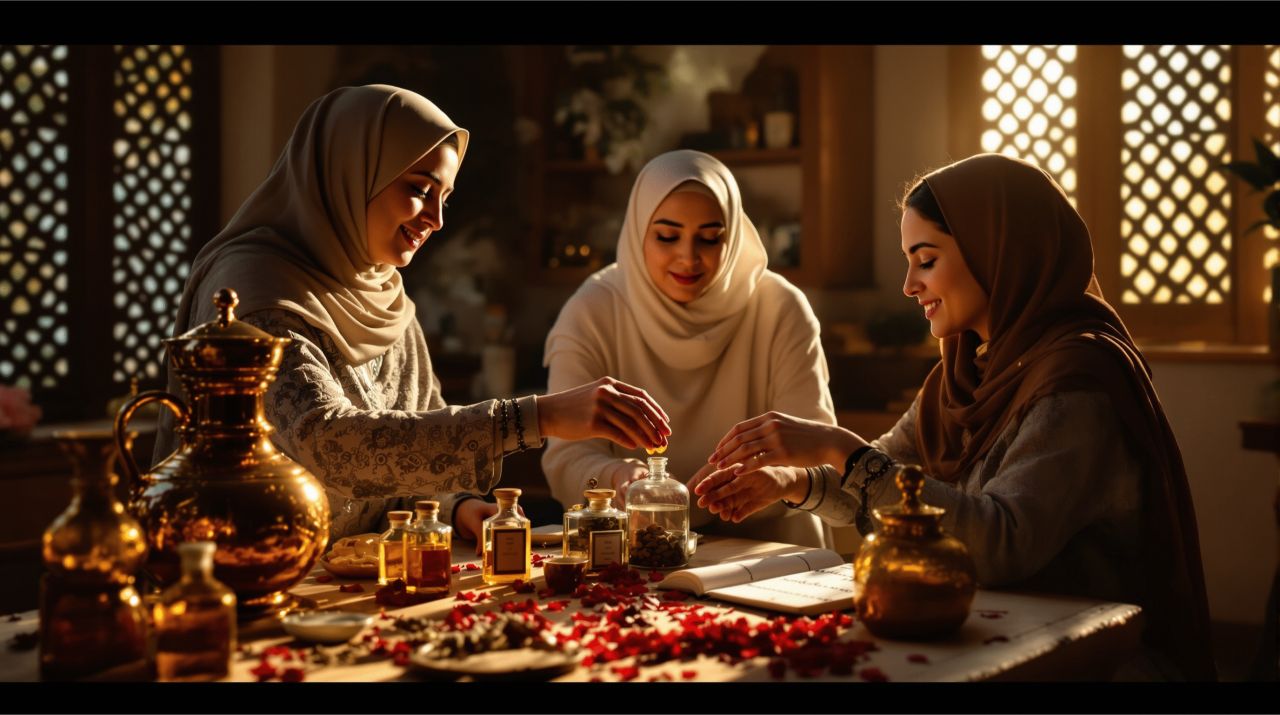
For millions of people across the Middle East and North Africa, Arabian perfume isn’t just about smelling good. It’s about carrying their ancestors with them every single day.
But here’s the big question: How exactly does Arabian perfume preserve cultural heritage? And in our fast-paced, modern world, can these ancient traditions survive?
Today, we’re diving deep into the living, breathing world of Arabian perfume heritage. You’ll discover how grandmothers pass down secret recipes, how Friday prayers keep thousand-year-old rituals alive, and how young perfumers are using Instagram to save traditions their great-grandparents practiced. This isn’t just history—this is heritage preservation happening right now, in workshops, homes, and hearts across the Arab world.
- What Does Cultural Heritage in Perfume Actually Mean?
- Traditional Methods That Keep Heritage Alive
- Spiritual & Cultural Practices Keeping Heritage Alive
- Ingredients as Living Heritage
- Threats to Arabian Perfume Heritage
- Modern Innovations Supporting Heritage
- Regional Variations in Heritage Preservation
- How YOU Can Support Heritage Preservation
- The Future of Arabian Perfume Heritage
- Conclusion: Your Scent, Your Heritage, Our Shared Future
What Does Cultural Heritage in Perfume Actually Mean?
Before we go further, let’s talk about what “cultural heritage” really means. You’ve probably heard the term thrown around, but what does it look like in a perfume bottle?
Here’s the simple explanation: Cultural heritage is everything we inherit from past generations that tells us who we are. Think of it like a treasure chest passed down through time. Some treasures you can touch—like old buildings or ancient jewelry. But others you can’t hold in your hands, like stories, songs, dances, and yes, the art of making perfume.
UNESCO (the United Nations group that protects world heritage) calls this “intangible cultural heritage.” You can’t exactly put a perfume-making tradition in a museum case, but it’s just as valuable as any artifact!
Arabian Perfume Has Three Layers of Heritage:
1. Material Heritage (The Physical Stuff)
- Traditional copper distillation equipment (called deg-bhapka)
- Amber glass bottles with ornate designs
- Raw ingredients like oud wood, frankincense resin, Damascus roses
- Ancient recipe books written in flowing Arabic script
2. Knowledge Heritage (The Know-How)
- Secret family formulas passed down for generations
- Techniques for distilling rose attar (takes 12-15 hours!)
- Understanding which oud wood produces the best scent
- The art of layering fragrances (we’ll explain this soon!)
3. Social Heritage (The Meaning)
- Perfuming guests as a sign of respect
- Using special scents for Friday prayers
- Creating unique wedding bakhoor (perfumed incense)
- The belief that good scents keep evil spirits away
See how it all works together? The copper still means nothing without the knowledge to use it. And the knowledge means nothing without the cultural context of why we make perfume in the first place. That’s what makes heritage “living”—it’s not frozen in time, it’s actively practiced every single day.
Why Scent Memory Matters So Much
Here’s something fascinating about your brain: the part that processes smell sits right next to the part that stores memories and emotions. That’s why a single whiff of your mom’s perfume can instantly transport you back to childhood!
For Arabian perfume, this creates something magical: Every time a grandmother teaches her granddaughter to make rose water, she’s not just teaching a recipe. She’s embedding memories, emotions, and identity into that scent. Twenty years from now, when that granddaughter smells roses, she’ll remember her grandmother’s hands, her voice, her laughter.
Mona Haddad, a traditional Emirati perfumer, explained it beautifully: “A gentle mixture of musk and rose always reminds me of my mom. But my grandmother’s aroma is more piquant: the peppery smell of cinnamon lays atop woody base notes.”
Think about that. Mona can literally smell her family tree! Each generation has its own scent signature, passed down like genetic code made of fragrance. When these traditions disappear, it’s not just a recipe that’s lost—it’s a whole dimension of family memory that vanishes.
That’s why preserving Arabian perfume traditions isn’t some abstract cultural project. It’s about preserving the ability for future generations to smell their great-grandmother’s love, their grandfather’s wisdom, their homeland’s soil. Perfume becomes a liquid archive of who we are.
Traditional Methods That Keep Heritage Alive
Now let’s get practical. How exactly do Arabian perfume traditions get preserved? Let’s look at three powerful methods that have kept these practices alive for over a thousand years.
Family Recipe Preservation: The Grandmother Effect
Walk into almost any traditional Arab household, and you’ll find something remarkable: handwritten perfume recipes, often decades or even centuries old, carefully preserved in kitchen drawers or bedroom closets.
These aren’t fancy professional formulas. They’re personal notes scribbled in Arabic, sometimes faded and stained, with measurements like “a handful of rose petals” or “soak until the full moon.” But to the families who own them, these papers are priceless.
Here’s how it typically works:
When a girl reaches her teenage years, her grandmother or mother begins teaching her the family’s secret perfume blends. They might start with something simple—mixing rose water with a bit of musk. Then they progress to more complex creations like bakhoor (those perfumed wood chips we keep mentioning).
“My grandmother taught me her special wedding bakhoor recipe,” one Saudi woman told me. “She learned it from her grandmother, who learned it from hers. We don’t know how far back it goes, but every bride in our family has worn this scent for at least 150 years.”
Each family’s blend is unique. One household might prefer heavy, oud-dominant scents. Another might love light, floral combinations. These differences aren’t just about smell—they’re about family identity. When you wear your family’s perfume, you’re literally carrying your lineage with you!
But here’s the modern challenge: What happens when the younger generation isn’t interested?
In cities like Dubai, Riyadh, and Doha, many young people are pursuing careers in tech, business, or medicine. The hours-long process of making traditional perfume feels outdated when you can just buy a bottle at the mall. Some grandmothers worry their carefully preserved recipes will die with them.
Yet there’s hope! Many young Arabs are rediscovering their heritage through social media. TikTok and Instagram are full of videos showing traditional perfume-making, and suddenly it’s cool again. Sometimes heritage needs to skip a generation before it comes back even stronger.
Master-Apprentice Training: Learning by Doing
Outside of family homes, professional perfume knowledge passes through a completely different system: the master-apprentice relationship.
There are no formal schools for traditional Arabian perfumery. You can’t get a degree in making attar at a university (though that might change soon!). Instead, if you want to learn the craft professionally, you find a master perfumer and beg them to take you on as an apprentice.
The process looks something like this:
A young person (often a teenage boy, though more girls are entering the field now) approaches an experienced perfumer—maybe someone who runs a shop in the old souk (market). If the master agrees, the apprentice starts with the most basic tasks: cleaning equipment, organizing bottles, running errands.
This can last for years. The apprentice watches silently as the master works, slowly absorbing the craft through observation. Eventually, maybe after a year or two, the master allows the apprentice to help with simple tasks—measuring ingredients, stirring mixtures, testing temperatures.
“I spent five years with my teacher before he let me create my first perfume from scratch,” Mohammed, a young Saudi perfumer, shared. “And when I finally did, he smelled it and just nodded. That was the greatest compliment of my life.”
What makes this system so valuable for heritage preservation?
First, it’s oral tradition. Masters don’t usually write things down. They explain techniques verbally, often using metaphors and stories. “Heat the deg until it sings to you,” a master might say, meaning the copper still should make a certain humming sound when it reaches the right temperature.
This forces apprentices to develop deep intuition. They can’t just follow a recipe—they have to feel the process. This intuitive knowledge, passed from person to person, is what makes Arabian perfumery an art form rather than just chemistry.
Second, it preserves regional variations. A master in Oman teaches different techniques than a master in Morocco, which differs from masters in Lebanon. Without this localized, personal training, everything would blend into one generic “Arabian style.”
The challenge? In our modern economy, it’s hard for young people to spend 5-10 years as low-paid apprentices when they could earn good money elsewhere. Many master perfumers are now in their 60s, 70s, even 80s, and some will pass away without successors. Every time this happens, centuries of accumulated knowledge can vanish overnight.
Artisan Workshop Preservation: Sacred Spaces of Creation
Let me take you on a journey to Old Dubai Souk, one of the traditional markets where perfume artisans have worked for generations.
You walk through narrow lanes crowded with shops. The air is thick with competing scents—oud, rose, amber, frankincense, all mixing together in a dizzying perfume symphony. Every few steps, a shopkeeper calls out, inviting you to try their wares.
But if you know where to look, you’ll find workshops that haven’t changed in 50, 60, even 100 years. These spaces are heritage sites themselves.
In one such workshop, you might see:
- A copper deg-bhapka still, polished smooth by decades of use
- Bamboo chonga pipes (the condenser tubes) hanging on the wall
- Amber glass bottles arranged by size on wooden shelves
- A small clay furnace in the corner, its bricks blackened by countless fires
- Handwritten ledgers recording customer orders going back to the 1950s
These workshops preserve heritage in a unique way: They keep the entire ecosystem alive. The artisan perfumer still uses the same copper still his grandfather used. He still buys frankincense from the same family supplier. He still follows the same daily rhythm—arriving before dawn to start the distillation, breaking for prayer, working late into the evening.
When you visit these workshops, you’re not just buying perfume. You’re participating in a living tradition that connects modern Dubai to the ancient Bedouin traders who carried frankincense across desert sands centuries ago.
But urbanization threatens these sacred spaces.
Real estate developers see old souks as prime property for luxury apartments and shopping malls. In the last 20 years, countless traditional workshops have been demolished. The artisans receive compensation, but money can’t replace the cultural loss.
The bright spot? Some families are turning their workshops into heritage museums. They continue making perfume using traditional methods, but now they also offer tours, explaining the history and techniques to visitors. This creates economic incentive to preserve the space while educating the public.
In Saudi Arabia, for example, some perfume families have opened “living museums” where tourists can watch traditional attar distillation, try making their own bakhoor, and learn about the spiritual significance of fragrance in Islam. When heritage becomes tourist-friendly, it can actually help it survive.
Spiritual & Cultural Practices Keeping Heritage Alive
Here’s something powerful: When your religion and culture require certain practices, those traditions become nearly impossible to erase. Let’s explore how daily spiritual and social customs guarantee Arabian perfume heritage keeps flowing through generations.
Religious Rituals: Perfume as Worship
Did you know that wearing perfume to Friday prayers is a religious recommendation in Islam?
The Prophet Mohammed (peace be upon him) strongly encouraged his followers to wear perfume, especially when attending communal prayers. There are multiple hadiths (recorded sayings and actions of the Prophet) that mention his love of fragrance:
- “The Prophet never declined to have a touch of perfume offered to him.”
- “The Oud was the best type of perfume the Prophet loved.”
- “The Prophet disliked to go out to meet his companions without wearing some perfume.”
These aren’t just historical curiosities. Millions of Muslim men follow this practice every single Friday! Before heading to the mosque, they perform their ritual cleansing (wudu), put on their best clothes, and then apply perfume—usually traditional oil-based attars.
One Saudi businessman explained his routine: “Every Friday morning, I burn bakhoor to scent my thobe (traditional robe), then I apply oud oil to my neck and wrists, and finally a spray of rose attar. It takes 30 minutes. My father did exactly this. His father did exactly this. How many generations? Nobody knows. But as long as Friday prayers exist, this tradition will continue.”
Think about the math here: If even a fraction of the world’s 1.8 billion Muslims maintain this practice, we’re talking about millions of people actively keeping traditional perfume-making alive through weekly ritual. The demand for authentic oud, rose attar, and amber oils remains steady because it’s tied to religious practice.
During Ramadan, perfume use intensifies even more. Families prepare special bakhoor blends just for the holy month. The scent of frankincense wafts from homes at iftar (breaking fast). This creates seasonal demand for traditional ingredients and techniques, employing artisans who might otherwise struggle economically.
Religious rituals essentially create a “heritage preservation insurance policy.” As long as people pray, they’ll need perfume. As long as they need perfume, artisans will keep making it traditionally.
Hospitality Customs: Perfuming Your Guests
Now let’s talk about one of the most beautiful Arabian traditions: perfuming your guests.
Imagine you’re invited to a traditional Arab home for dinner. You arrive, remove your shoes at the entrance, and your host greets you warmly. But before you sit down, something special happens:
The host brings out a small ornate incense burner (called a mabkhara) filled with burning bakhoor. They walk around you, letting the fragrant smoke waft over your clothes and hair. Then they might offer you a tray of perfume bottles—oud oils, rose water, amber blends—inviting you to apply whatever you like.
This isn’t just being polite. It’s a profound cultural statement:
- “You are honored in my home” (perfume is expensive, you’re worth it)
- “We are now connected” (you’ll leave smelling like my family’s scent)
- “Food smells will not diminish you” (cooking odors are considered unclean, perfume purifies)
Mohammed Abu Hajar, a Saudi influencer and perfume expert, explained: “When guests visit for a meal, the host will provide perfume or cense the guests at the end since the kitchen and cooking are considered to deal with bad smells. Guests arrive smelling different from each other, but leave rescented with a similar smell. The perfume-sharing ritual establishes social ties and essential group unity.”
Read that last part again. Everyone leaves smelling similar—that’s social bonding through scent! It’s like saying “we’re part of the same family now, at least for today.”
This hospitality tradition keeps perfume-making skills relevant across generations. Even if you don’t wear perfume daily, you need it to properly welcome guests. And if you’re a good host, you want your perfume to be memorable—ideally, a unique family blend. So mothers teach daughters, fathers teach sons, and the knowledge continues.
Modern twist? Electric bakhoor burners have replaced charcoal burners in many homes. They’re faster (2 minutes instead of 30) and safer (no fire risk). Some traditionalists worry this cheapens the ritual, but others argue that making traditions more convenient actually helps them survive. After all, a quick bakhoor burning is better than no bakhoor at all!
Fragrance Layering: The Daily Heritage Practice
Okay, this is where Arabian perfume culture gets really fascinating. Most people in the West spray perfume and call it a day. But in the Arab world, wearing perfume is a multi-step art form that can take 30 minutes or more!
Here’s the traditional layering process:
Step 1: Oil Application (10 minutes) Start with oil-based perfume (attar) applied directly to pulse points—wrists, neck, behind ears. Use oud oil, rose oil, amber oil, or musk. The oil sinks into your skin and creates the base layer. In hot, humid climates (like the Gulf), oils work better than alcohol-based perfumes because they don’t evaporate as quickly.
Step 2: Bakhoor Fumigation (15 minutes) Light your bakhoor (or turn on the electric burner). Stand over the smoking incense, letting it waft through your clothes. For men, this often means holding your thobe or kandura (traditional robe) over the burner like a tent. For women, the abaya gets the same treatment. The fabric absorbs the smoke, carrying the scent for hours or even days.
Step 3: Alcohol-Based Perfume (2 minutes) Finally, spray alcohol-based perfume over your clothes and body. This creates the top layer—the first scent people smell when you enter a room.
Step 4 (Optional): Hair Perfuming Some people spray rose water or light floral perfume into their hair, adding another dimension.
Alexandre Helwani, an independent perfumer, told me: “It’s at least a 30-minute ritual just to put your fragrance. Of course, now you have electric burners that are much faster—in 2 minutes you’re done!”
Why does this matter for heritage preservation?
Because layering requires knowledge! You need to understand which oils work as good base notes. You need to know how to make or buy quality bakhoor. You need to develop your own unique combination—your “scent signature” that makes you recognizable.
Saeed Alnuaimi, founder of Dubai-based Scent Library, explained: “Everyone wears perfume. And we wear a lot. Our grandmas would dump perfume onto each other! I personally like two layers. Some people do three or four layers, adding essence oils on the body and clothes too.”
This culture of layering does something brilliant: It makes every person a perfume creator. You’re not just consuming someone else’s fragrance—you’re actively blending and customizing. This hands-on involvement keeps people interested in perfume ingredients, quality, and techniques.
And when parents teach their children how to layer properly, they’re passing down heritage without even realizing it. The child learns “musk goes first, then oud, then rose” and suddenly they’re carrying on a tradition their great-great-grandparents practiced.
Ingredients as Living Heritage
Let’s talk about something that doesn’t get enough attention: the raw materials themselves are part of the heritage. When we lose access to traditional ingredients, we lose pieces of cultural memory.
Endangered Traditional Ingredients: A Crisis Nobody Talks About
Wild Oud Wood is Disappearing
Oud (also called agarwood) is the most prized ingredient in Arabian perfumery. It comes from Aquilaria trees that have been infected by a specific mold, which causes the tree to produce dark, resinous, incredibly aromatic wood.
Problem: Wild oud-producing trees are endangered. Decades of overharvesting have pushed several Aquilaria species to the brink of extinction. In some regions, collectors have cut down entire forests searching for oud.
The price reflects this scarcity. Premium natural oud oil can cost $10,000 to $100,000 per kilogram! At that price, poor quality counterfeits flood the market, making it harder for traditional artisans to compete.
When oud disappears, we lose more than a perfume ingredient. We lose the cultural meaning attached to it—oud represents nobility, spirituality, wealth, and Arabian identity itself. A perfumer who can’t access real oud is like a painter who can’t access certain colors. The art form becomes limited.
Damascus Rose Under Threat
The famous Damascus rose (Rosa damascena), beloved for its rich, complex scent, has faced crisis after crisis. The Syrian conflict devastated rose cultivation in what was once the world’s finest rose-producing region. Farmers fled, fields were abandoned, and centuries of agricultural knowledge was lost.
Even outside Syria, traditional rose cultivation is declining. It’s backbreaking work—roses must be picked at dawn when their scent is strongest, and it takes about 4,000 flowers to produce just one gram of essential oil! Younger generations often choose easier, better-paying jobs.
Frankincense Trees Threatened by Climate Change
Frankincense comes from Boswellia trees in Oman, Yemen, Somalia, and Ethiopia. These trees grow in harsh, arid conditions. But climate change is making those conditions even harsher.
Scientists warn that frankincense trees are declining rapidly. Some estimates suggest production could drop by 50% in the next few decades. And when a tree takes 10-15 years to mature, you can’t just replant quickly.
For Arab cultures where frankincense has been burned for 5,000+ years, this is heartbreaking. The scent of frankincense IS the smell of heritage for many people.
Heritage Ingredient Preservation Efforts: Fighting Back
But here’s the good news: People are fighting to save these precious ingredients!
Taif Rose Preservation in Saudi Arabia
The city of Taif in Saudi Arabia is famous for its roses, which produce some of the world’s finest rose oil. Recognizing this heritage treasure, Saudi families and perfume houses like Batlah Perfumery have launched preservation programs.
They’re documenting traditional cultivation methods, supporting local farmers with better equipment and fair prices, and training young people in rose oil distillation. The Saudi government has even included Taif roses in its Vision 2030 cultural heritage initiatives.
One perfumer told me: “The Taif Rose oil manufacturing has been and still is a magnificent asset to the perfume industry in Saudi Arabia. We took upon ourselves the responsibility of presenting the Taif Rose oil in its finest natural qualities and in reflection of the visible cultural heritage of Saudi Arabia.”
Omani Frankincense Conservation
In Oman, conservation groups work with local communities to protect frankincense trees. They’ve established sustainable harvesting guidelines—limiting how much resin can be taken from each tree to prevent damage.
Some programs pay harvesters more for careful, sustainable collection rather than destructive over-tapping. When protecting the environment becomes economically beneficial, people are more likely to do it.
Sustainable Oud Cultivation Projects
Instead of hunting wild oud (which is mostly illegal now anyway), some companies are developing oud plantations. They intentionally infect farmed Aquilaria trees with the special fungus, creating oud-producing wood without damaging wild forests.
It takes 10-15 years for a tree to produce harvestable oud, so this is a long-term investment. But it offers hope that future generations can still experience authentic oud without driving the species extinct.
Modern Ethical Adaptations: Can Synthetic Be Heritage?
This brings up a fascinating debate in the Arabian perfume community: If we use synthetic alternatives, does it still count as traditional?
The Old Ways Used Animal Products
Historically, Arabian perfumes included:
- Musk from deer scent glands (deer were killed)
- Ambergris from whale intestines (rare, expensive, ethically questionable)
- Civet from civet cat glands (animals kept in cruel conditions)
These ingredients created incredible, long-lasting scents. But they also involved animal cruelty that modern perfumers find unacceptable.
The Young Generation Says: Ethics Are Part of Heritage Too
Mona Haddad, the Emirati perfumer we mentioned earlier, explained her philosophy: “Many old ingredients are not animal-friendly. Amber comes from whales. Musk comes from the scent glands of deer. I use white musk now, which is synthesized, instead of black musk, which comes from animals.”
She’s not alone. Many young perfumers argue that compassion and sustainability should be part of Arabian perfume heritage. Just because ancestors did something one way doesn’t mean we must repeat their mistakes.
Synthetic white musk can create similar effects to animal musk. Lab-created ambergris alternatives capture the warmth and depth of the real thing. These innovations let traditional perfume styles continue without harming animals or depleting endangered species.
But Some Disagree
Traditionalists worry that synthetic ingredients lack the soul and complexity of natural materials. They argue that part of what makes Arabian perfumery special is the connection to nature—the real plants, trees, and resins that grow in Arab lands.
One older perfumer told me: “When you use oud from a tree that’s 100 years old, you’re holding a century of that tree’s life in your hands. No laboratory can replicate that. If we lose this connection, we lose something essential.”
My Take? Both sides have valid points. The ideal path forward probably involves:
- Sustainable, ethical harvesting of natural ingredients (supporting both heritage AND environmental protection)
- Synthetic alternatives for ingredients that require animal cruelty or come from endangered species
- Transparency about what’s natural and what’s synthetic (let customers make informed choices)
Heritage isn’t static—it evolves. Our ancestors adapted their perfume-making to whatever materials and knowledge they had available. We can honor them by doing the same, making choices that align with both tradition and our modern values.
Threats to Arabian Perfume Heritage
Now let’s talk about the less pleasant side: What could cause these beautiful traditions to disappear? Understanding threats is the first step to fighting them.
Cultural Appropriation & Commodification: When Heritage Gets Stolen
Walk into any major department store in New York, Paris, or Tokyo, and you’ll see dozens of perfumes labeled “Oriental,” “Arabian Nights,” or “Oud Collection.” Big Western brands like Tom Ford, Dior, and Chanel have all released “Arabian-inspired” fragrances.
On the surface, this seems like cultural appreciation, right? Arabian perfume getting global recognition?
Not quite. Here’s the problem:
1. They Take Without Giving Credit
These brands rarely acknowledge the thousands of years of Arabian perfume tradition they’re borrowing from. Instead, they market these scents as exotic, mysterious discoveries—as if they invented using oud or amber.
Imagine spending your whole life mastering a traditional craft, then watching a massive corporation copy your techniques, slap on fancy packaging, and sell it for 10x the price while never mentioning where they got the idea. That’s what many Arabian perfumers experience.
2. The “Oriental” Category is Offensive
Many perfume classifications still use “Oriental” as a category. This term lumps together all of Asia and the Middle East into one vague “exotic East” stereotype. It’s reductive and rooted in colonial-era thinking that treated Eastern cultures as mysterious objects rather than complex societies.
As one perfumer said: “Right now, many luxury brands, from Chanel to Tom Ford, have produced ‘Arab-inspired’ perfume, highlighting the musk, oud, or amber tone and neglecting the diversity of recipes across different areas. This colonial perception and narrative is still pervasive.”
3. Authentic Artisans Lose Business
When mass-produced “Arabian-style” perfumes flood the market at lower prices, small artisan perfumers struggle to compete. Tourists might buy cheap knockoff oud oil from a big brand instead of supporting traditional workshops.
This economic pressure makes it harder for heritage practices to survive. If traditional perfumers can’t earn a living, they leave the profession, taking their knowledge with them.
4. They Don’t Understand the Cultural Context
Western brands create “Arabian” perfumes based solely on smell, ignoring the spiritual, social, and cultural meanings. A Tom Ford oud perfume might smell expensive, but it doesn’t carry the weight of Friday prayer tradition, family recipes, or hospitality rituals.
When perfume becomes just a commodity (something to buy and sell), divorced from its cultural roots, the heritage piece dies even if the scent survives.
Generational Knowledge Loss: When Young People Aren’t Interested
Here’s a tough reality: Many young people in the Arab world aren’t particularly interested in traditional perfume-making.
Why? Several reasons:
1. Career Opportunities Elsewhere
In cities like Dubai, Riyadh, and Doha, young people can earn much more money in tech, finance, or oil industries than as artisan perfumers. When you need to support a family and pay expensive city rent, becoming a perfume apprentice earning minimal wages for years becomes unattractive.
2. Traditional Perfume Work is Hard
Making traditional attar involves:
- Standing over hot copper stills for 12-15 hours
- Waking before dawn to pick roses at optimal freshness
- Developing skills over decades of practice
- Working with your hands in hot, aromatic workshops
For a generation raised with air conditioning and desk jobs, this can seem like needlessly difficult work.
3. Urbanization Changes Lifestyles
Many Arab families have moved from small towns and villages into megacities. In a high-rise apartment, you can’t exactly set up a traditional distillation workshop! The physical space for practicing heritage crafts disappears.
4. Changing Social Priorities
Some young people see traditional practices as “old-fashioned” or “backward.” They want to embrace modernity, global culture, and innovation. To them, insisting on grandfather’s methods might feel like refusing to move forward.
The Statistics are Sobering
Some estimates suggest a 30% decline in traditional perfume workshop apprentices over the past 20 years. Master perfumers in their 70s and 80s sometimes have no one to pass their knowledge to.
One Omani perfumer told researchers: “I’ve trained three apprentices in my life. One became a taxi driver. One moved to Dubai for tech work. One still makes perfume, but he also runs an online business on the side. When I die, maybe 70% of what I know will die with me.”
But There’s a Glimmer of Hope!
Interestingly, heritage interest often skips generations. Grandchildren sometimes reconnect with traditions their parents rejected. And social media is creating surprising new interest—young Arabs scrolling through Instagram or TikTok suddenly see traditional perfume-making as cool, authentic, and worth preserving.
The key is making heritage accessible and relevant to modern life. Heritage doesn’t have to mean rejecting progress. It can mean bringing ancestral wisdom INTO progress.
Globalization Pressures: When Everything Becomes the Same
The third major threat is homogenization—everything starting to look, smell, and feel the same worldwide.
Western Beauty Standards Influence Fragrance Preferences
As Western media, fashion, and beauty standards spread globally, they influence what people consider “attractive” or “sophisticated.” Young Arabs might prefer French-style perfumes (light, fresh, citrusy) over traditional heavy, musky Arabian perfumes because Western media taught them that’s what “elegance” smells like.
When local preferences shift toward global mainstream tastes, demand for traditional styles drops, threatening the artisans who make them.
Alcohol-Based Perfumes Replacing Oils
Traditional Arabian perfumes were oil-based because:
- Islam prohibits alcohol consumption (though perfume use is debated)
- Oil perfumes last longer in hot climates
- Oils allowed for layering and customization
But Western perfume culture is almost entirely alcohol-based. As this influence spreads, some Arab consumers switch to alcohol-based sprays because they’re more familiar or convenient.
This changes the entire perfume-making process, equipment, and ingredient balance. Traditional perfumers trained in oil-based methods struggle to adapt.
Loss of Regional Diversity
Perhaps most tragically, globalization is erasing regional differences within Arabian perfume culture itself.
Remember how we talked about Gulf perfumes being oud-heavy, Levantine perfumes being rose-focused, and North African perfumes being amber and spice dominant? Those distinctions are blurring.
When everyone watches the same social media influencers, shops from the same luxury brands, and travels frequently between regions, unique local traditions start looking old-fashioned compared to a homogenized “Arabian style” that’s actually a mix of everywhere and nowhere.
A Lebanese perfumer lamented: “My grandmother made perfumes that smelled like Lebanon—orange blossom, rose, Mediterranean herbs. Now my daughter wants oud like Dubai influencers wear. When everyone wants Dubai style, Lebanese style dies.”
Economic Pressure to Mass-Produce
To compete with big brands, some traditional perfumers feel pressured to scale up production, which often means:
- Using cheaper synthetic ingredients instead of expensive natural ones
- Simplifying complex traditional processes to save time
- Standardizing recipes instead of making small, customized batches
When heritage becomes industrialized, it often stops being heritage. The soul gets lost in the machinery.
Modern Innovations Supporting Heritage
But enough doom and gloom! Let’s talk about the exciting ways modern technology and innovation are actually HELPING preserve Arabian perfume heritage. Tradition and progress don’t have to be enemies—they can be powerful allies!
Documentation & Digital Preservation: Saving Knowledge Forever
Social Media as Heritage Archive
Here’s something amazing: On Instagram, TikTok, and YouTube, thousands of people are documenting traditional perfume-making processes that might otherwise be lost.
Search #arabperfume on TikTok and you’ll find:
- Grandmothers demonstrating their secret bakhoor recipes
- Young perfumers filming the entire 12-hour rose distillation process
- Tutorials on fragrance layering with traditional oils
- Virtual tours of historic perfume souks
Why is this revolutionary?
For thousands of years, perfume knowledge was oral—passed only from teacher to student, grandmother to granddaughter. If that chain broke, the knowledge vanished. But now, when someone films their grandmother making traditional perfume, that knowledge becomes permanently accessible to millions of people worldwide!
A Syrian woman living in Sweden filmed her mother’s rose water recipe before her mother passed away. Now tens of thousands of people have learned that specific family tradition. Heritage that would have died with one person instead lives forever online. That’s powerful!
Digital Recipe Archives
Some families are photographing their great-grandmothers’ handwritten perfume notebooks and uploading them to cloud storage or family websites. Museums are scanning historic perfume texts and making them freely available online.
The Museum of Islamic Art in Doha, for example, has digitized centuries-old perfume treatises written by scholars like Al-Kindi. Researchers anywhere in the world can now access texts that were previously locked in archives.
Virtual Museum Exhibitions
During COVID-19 lockdowns, several perfume heritage projects launched virtual exhibitions. You could take 360-degree tours of traditional perfume workshops, see close-ups of antique distillation equipment, and hear oral history interviews with master perfumers—all from your couch!
These digital experiences make heritage accessible to people who could never afford to travel to the Middle East. A teenager in Brazil can now learn about Arabian perfume traditions in depth. When heritage goes digital, it becomes global.
Heritage-Focused Brands: Modern Businesses with Traditional Souls
Not all modern perfume brands are cultural appropriators! Some are actually leading the charge in heritage preservation while building successful businesses.
Spotlight: Batlah Perfumery (Saudi Arabia)
Batlah describes itself as “a Saudi perfumery house that draws inspiration from the ancient art of perfume-making. We are dedicated to reviving the traditional methods of crafting perfumes by exclusively using natural oils.”
What makes them special:
- They source Taif roses directly from local Saudi farmers, supporting traditional agriculture
- They use only natural ingredients, no synthetics
- They employ traditional distillation methods
- Their packaging reflects Saudi cultural motifs
- They educate customers about the heritage behind each scent
By succeeding as a business, Batlah proves that heritage perfume-making can be economically viable in 2025! This inspires other families to preserve their traditions rather than abandoning them.
Spotlight: Scent Library (UAE)
Founded by Saeed Alnuaimi, Scent Library bridges tradition and modernity beautifully. They created a collection called “Seven Scents of UAE,” where each fragrance is named after a place or cultural element in Emirates heritage.
Saeed explained his vision: “Each fragrance is a book with chapters that you smell, which give you memories, information and so much more. In the Emirates, you have people from one of three areas: the mountains, the desert or the sea.”
Notice the educational approach? They’re not just selling perfume—they’re teaching customers about Emirati geography, culture, and history through scent. When you buy their “desert” perfume, you learn about Bedouin life. The product becomes a heritage lesson.
Supporting Small Heritage Brands
Mohammed Abu Hajar, a Saudi influencer and PR expert, works specifically with traditional brands to help them modernize WITHOUT losing their heritage:
“How does a 40-year-old small brand renew their brand image? They need help transitioning from a small family business to a global fragrance brand. They have to be open to change, to accept and cater to different tastes, but they can do this while respecting their heritage.”
He helps brands with:
- Modern packaging that still reflects cultural identity
- Social media marketing that tells heritage stories
- International distribution while maintaining production quality
- Connecting with younger consumers who value authenticity
When heritage brands succeed commercially, they create jobs for traditional perfumers, maintain demand for authentic ingredients, and prove that you don’t have to choose between tradition and success!
Educational Initiatives: Teaching Heritage to New Generations
Perfume-Making Workshops for Everyone
Remember Mona Haddad, the Emirati perfumer? She teaches workshops at events like the Smithsonian Folklife Festival in Washington, DC, where visitors can:
- Learn to make traditional bakhoor
- Create custom perfume blends using traditional ingredients
- Understand the cultural significance of fragrance in Arab life
- Take home their handmade creations
Why is this important?
When people have hands-on experience making traditional perfume, they develop appreciation for:
- How difficult and skillful it is (making attar isn’t easy!)
- Why natural ingredients are expensive (it takes 4,000 roses for one gram of oil!)
- The patience required (some processes take months!)
This experiential learning creates cultural ambassadors—people who go home and tell their friends, “I made traditional Arabian perfume and it was AMAZING!” Word spreads. Interest grows. Heritage survives.
School Programs in the Middle East
Some Middle Eastern schools now include perfume heritage in cultural studies classes. Students visit traditional workshops, interview elder perfumers, and learn basic techniques.
In one Saudi school program, students created a video documentary about a local perfumer whose family has made attar for five generations. The project taught them research skills, cultural appreciation, and pride in their heritage. When schools teach heritage, it becomes normalized for the next generation rather than seen as “weird old stuff.”
University-Level Perfume Studies
While traditional apprenticeship remains the main training method, some universities are beginning to offer courses in aromatic heritage:
- Cultural anthropology programs study perfume as intangible heritage
- Chemistry departments analyze traditional distillation methods scientifically
- Business schools create case studies on heritage brand development
- Art programs explore perfume as cultural expression
Heritage Certifications
Some organizations are developing certification programs for “traditional Arabian perfume” similar to geographic indicators for wine or cheese.
The idea: If a perfume is labeled “Traditional Omani Frankincense Attar,” it must:
- Use frankincense sourced from Oman
- Follow documented traditional production methods
- Be made by certified artisans trained in traditional techniques
This protects authentic artisans from counterfeit competition and helps consumers identify genuine heritage products. When authenticity has market value, preservation becomes profitable!
Regional Variations in Heritage Preservation
Here’s something crucial that most articles miss: Arabian perfume heritage isn’t one thing—it’s many different regional traditions, each with unique preservation challenges and successes.
Gulf Countries (UAE, Saudi Arabia, Kuwait, Oman, Qatar, Bahrain)
Heritage Character: Oud-dominant, intense, luxurious, status-oriented
Preservation Advantages:
- Wealth: Gulf countries have money to invest in cultural heritage programs
- Government support: Saudi Vision 2030 and UAE cultural initiatives fund traditional crafts
- Tourism infrastructure: Heritage souks and museums attract visitors and revenue
- Strong cultural identity: National pride supports traditional practices
Preservation Challenges:
- Rapid modernization: Cities like Dubai change so fast that traditional spaces struggle to keep up
- Foreign worker majority: In some Gulf cities, locals are minority, which can dilute local culture
- Youth disconnect: Wealthy young people sometimes see traditional crafts as beneath them
Success Story: Saudi Arabia’s Taif Rose Festival celebrates traditional rose cultivation with competitions, exhibitions, and workshops. It’s become a major tourist event that generates millions in revenue while preserving rose-growing heritage. When heritage becomes economically valuable through tourism, governments protect it!
Levantine Region (Syria, Lebanon, Palestine, Jordan)
Heritage Character: Rose and orange blossom focused, lighter, more floral, everyday wear
Preservation Advantages:
- Deep-rooted traditions: Perfume-making here dates back thousands of years
- Family structures: Strong extended families maintain knowledge transfer
- Diaspora connections: Lebanese and Syrian diaspora communities worldwide keep traditions alive
Preservation Challenges:
- Conflict impact: Syrian civil war devastated traditional perfume regions
- Economic crisis: Lebanon’s economic collapse makes it hard to afford quality ingredients
- Migration: Many skilled perfumers have fled as refugees, taking knowledge with them
- Limited resources: Governments facing multiple crises can’t prioritize perfume heritage
Resilience Story: Despite war, some Syrian perfume families continued making rose water in ruins, refusing to let their heritage die. One Damascus perfumer said: “My family has made rose water for 300 years. Bombs won’t stop us. This is who we are.” That’s the power of heritage—sometimes it’s literally all people have left.
North Africa (Morocco, Egypt, Tunisia, Algeria)
Heritage Character: Amber and spice dominant, warm, souk culture, artisan cooperatives
Preservation Advantages:
- Souk culture: Traditional markets remain vibrant community centers
- Artisan cooperatives: Group organization provides economic stability
- Tourism: Morocco especially benefits from heritage tourism
- Cross-cultural influence: Rich blend of Arab, Berber, Mediterranean, and African traditions
Preservation Challenges:
- Quality concerns: Some souks flood with tourist-targeted cheap products
- Globalization: Young people increasingly prefer Western brands
- Rural-urban migration: Traditional perfume-making often centered in rural areas losing population
Innovation Story: Moroccan argan oil cooperatives provide a model: Women’s cooperatives combine traditional methods with modern business practices, creating sustainable income while preserving heritage. Some perfume artisans are adopting similar models—proving that collective action can preserve individual traditions!
How YOU Can Support Heritage Preservation
Alright, we’ve covered a LOT of information. But here’s the most important question: What can YOU, as an individual reader, actually DO to help preserve Arabian perfume heritage?
Good news: You don’t need to be Arab, wealthy, or expert to make a difference! Here are practical actions anyone can take:
Purchase Authentically: Your Money Votes
Buy from Heritage-Focused Brands
Instead of purchasing mass-produced “Arabian-style” perfume from big corporations, support:
- Family-run businesses with traditional methods
- Artisan perfumers in souks (if traveling)
- Heritage-conscious brands like Batlah, traditional Ajmal lines, or Arabian Oud
- Small-batch, natural ingredient perfumes
How to Identify Authentic Sources:
- Look for transparency about ingredients and methods
- Check if the brand explains cultural context
- See if they’re based in the Middle East/North Africa
- Read reviews from Arab customers, not just Western ones
- Higher prices often (though not always) indicate authentic natural ingredients
Even if authentic perfume costs more, remember: That extra money supports traditional artisans, sustainable ingredient sourcing, and heritage preservation. Your purchase is literally keeping a tradition alive!
Learn & Share: Knowledge is Power
Take Traditional Perfume-Making Workshops
Many cities worldwide now offer Arabian perfume workshops taught by Middle Eastern artisans. Look for:
- Cultural centers and museums with perfume programs
- Middle Eastern cultural festivals (like Smithsonian Folklife Festival)
- Online classes from traditional perfumers
- Workshops during travel to Middle East/North Africa
Document Your Family’s Perfume Stories
If you have Middle Eastern or North African heritage:
- Interview your elders about their perfume traditions
- Photograph or scan any handwritten recipes
- Record (video/audio) the process when they make traditional perfume
- Write down the stories attached to specific scents
- Share these with family members and potentially wider audiences (with permission)
Even if you’re not from Arab heritage:
- Learn the proper history and cultural context
- Share accurate information on social media
- Correct misconceptions when you encounter them
- Amplify Arab voices talking about their own heritage
When more people understand Arabian perfume heritage, more people value it. And what’s valued gets protected!
Respect Cultural Context: Appreciation, Not Appropriation
Understand the Difference:
Cultural Appreciation:
- Learning about Arabian perfume traditions with respect
- Acknowledging where knowledge comes from
- Supporting Arab artisans and brands
- Understanding spiritual/cultural significance
- Being comfortable saying “I don’t know everything about this”
Cultural Appropriation:
- Taking Arabian perfume techniques without credit
- Treating Middle Eastern culture as “exotic” commodity
- Ignoring religious/cultural meanings while copying practices
- Profiting from cultural elements without supporting source communities
- Speaking over Arab voices about their own traditions
Practical Respect:
- Always credit Arabian perfume origins when discussing techniques
- Don’t use religious rituals (like prayer perfuming) as aesthetic without understanding significance
- Support ethical ingredient sourcing (don’t contribute to endangered species exploitation)
- Listen more than you speak when Arab perfumers share their knowledge
When engaging with heritage from cultures other than your own, remember: You can be a student and supporter without claiming ownership or expertise.
Teach the Next Generation
If You’re a Parent:
- Introduce children to multicultural heritage (including Arabian perfume)
- Visit museums with Middle Eastern cultural exhibitions
- Buy books about perfume history and tradition
- Make simple scent projects together (not necessarily authentic traditional perfume, but building scent appreciation)
If You’re from Arab Heritage:
- Teach your children your family’s perfume traditions
- Even if they don’t become perfumers, they’ll carry cultural knowledge
- Share stories about why perfume matters in your culture
- Take them to visit traditional souks and workshops when possible
- Support youth perfumer programs and apprenticeships
If You’re an Educator:
- Include Arabian perfume in cultural studies units
- Invite guest speakers from Middle Eastern communities
- Organize field trips to cultural centers or perfume exhibitions
- Help students understand intangible heritage concepts
Heritage preservation happens one generation at a time. Every child who learns about traditions becomes a potential guardian of that heritage!
The Future of Arabian Perfume Heritage
So what does the future hold? Will these ancient traditions survive another 50, 100, 1000 years? Let me share my vision—based on current trends, conversations with perfumers, and hope for what’s possible.
Reasons for Optimism
1. Youth Revival Movements
Across the Arab world, young people are increasingly rejecting Western cultural dominance and rediscovering pride in their own heritage. Traditional crafts that seemed “old-fashioned” ten years ago are now “authentic” and “cool.”
Social media influencers with millions of followers promote traditional perfume. Young perfumers blend ancient techniques with modern aesthetics. Gen Z might actually save heritage their parents’ generation nearly abandoned!
2. Technology + Tradition Collaboration
We’re learning that technology doesn’t have to destroy tradition—it can amplify it:
- Digital archives preserve knowledge that could be lost
- Online marketplaces let small artisans reach global customers
- Virtual workshops teach traditional techniques to students worldwide
- Apps help tourists find authentic heritage workshops when traveling
When tradition embraces helpful technology, it becomes more resilient, not weaker.
3. Global Recognition Growing
UNESCO has recognized many intangible cultural heritage practices worldwide. While Arabian perfume hasn’t received official UNESCO designation yet, momentum is building. As global awareness grows, so does support and protection.
International perfume exhibitions increasingly feature Arabian traditions. Luxury perfume buyers worldwide seek authentic oud and attar. When heritage has international prestige, local governments invest in protecting it.
4. Sustainable Ingredient Sourcing Becoming Norm
The perfume industry is slowly shifting toward sustainability—ethical harvesting, replanting programs, fair trade, endangered species protection. This benefits heritage artisans who have always worked sustainably with small batches and natural ingredients.
As mass production is increasingly criticized, traditional methods gain competitive advantage!
5. Heritage Perfume Tourism Boom
Post-pandemic, tourists are seeking meaningful, educational experiences over shallow sightseeing. “Perfume tourism”—visiting traditional workshops, taking perfume-making classes, experiencing authentic cultural practices—is becoming a major travel sector.
When tourism generates significant revenue, governments protect heritage sites. Economic incentive is one of the strongest preservation forces.
Success Indicators to Watch
How will we know if preservation efforts are working? Look for:
- More young apprentices: Are 20-year-olds choosing perfume careers?
- Family workshops thriving: Are they just surviving or actually growing?
- Regional diversity celebrated: Are Moroccan, Lebanese, and Gulf styles all valued?
- Authentic brands gaining market share: Are real heritage perfumes competing successfully with copies?
- Perfume recognized alongside other heritage crafts: Is it mentioned with calligraphy, weaving, etc.?
- Ingredient sustainability: Are oud, frankincense, and roses recovering?
My Vision for 2045
Here’s what I hope to see in 20 years:
A teenager in Oman wakes up and puts on perfume using the same copper still her great-grandmother used—but she also posts a video of the process to her 100,000 Instagram followers. She earns good money selling small-batch traditional attar online while finishing her university degree in cultural heritage management.
A Lebanese refugee family in Sweden continues making their ancestral rose water recipe, teaching Syrian and Lebanese youth in the diaspora. Their perfume wins awards at European artisan markets, and they use profits to support perfume heritage preservation in Syria.
UNESCO officially recognizes Arabian perfume-making as Intangible Cultural Heritage of Humanity, similar to Italian violin-making or Japanese washoku cuisine. This brings international funding and protection to traditional workshops.
Major perfume brands collaborate WITH rather than copy from Arab perfumers, creating fair partnerships that credit and compensate cultural knowledge sources.
Medical research confirms what Arabs have known for centuries: Traditional perfume rituals have genuine wellness benefits—stress reduction, spiritual connection, community bonding. This scientific validation creates new appreciation for heritage practices.
Most importantly: Families continue passing down recipes, teaching children to layer perfume, burning bakhoor in their homes, perfuming guests, wearing special scents to Friday prayers.
Because heritage isn’t really preserved in museums or databases. It’s preserved in the daily practices of ordinary people living their culture. THAT’S the future I’m working toward.
Conclusion: Your Scent, Your Heritage, Our Shared Future
Remember that scent memory I shared at the beginning—my grandmother’s cinnamon and wood perfume that stopped me in my tracks?
Years after her passing, I finally learned what that scent was: a traditional family blend her own grandmother taught her to make in Morocco in the 1940s. Four generations of women in my family wore that exact perfume. When I smell it now, I’m not just remembering my grandmother—I’m connecting with great-great-grandmothers I never met, carrying their legacy in my sensory memory.
That’s what Arabian perfume heritage really is.
It’s not about exotic luxury or mysterious oriental fragrances. It’s about families carrying their ancestors with them through scent. It’s about spiritual connection made tangible through fragrant smoke. It’s about hospitality expressed through shared perfume. It’s about identity, memory, and belonging made real through the power of smell.
Three Key Takeaways:
1. Heritage is LIVING, Not Frozen Arabian perfume heritage isn’t a museum piece from the past—it’s actively practiced every single day by millions of people. When a Saudi man perfumes himself for Friday prayer, when a Lebanese mother teaches her daughter to make rose water, when an Emirati family burns bakhoor for guests, heritage is alive and breathing.
2. Everyone Can Participate in Preservation You don’t need to be Arab, wealthy, or expert to support heritage preservation. Buy authentic perfumes. Learn the real history. Share accurate information. Respect cultural context. Small individual actions add up to collective cultural survival.
3. Tradition + Innovation Coexist Beautifully Preservation doesn’t mean rejecting all change. Young perfumers using Instagram, brands adopting sustainable practices, digital archives saving ancient knowledge—these innovations SUPPORT heritage, they don’t threaten it. The key is keeping the heart (cultural meaning, traditional knowledge, community connection) while adapting the methods to contemporary reality.
The Real Call to Action
Every time someone layers perfume the traditional way, heritage continues.
Every time someone teaches a recipe to their child, heritage continues.
Every time someone burns bakhoor to welcome a guest, heritage continues.
Every time someone chooses authentic attar over mass-produced copies, heritage continues.
Every time someone documents their grandmother’s perfume traditions, heritage continues.
Arabian perfume heritage belongs to humanity, not just Arabs. These thousand-year-old traditions teach all of us about patience, craftsmanship, memory, identity, and connection. In a world that feels increasingly disconnected from the past, perfume offers a tangible bridge between then and now, between individual and community, between personal memory and cultural legacy.
So let me end where I began, with a question for you:
What scent memories will you create and preserve? What fragrances will your great-grandchildren inherit from you? Will they smell your perfume and feel you beside them, just as I feel my grandmother when cinnamon and wood reach my nose?
Heritage preservation starts with individual choice. Your choice. Today.
What will you choose?


