
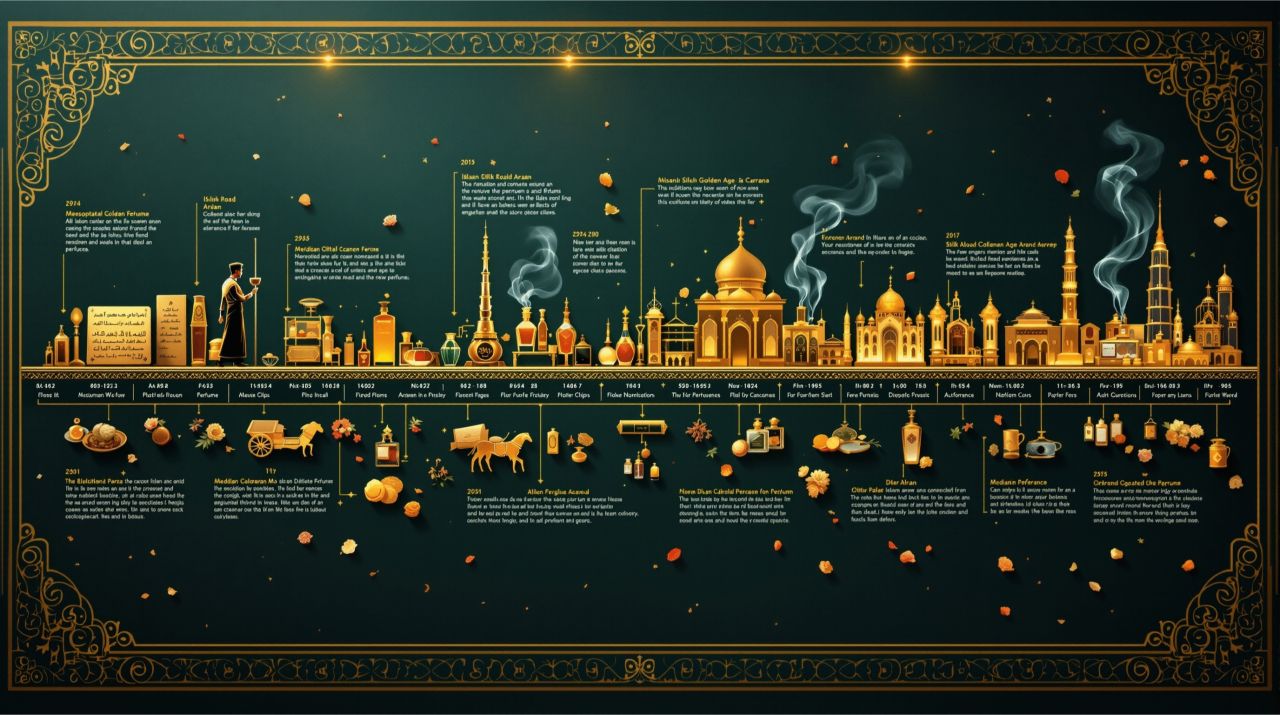
Have you ever wondered how a single invention could change the way the world smells? Or how ancient wars and trade routes shaped the perfumes you wear today? The story of Arabian perfume isn’t just about beautiful scents—it’s a thrilling journey through 3,300 years of human history, filled with scientific breakthroughs, epic journeys, and powerful empires.
From the clay tablets of ancient Mesopotamia to the glittering perfume shops of modern Dubai, Arabian perfume has been shaped by incredible historical events. Each moment in time—whether it was a brilliant scientist’s discovery, a trader’s dangerous journey, or an empire’s rise and fall—added something special to the fragrant world we know today.
Let’s explore the pivotal events that transformed Arabian perfumery from sacred ritual to global luxury. These aren’t just dates in a history book—they’re the moments that made Arabian perfume the treasure it is today!
- I. Ancient Foundations: The Birth of Perfume Art (3500 BCE – 600 CE)
- II. Islamic Golden Age: Scientific Revolution (610 CE – 1258 CE)
- III. Trade Routes & Cultural Exchange (1095 – 1500)
- IV. Ottoman Era: Imperial Fragrance Culture (1453 – 1922)
- V. Modern Transformation: 20th Century Renaissance (1900 – 2000)
- VI. Contemporary Globalization (2000 – Present)
- CONCLUSION: From Clay Tablets to Instagram—A Fragrant Legacy
I. Ancient Foundations: The Birth of Perfume Art (3500 BCE – 600 CE)
Event 1: The World’s First Perfume Recipe (1200 BCE – Mesopotamia)
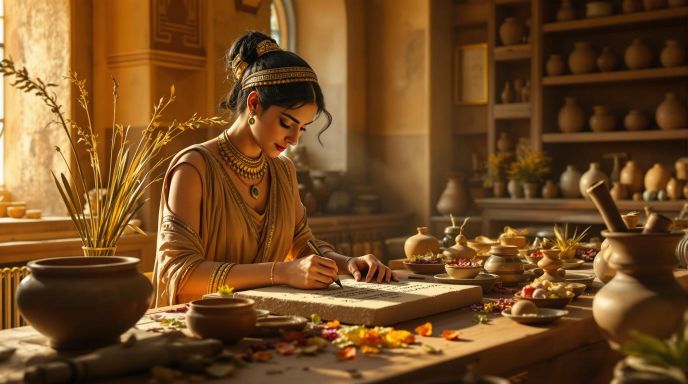
Imagine being the world’s very first professional perfumer! That honor belongs to a woman named Tapputi-Belatekallim, who lived in Mesopotamia over 3,200 years ago. She wasn’t just mixing pretty-smelling flowers in a bowl—she was creating something completely revolutionary.
Tapputi worked in the royal palace, and she did something no one had done before: she wrote down her perfume recipes on clay tablets. These ancient instructions described how to blend flowers, oils, and calamus (a sweet-smelling reed) with other aromatics. She even documented early distillation-like techniques, using water and heat to extract precious essences.
Why did this matter so much? Before Tapputi, perfume-making was passed down by word of mouth, like secret family recipes. But when she carved her formulas into clay, she transformed perfumery from folk art into documented science. Anyone who could read her tablets could recreate her perfumes. This was the beginning of perfumery as a true craft!
The region we now call Iraq, Syria, and the Arabian Peninsula became the birthplace of organized perfume-making. Ancient Mesopotamians used these fragrances in religious ceremonies, believing scents could carry prayers to the gods. They anointed kings and blessed temples with perfumed oils. This single event—writing down perfume formulas—gave Arabian perfumery its first solid foundation.
Event 2: Egyptian Trade Routes Open (1500 BCE)
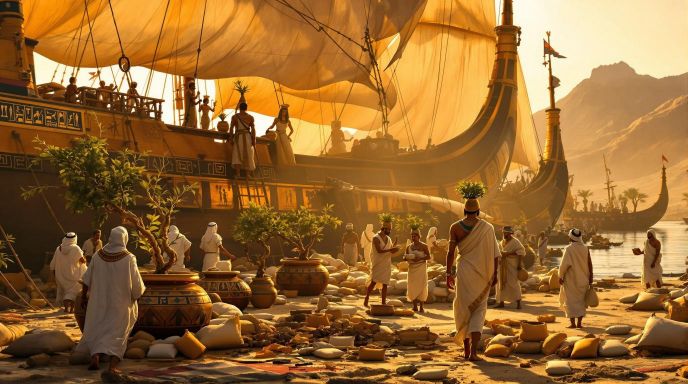
Fast forward a few centuries to ancient Egypt, where Pharaohs were absolutely obsessed with perfume! But here’s the catch—Egypt didn’t grow all the ingredients they needed. The most precious materials, especially frankincense and myrrh, came from the Arabian Peninsula, particularly from what we now call Yemen and Oman.
Queen Hatshepsut, one of Egypt’s most powerful rulers, did something extraordinary. Around 1500 BCE, she sent a massive expedition to a mysterious land called Punt (likely modern-day Somalia and Yemen). Her ships returned loaded with frankincense trees, myrrh, gold, and exotic animals. Wall paintings in her temple still show this incredible journey today!
This expedition wasn’t just about getting nice smells. It created the Arabian Peninsula’s first perfume export economy. Arabian merchants realized they were sitting on a goldmine—literally! Their land produced ingredients that powerful kingdoms desperately wanted. Trade routes sprang up across the desert, with camel caravans carrying precious resins from Southern Arabia to Egypt, Mesopotamia, and beyond.
Frankincense and myrrh became so valuable that traders called them “liquid gold.” These trade routes brought wealth to Arabian communities and established the region as the world’s perfume supplier. For the first time, Arabian aromatics became international luxury goods! The perfume business was born, and it would only grow from here.
Event 3: Persian Empire Conquests (550 BCE)
When Cyrus the Great built the massive Persian Empire around 550 BCE, he did more than conquer lands—he connected cultures. The Persian Empire stretched from modern-day Iran all the way to Egypt and parts of Arabia, creating a huge territory where ideas, techniques, and ingredients could flow freely.
The Persians were perfume fanatics! Their royal courts didn’t just wear perfume—they bathed in it, burned it as incense, and even perfumed their horses and soldiers before battle. Persian kings each had their own signature scents, custom-made by court perfumers. Imagine having your own personal fragrance that no one else could wear!
But here’s what made this event so important: The Persian Empire unified different perfume traditions. Arabian incense-making met Egyptian embalming techniques. Mesopotamian distillation methods merged with Persian rose cultivation. For the first time, perfumers from different regions could share their secrets and learn from each other.
The Persians perfected rosewater production, creating vast rose gardens in places like Shiraz. They developed better storage methods for perfumed oils and created elaborate glass bottles to hold their creations. Persian perfume culture influenced everyone around them, and Arabian perfumers absorbed these innovations eagerly.
This cross-cultural blending during the Persian Empire created a shared perfume knowledge base that would later explode during the Islamic Golden Age. The foundations were set, and Arabian perfumery was ready to evolve!
II. Islamic Golden Age: Scientific Revolution (610 CE – 1258 CE)
Event 4: Prophet Muhammad’s Teachings (610-632 CE)
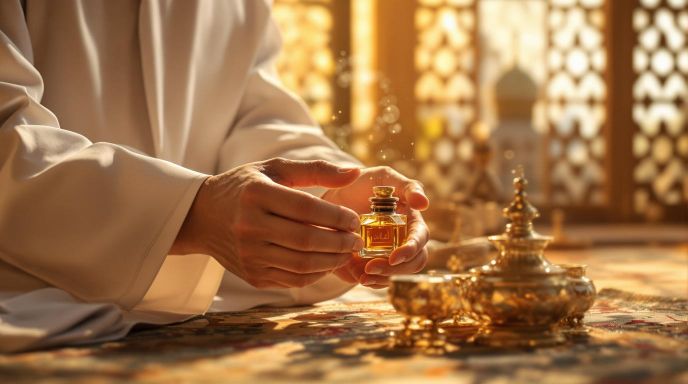
Everything changed when Islam arrived in Arabia during the 7th century. Prophet Muhammad didn’t just bring a new religion—he transformed how people thought about perfume. Before Islam, perfume was mainly for the wealthy and powerful. But the Prophet’s teachings made fragrance important for everyone!
The Prophet Muhammad loved perfume so much that he’s famously quoted in hadith (Islamic teachings) as saying: “Three things have been made dear to me: women, perfume, and prayer.” He wore perfume regularly, especially on Fridays before communal prayers. He encouraged his followers to use pleasant scents, particularly musk, amber, and oud.
But why did this matter so much for Arabian perfume? Because overnight, wearing perfume went from being a luxury to being a religious duty! Muslims were taught that cleanliness and pleasant fragrance were part of proper worship. Before entering a mosque, believers should apply perfume. Before Friday prayers, wearing fragrance became strongly recommended.
Suddenly, perfume wasn’t just for kings and queens—it was for everyone who prayed. This created massive demand across the entire Arabian Peninsula and beyond as Islam spread. Perfume markets exploded in cities like Mecca, Medina, and later Damascus and Baghdad. Perfumers became respected community members who helped people fulfill their religious practices.
The Prophet’s love for specific scents, especially oud (agarwood), made these fragrances culturally significant throughout the Muslim world. This single event transformed perfume from luxury item to spiritual necessity, ensuring Arabian perfumery would thrive for centuries to come.
Event 5: Al-Kindi Writes First Perfume Textbook (9th Century)
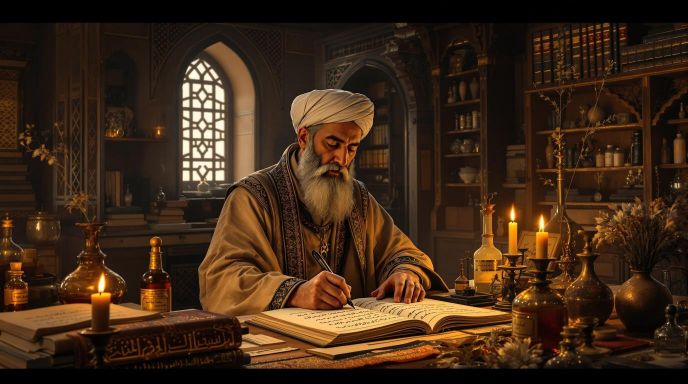
Let’s jump to Baghdad in the 9th century, during what historians call the Islamic Golden Age. The city was the world’s intellectual capital, filled with scholars, scientists, and philosophers. Among them was a genius named Al-Kindi (full name: Abu Yusuf Ya’qub ibn Ishaq al-Kindi), who did something revolutionary.
Al-Kindi wrote the world’s first proper perfume textbook! Called “Kitāb Kīmiyā’ al-‘Iṭr wa al-Taṣ’īdāt” (The Book of the Chemistry of Perfume and Distillations), this amazing book contained over 100 detailed perfume recipes. But it wasn’t just a recipe collection—it was a scientific manual!
Al-Kindi explained exactly how to distill essential oils from flowers and plants. He described how to build proper equipment, including glass and ceramic stills. He detailed the ratios of ingredients needed for each perfume, the temperatures required, and even how long each process should take. For the first time ever, perfume-making had a comprehensive textbook!
Before Al-Kindi, apprentices learned by watching master perfumers for years. Knowledge could be lost if a master perfumer died without passing on their secrets. But Al-Kindi’s book changed everything. Now, anyone who could read Arabic and follow instructions could become a perfumer.
His book spread throughout the Islamic world and was later translated into Latin, influencing European perfumery too. Al-Kindi transformed perfume-making from mysterious art into reproducible science. He created the foundation for perfumery education that continues today. Chemistry students still study his distillation principles!
Event 6: Avicenna Invents Steam Distillation (11th Century – 1025 CE)
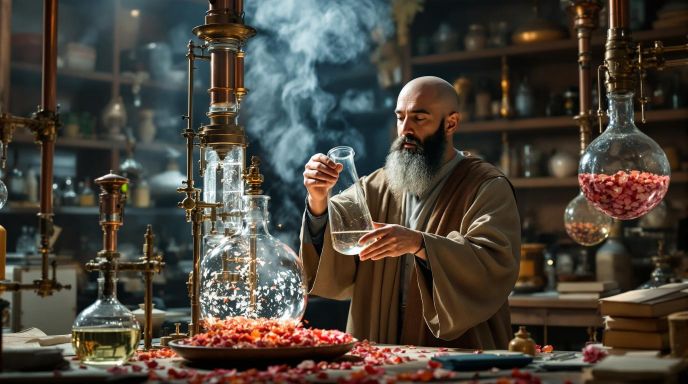
Now we meet perhaps the most important person in perfume history: Ibn Sina, known in the West as Avicenna. This Persian polymath (someone who’s an expert in many subjects) was a doctor, philosopher, astronomer, and—most importantly for our story—a brilliant chemist!
Around the year 1025, in the city of Bukhara (in modern-day Uzbekistan, but part of the Persian cultural sphere), Avicenna was experimenting with rose petals. He wanted to create medicine from rose essence, but the existing methods didn’t work well. Heating roses directly often burned them, destroying their delicate fragrance.
Then Avicenna had a breakthrough idea: What if steam could extract the essence instead of direct heat? He designed a special apparatus where steam passed through rose petals, captured their essential oils, then condensed back into liquid in a cooling chamber. The result? Pure, crystal-clear rosewater and rose oil!
Why was this such a game-changer? Before Avicenna, most perfumes were made by soaking flowers in oil or animal fat (a process called enfleurage). These perfumes were thick, greasy, and didn’t last long. But steam distillation created pure essential oils that could be mixed with alcohol, creating the light, long-lasting perfumes we know today!
Avicenna’s technique spread like wildfire through the Arabian world. Perfumers in Baghdad, Damascus, and Cairo all adopted his method. They began distilling not just roses, but jasmine, orange blossoms, herbs, and spices. The variety of available perfumes exploded!
Here’s something amazing: We still use Avicenna’s basic distillation technique today, over 1,000 years later! Modern perfume factories use the same principle—steam extraction of essential oils. Every time you spray a floral perfume, you’re experiencing Avicenna’s genius invention. This single breakthrough made modern perfumery possible!
Event 7: Abbasid Caliphate Establishes Baghdad Perfume Markets (8th-13th Century)
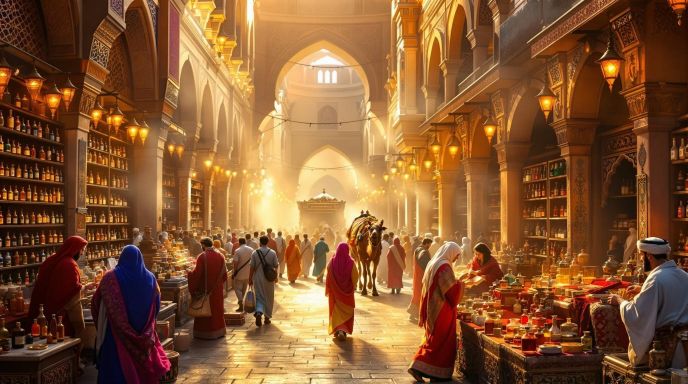
Picture Baghdad in the 9th century: a glittering metropolis with over one million people, grand libraries, sophisticated hospitals, and incredible wealth. The Abbasid Caliphate had made Baghdad the center of the known world, and nowhere was this more obvious than in the city’s perfume markets!
The Abbasid rulers established specialized souks (markets) dedicated entirely to perfumes and aromatics. These weren’t just simple shops—they were elaborate commercial districts where perfumers, ingredient merchants, bottle makers, and traders all worked together. Each souk specialized in specific materials: one area for oud, another for roses, another for musk and amber.
The most famous was the Suq al-Attarin (Perfumers’ Market), where hundreds of perfume shops lined narrow streets. The air itself was perfumed! Merchants from India brought sandalwood and agarwood. Traders from China arrived with musk. African merchants sold ambergris from whales. European traders came seeking Arabian aromatics to take home.
But the souks did more than just sell perfume—they standardized the industry! The Abbasids created quality controls, ensuring that “oud from Assam” really came from Assam and met certain standards. They established fair pricing, weights, and measures. They even created perfume guilds—professional organizations where perfumers could learn from each other and protect their trade secrets.
For over 500 years, Baghdad was the world’s perfume capital. Innovations in one Baghdad workshop would spread throughout the Arabian world within months. Perfumers competed to create the most exquisite fragrances for wealthy patrons. The perfume merchant class became rich and respected.
This event created the commercial infrastructure that kept Arabian perfumery thriving. Even after the Mongols destroyed Baghdad in 1258, the perfume market traditions continued in other cities like Damascus, Cairo, and later Istanbul. The souks had proven that perfume could be a sophisticated, organized industry—not just individual artisans working alone.
III. Trade Routes & Cultural Exchange (1095 – 1500)
Event 8: The Crusades Open European Markets (1095-1291)
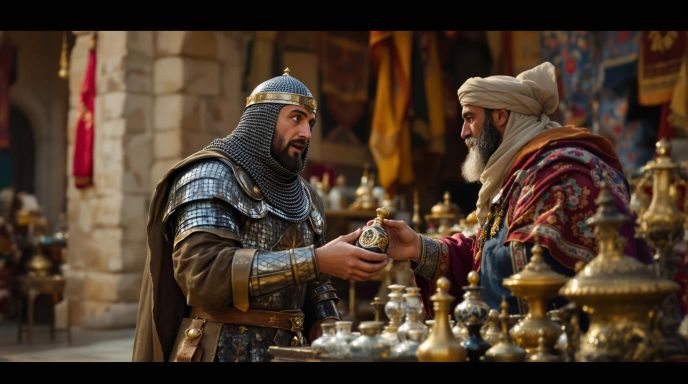
Here’s where things get really interesting! When European Christian knights launched the Crusades to capture the Holy Land (modern-day Israel, Palestine, Syria, and Lebanon), they expected to find barbarians. Instead, they discovered a culture far more sophisticated than their own—especially when it came to perfume!
European Crusaders were shocked by what they found. Muslims bathed regularly (Europeans rarely bathed!), wore beautiful perfumes, and lived in cities that smelled like gardens instead of, well… medieval Europe. The Knights encountered perfume markets filled with scents they’d never imagined. Oud? They’d never smelled anything like it! Rosewater? In Europe, roses were just flowers!
When the Crusaders returned home (1095-1291), they brought Arabian perfumes with them. Knights gave perfumed oils to their wives and girlfriends as exotic gifts. Merchants who traveled with the armies saw business opportunities and began importing Arabian aromatics to European cities.
Venice and Constantinople became the main European hubs for this perfume trade. Venetian traders established permanent relationships with Arabian and Syrian perfume merchants. Italian cities started creating their own perfumes based on Arabian formulas. For the first time, Arabian perfume knowledge spread systematically to Europe!
The Crusades also introduced specific ingredients to European markets: frankincense, myrrh, oud, musk, and amber all became available (though expensive!) in European cities. Nobles began wearing perfumes to seem sophisticated and worldly. European perfumers tried to recreate Arabian scents.
This event created lasting demand for Arabian perfumes in the West that continues today. The “mysterious Orient” became associated with luxurious fragrances in European minds. Without the Crusades, Western perfumery might have developed completely differently!
Event 9: Silk Road Peak Trade (13th-14th Century)
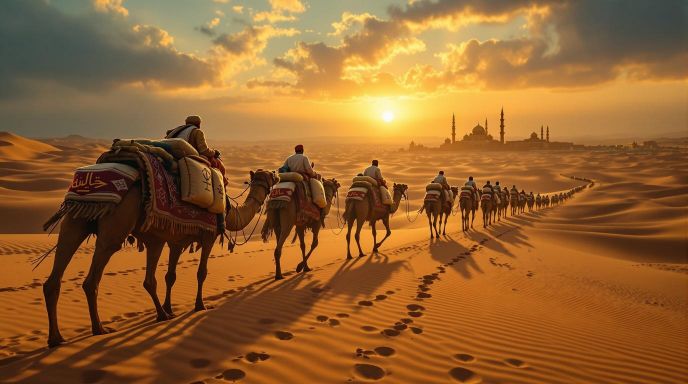
Now let’s talk about the most famous trade route in history: the Silk Road! While the Silk Road had existed for centuries, it reached its absolute peak during the 13th and 14th centuries under Mongol control. And guess what was one of the most valuable items traveling these routes? Perfume ingredients!
The famous explorer Marco Polo documented perfume trade extensively during his travels (1271-1295). He wrote about markets in Central Asia overflowing with aromatics. He described how agarwood from Southeast Asian forests traveled thousands of miles to Arabian markets. He noted Chinese musk dealers, Indian sandalwood merchants, and Arabian frankincense traders all meeting in cities along the Silk Road.
Why did this matter so much? Before the Silk Road’s peak, Arabian perfumers had limited ingredient options—mostly what grew in their region plus a few imports. But when the Silk Road was fully open and safe (thanks to Mongol peace), the perfumer’s palette exploded!
Suddenly, Arabian perfumers could access:
- Agarwood (oud) from Vietnam, Cambodia, and India
- Musk from Tibet and China
- Sandalwood from India
- Camphor from China and Southeast Asia
- Saffron from Persia
- Spices like cinnamon, cloves, and cardamom from India and Southeast Asia
Each new ingredient opened creative possibilities. Perfumers experimented with combinations never tried before. A perfumer in Damascus could now create a blend using Arabian frankincense, Indian sandalwood, Chinese musk, and Southeast Asian oud—all in one bottle!
This event dramatically expanded what “Arabian perfume” could be. The complexity and richness we associate with Arabian fragrances today comes directly from this period when ingredients from three continents flowed into Arabian workshops. The Silk Road made Arabian perfumery truly international!
Event 10: Fall of Constantinople (1453)
May 29, 1453, was a Tuesday that changed the world. After a 53-day siege, the Ottoman Turks conquered Constantinople (modern-day Istanbul), ending the Byzantine Empire. The last Christian stronghold in the East fell, and the Ottomans controlled the crucial gateway between East and West.
You might wonder: What does a military conquest have to do with perfume? Everything! Constantinople sat right at the crossroads of perfume trade routes. For centuries, it had been the main hub where Eastern perfumes entered European markets. Arabian and Persian perfumes, along with ingredients from India and Southeast Asia, all flowed through Constantinople’s ports.
When the Ottomans took control, they didn’t shut down the perfume trade—but they definitely changed it! Ottoman merchants now controlled access to Eastern perfumes. They could set prices, choose which European traders to work with, and keep the best materials for themselves. European traders who once had easy access suddenly faced barriers.
This had two major effects:
First, Arabian perfumes became more expensive and exclusive in Europe. Since they were harder to get, they became even more prestigious. Wealthy Europeans competed to own these rare, exotic fragrances. The “mysterious Orient” became even more mysterious!
Second, Europeans began searching for new trade routes. This led to the Age of Exploration! Portuguese and Spanish sailors tried to reach India and Southeast Asia by sailing around Africa, hoping to bypass Ottoman-controlled territories. They wanted direct access to spices and perfume ingredients.
Meanwhile, in the Ottoman Empire itself, perfumery flourished! Istanbul became a major perfume center, blending Arabian, Persian, and Turkish traditions. The fall of Constantinople didn’t stop perfume trade—it just reorganized it, creating new centers of perfumery and making Arabian fragrances even more desirable in Western markets.
IV. Ottoman Era: Imperial Fragrance Culture (1453 – 1922)
Event 11: Ottoman Empire Establishes State Perfumers (16th Century)
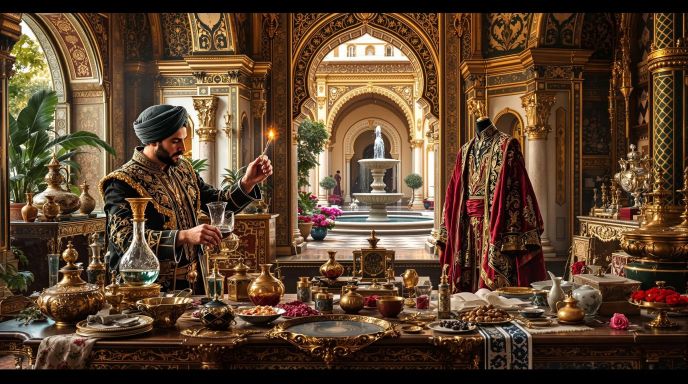
Sultan Suleyman the Magnificent (who ruled 1520-1566) took perfume to a whole new level! He didn’t just wear perfume—he created an entire bureaucracy around it. The Ottoman court established official positions for imperial perfumers, giving them salaries, workshops, and high status.
These weren’t just employees; they were artists with special privileges! Imperial perfumers worked in dedicated workshops within the Topkapi Palace in Istanbul. They created exclusive fragrances that only the Sultan and his chosen favorites could wear. Imagine having your own personal perfumer whose sole job was making unique scents just for you!
The Ottomans took rose cultivation to incredible heights. They planted massive rose fields in Bulgaria, Turkey, and Syria. Ottoman rose attar (concentrated rose oil) became world-famous for its incredible quality. One tiny drop could perfume your skin for hours! The Sultan even had special fountains that flowed with rosewater during celebrations.
But here’s what made this event historically important: The Ottomans professionalized perfume-making. Instead of individual artisans working independently, perfumery became an organized profession with standards, training, and hierarchy. Master perfumers took apprentices who studied for years. The guild system protected trade secrets while ensuring quality.
Ottoman perfumers also innovated in presentation. They created beautiful bottles, elaborate boxes, and ceremonial sets for presenting perfumes as diplomatic gifts. When the Sultan gave foreign ambassadors perfume as gifts, it showed incredible respect—and showed off Ottoman sophistication!
This professionalization set standards that influenced perfumery throughout the Arabian and Islamic world. The idea that perfume-making should be a respected profession with formal training continues today. Ottoman perfume culture also kept Arabian perfumery traditions alive and thriving during this period, preserving knowledge for future generations.
Event 12: European Colonial Expansion (18th-19th Century)
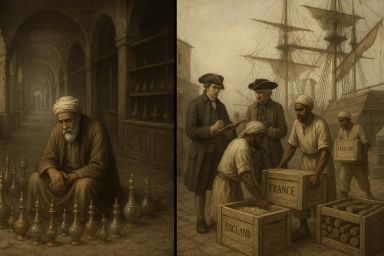
Now we come to a darker chapter in Arabian perfume history. During the 18th and 19th centuries, European powers—especially Britain and France—colonized much of the Middle East and North Africa. This wasn’t just political control; it disrupted centuries of Arabian perfume traditions.
The British controlled parts of the Arabian Peninsula, including Aden (Yemen) and the Gulf coast. The French took Syria, Lebanon, and North Africa. These colonial powers did several things that hurt traditional Arabian perfumery:
First, they extracted raw materials without supporting local perfumers. European companies bought up frankincense, myrrh, and oud at low prices, then shipped these materials to France for processing. Instead of supporting Arabian perfume workshops, colonizers wanted cheap ingredients for European perfume houses in Grasse, France.
Second, they disrupted traditional trade routes. Camel caravans and traditional merchant networks were replaced by colonial shipping routes that benefited European companies. Arabian merchants lost their intermediary role. The ancient perfume souks declined as European-controlled ports became the new trade centers.
Third, they introduced Western products that competed with traditional Arabian perfumes. European alcohol-based perfumes, marketed as “modern” and “sophisticated,” flooded Arabian markets. Some local consumers began preferring Western brands, seeing them as status symbols.
For about 150 years, Arabian perfumery entered a decline. Traditional workshops closed. Master perfumers couldn’t compete with cheap European imports. Ancient techniques were forgotten as younger generations learned other trades instead.
However, not all was lost! Some perfume families preserved their traditions in secret. Cities like Mecca, Medina, and interior Arabian towns maintained their perfume-making heritage. And this preservation would become crucial when the pendulum swung back in the 20th century.
This colonial period teaches us an important lesson: Traditional crafts can be vulnerable to political and economic disruption. But it also shows the resilience of Arabian perfume culture—these traditions survived even when everything seemed stacked against them!
V. Modern Transformation: 20th Century Renaissance (1900 – 2000)
Event 13: Oil Discovery in Arabian Gulf (1930s-1960s)
Everything changed when oil was discovered! In 1938, massive oil reserves were found in Saudi Arabia. Soon after, oil was discovered in Kuwait, the United Arab Emirates, Qatar, and other Gulf states. Almost overnight, some of the world’s poorest regions became incredibly wealthy.
But what does oil have to do with perfume? Money for cultural preservation! As Gulf states became rich, their leaders wanted to protect and revive traditional Arabian culture that had been fading during colonial times. Perfume-making was high on that list!
Saudi Arabia’s royal family invested in reviving traditional perfume-making. They funded workshops, supported master perfumers who still knew the old techniques, and encouraged young people to learn the craft. They built modern facilities that combined traditional knowledge with contemporary manufacturing.
The UAE, especially Dubai and Abu Dhabi, went even further. They transformed perfume from cottage industry into modern business while respecting traditional methods. New Arabian perfume companies received government support, tax breaks, and access to international markets.
Oil wealth also created a new customer base: Wealthy Gulf citizens who wanted to reconnect with their heritage! They had money to spend on high-quality traditional perfumes. This demand encouraged perfumers to revive old formulas, source the best ingredients, and maintain high standards.
The oil boom also funded perfume research. Universities established programs studying traditional aromatics. Scientists worked to understand why oud, amber, and musk worked so well in Arabian climates. Modern labs analyzed ancient formulas to improve them without losing authenticity.
This event saved Arabian perfumery from possible extinction. Without oil wealth, traditional perfume-making might have faded completely under pressure from Western competition. Instead, it got a second life—and the funding to compete globally!
Event 14: Establishment of Major Arabian Perfume Houses (1950s-1980s)
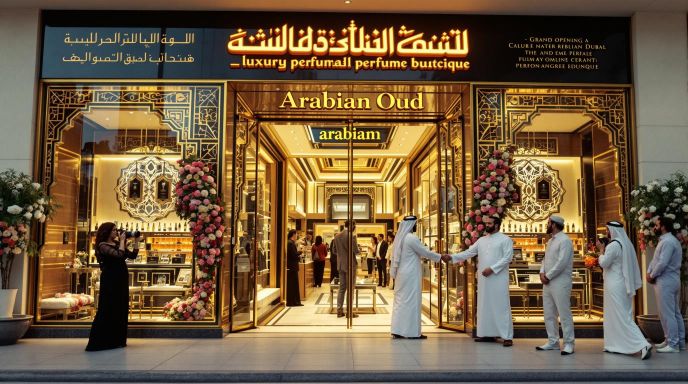
Now meet the companies that transformed Arabian perfume from local craft into global brand! Several visionary entrepreneurs saw an opportunity: combine traditional Arabian perfume-making with modern business practices.
Ajmal Perfumes (founded 1951) was one of the pioneers. Haji Ajmal Ali started by selling traditional attars in old Delhi, then expanded to the Gulf. His vision? Make high-quality Arabian perfumes accessible beyond just the wealthy elite. Ajmal created consistent products that customers could trust, using modern quality control while respecting traditional formulas.
Arabian Oud (established 1982) took a different approach. They positioned Arabian perfumes as luxury items comparable to French perfume houses. Beautiful stores, elegant packaging, professional staff—Arabian Oud said, “Our traditions deserve the same respect as Western luxury brands!” They opened stores across the Gulf, then expanded internationally.
Al Haramain Perfumes focused on religious and cultural significance. They emphasized perfumes used by Prophet Muhammad and created fragrances specifically for religious occasions. This connected modern products directly to Islamic traditions, making them spiritually meaningful as well as beautiful.
Abdul Samad Al Qurashi specialized in premium, artisanal perfumes using rare ingredients. They maintained traditional manufacturing methods while creating modern retail experiences. Their shops became destinations where customers could learn about perfume heritage while shopping.
Why did these companies matter so much? They industrialized handcraft traditions without losing authenticity! Here’s what they did:
- Standardized quality so customers knew what to expect
- Created brands that people recognized and trusted
- Built distribution networks making Arabian perfumes available everywhere
- Trained new perfumers keeping knowledge alive
- Invested in marketing telling Arabian perfume stories to the world
- Exported internationally putting Arabian perfumes in global markets
These companies transformed Arabian perfumery from artisan workshops into a modern industry worth billions. They proved that traditional perfumes could compete with French luxury brands. They created jobs, preserved culture, and made Arabian fragrances accessible to millions of people worldwide.
Event 15: Grasse-Gulf Collaboration Begins (1970s-1980s)
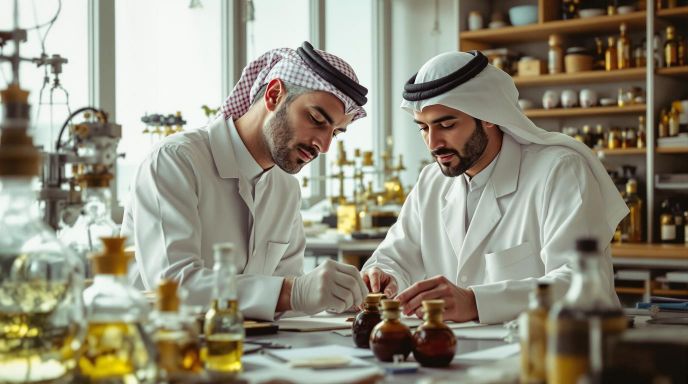
Here’s a surprising twist: French master perfumers from Grasse (France’s perfume capital) began partnering with Arabian perfume houses! After centuries of competition, East and West started working together.
Why did this happen? Both sides realized they had something valuable to offer each other!
French perfumers brought:
- Advanced chemical analysis of ingredients
- Sophisticated blending techniques
- Quality control systems
- International marketing expertise
- Access to European markets
Arabian perfume houses offered:
- Deep knowledge of oud, amber, musk, and traditional ingredients
- Understanding of Middle Eastern preferences
- Ancient formulas and blending traditions
- Access to rare, high-quality raw materials
- Growing market of wealthy Gulf customers
The collaborations created magic! French perfumers learned to work with oud, which behaves completely differently from Western ingredients. Arabian perfumers gained technical knowledge to improve consistency and longevity. Together, they created fusion fragrances that blended Eastern and Western traditions.
These partnerships also led to quality standardization. French experts helped Arabian companies meet international perfume standards. This made it easier for Arabian perfumes to be sold in department stores worldwide. Suddenly, Harrods in London, Bloomingdale’s in New York, and Galeries Lafayette in Paris started stocking Arabian fragrances!
This collaboration elevated Arabian perfumes to luxury tier. No longer seen as “ethnic” or “exotic” alternatives, Arabian perfumes gained respect as equals to French perfumery. Western perfume critics started taking Arabian fragrances seriously, reviewing them in major publications.
The Grasse-Gulf collaboration proved that perfumery could be multicultural. The best results came from respecting both traditions and learning from each other. This event positioned Arabian perfumery for global success in the 21st century!
VI. Contemporary Globalization (2000 – Present)
Event 16: Western Luxury Brands Adopt Oud (2007-2012)
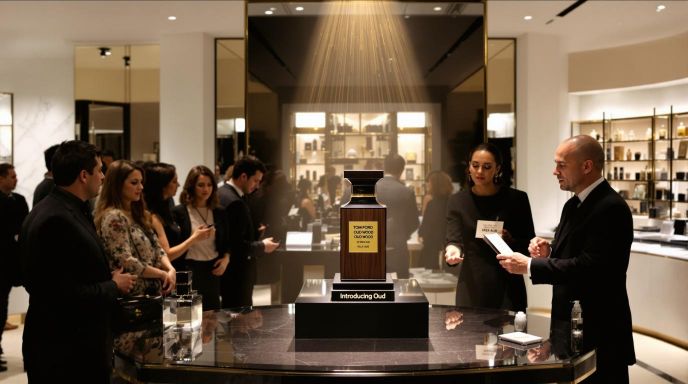
2007 was the year Western perfumery discovered oud! Tom Ford, the legendary American designer, launched “Oud Wood” as part of his Private Blend collection. This wasn’t just another perfume—it was a cultural moment!
Before 2007, oud (agarwood) was virtually unknown in Western markets. If you walked into a department store in New York or London and asked for oud, salespeople would look confused. Oud was an insider secret, known mainly to Middle Eastern customers and perfume enthusiasts.
But Tom Ford changed everything. “Oud Wood” became a massive hit! Celebrities wore it. Fashion magazines raved about it. Suddenly, everyone wanted to know: “What is oud?” Western consumers discovered this incredible ingredient that had been treasured in Arabia for over 1,000 years.
Other luxury brands quickly jumped in:
- Dior launched “Oud Ispahan” (2012)
- Yves Saint Laurent created “M7 Oud Absolu”
- Giorgio Armani introduced “Armani Privé Oud Royal”
- Gucci released multiple oud fragrances
- By Killian made “Pure Oud” and other oud-based scents
Why did this event matter so much?
First, it mainstreamed oud globally! An ingredient that was niche became a perfume category. Department stores created “oud sections.” Perfume websites added “oud” filters. The global fragrance industry recognized oud as essential, not exotic.
Second, it validated Arabian ingredients and perfumery knowledge. For centuries, Western perfumery dominated the luxury market. But when top Western brands started using Arabian ingredients and techniques, it acknowledged that Arabian perfumery had something special to offer.
Third, it created a fusion trend. Western brands didn’t just copy Arabian perfumes—they created blends combining oud with Western ingredients like vanilla, patchouli, and modern synthetic molecules. This fusion created entirely new fragrance families!
Fourth, it increased demand and prices for quality oud. As Western brands competed for the best agarwood, prices skyrocketed. This benefited Arabian perfume houses that had relationships with oud suppliers and deep knowledge of quality grading.
This event completed a full circle: Arabian perfumery influenced Europe during the Crusades, Europe colonized Arabian lands and dominated perfumery for 200 years, and now Western brands were embracing Arabian ingredients! The student had become the teacher again.
Event 17: Dubai Becomes Global Perfume Capital (2010s)
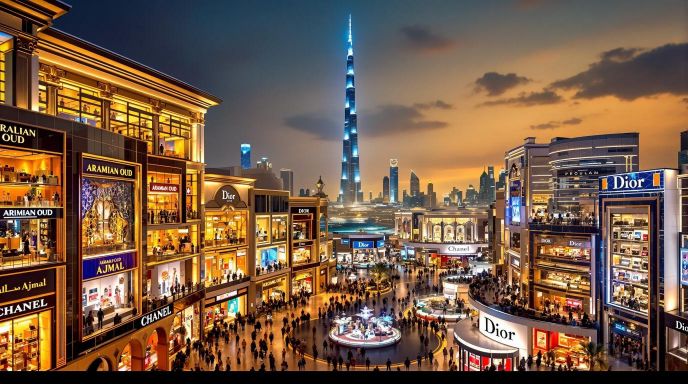
Move over, Paris—Dubai is here! During the 2010s, Dubai transformed itself into the world’s perfume capital. Not through history or tradition, but through vision, money, and incredible ambition!
Several developments made this happen:
Dubai Duty Free became the world’s largest perfume retailer. The massive airport shopping area sells over $2 billion in perfume annually! Every traveler passing through Dubai—and millions do—walks through perfume sections showcasing both Western and Arabian brands. This exposure introduced Arabian perfumes to global audiences.
The Dubai Shopping Festival and Dubai Perfume Festival turned perfume shopping into entertainment! These annual events feature:
- Hundreds of perfume brands in one place
- Master perfumers creating custom fragrances
- Workshops teaching perfume-making
- Competitions for best new fragrances
- Celebrity appearances and performances
- Special discounts and promotions
International luxury brands opened flagship stores in Dubai. Chanel, Dior, Tom Ford, and others established major presences. But alongside them, Arabian brands like Ajmal, Arabian Oud, and newcomers created equally impressive retail experiences. The message was clear: Arabian perfumes belong in the luxury conversation!
Dubai became a manufacturing hub. Many international brands now produce perfumes in Dubai’s free zones, taking advantage of tax benefits, strategic location, and access to Arabian ingredients. “Made in Dubai” became a quality mark!
Social media and influencer culture amplified Dubai’s perfume scene. Beauty influencers visiting Dubai posted perfume haul videos. Instagram showed glamorous perfume shopping experiences. YouTube featured Dubai perfume store tours. Dubai perfumery became aspirational lifestyle content!
Why does this matter historically? For 1,000 years, different cities claimed the title “perfume capital”—Baghdad during the Abbasid era, Constantinople under Ottomans, then Grasse in France. Dubai’s rise as perfume capital represents the full revival of Arabian perfumery from its colonial-era decline. It also represents globalization: a city that blends East and West, tradition and modernity, becoming the place where all perfume cultures meet.
Dubai proved that Arabian perfumery isn’t just about history—it’s about the future!
Event 18: Social Media & Influencer Culture (2015-Present)
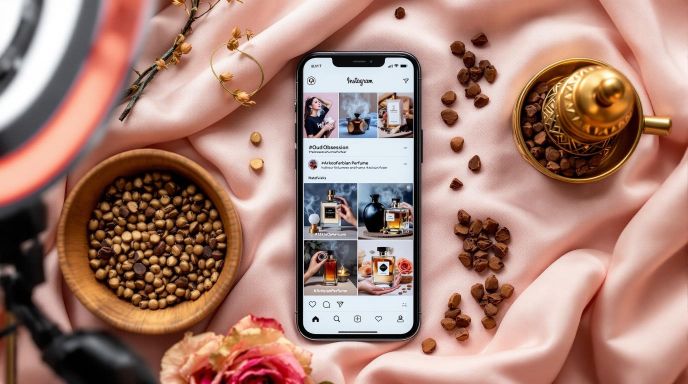
The final event shaping Arabian perfume is happening right now—on your phone! Social media has completely changed how people discover, learn about, and buy Arabian perfumes.
Instagram created visual perfume culture. Before Instagram, you could only experience perfume by smelling it. But Instagram turned perfume into visual art! Users post:
- Beautiful perfume bottles against luxurious backgrounds
- Flat-lay photography showing perfume collections
- Stories about finding rare Arabian fragrances
- Outfit-of-the-day posts including “fragrance of the day”
- Aesthetically pleasing videos of perfume applications
The hashtag #OudObsession has over 50,000 posts! #ArabianPerfume, #Attars, and #BakhoorLovers connect global communities. Suddenly, a teenager in Brazil can learn about Arabian perfumes from an enthusiast in Dubai, who learned from a traditional perfumer in Oman!
YouTube perfume reviewers created detailed content about Arabian fragrances. Channels like “Redolessence,” “Brooklyn Fragrance Lover,” and Middle Eastern fragrance enthusiasts post 30-minute reviews explaining oud varieties, comparing Arabian brands, and sharing personal stories. This educational content demystified Arabian perfume for Western audiences!
TikTok made perfume knowledge viral. Short videos showing:
- “How real oud is made” (showing agarwood harvesting)
- “Arabic perfume haul from Dubai”
- “Layering Arabian and Western perfumes”
- “Blind testing expensive vs. affordable oud”
- “My grandmother’s traditional attar collection”
These videos get millions of views! Suddenly, ancient Arabian perfume traditions become trendy content for Gen Z!
Online perfume communities on Reddit, Facebook groups, and Discord servers created spaces where enthusiasts share knowledge. Newcomers ask questions like “What’s the best beginner oud?” and experienced users share detailed recommendations. These communities preserve and spread perfume knowledge faster than any historical method!
Why is this event so historically significant?
It democratized Arabian perfume knowledge. You don’t need to live in Dubai or visit a traditional souk to learn about Arabian perfumes. Anyone with internet access can become educated about ingredients, techniques, brands, and traditions.
It created global demand from younger consumers. Millennials and Gen Z discovered Arabian perfumes through social media and started buying them. This younger customer base ensures Arabian perfumery will thrive for decades to come.
It connected producers directly to consumers. Small Arabian perfume houses can now sell globally through Instagram shops and websites. You can buy artisan attars directly from family businesses in Oman or Yemen with a few clicks!
It preserved endangered knowledge. When elder perfumers share traditional techniques on video, that knowledge becomes permanently accessible. Future generations can learn from these digital archives even if traditional apprenticeships decline.
This event represents the full globalization of Arabian perfume. What started in ancient Mesopotamia, flourished during the Islamic Golden Age, survived colonial challenges, and revived in the oil era has now become part of global digital culture. Arabian perfume isn’t just Middle Eastern anymore—it belongs to the world!
CONCLUSION: From Clay Tablets to Instagram—A Fragrant Legacy
What an incredible journey! From Tapputi carving the first perfume recipe into clay in 1200 BCE to influencers posting #OudObsession selfies today—3,300 years of history shaped Arabian perfume into what it is now.
Each event we explored added something essential to the story:
Ancient foundations established perfume-making as documented science
Islamic Golden Age transformed it through revolutionary inventions
Trade routes expanded ingredients and spread knowledge across continents
Empires professionalized the craft and maintained high standards
Colonial challenges tested but couldn’t destroy centuries of tradition
Oil wealth provided resources for revival and modernization
Modern companies industrialized without losing authenticity
Globalization brought Arabian perfume to worldwide audiences
Digital culture made ancient traditions accessible to new generations
Together, these 18 pivotal events created the $4.5 billion Middle Eastern perfume market we see today. But more importantly, they preserved a cultural treasure that connects us to our ancestors while pointing toward the future!
Every time you smell oud, rose, musk, or amber in a perfume, you’re experiencing history. That oud might travel the same trade routes Marco Polo documented. That rosewater might be distilled using Avicenna’s 1,000-year-old technique. That amber blend might follow formulas from Al-Kindi’s ancient textbook. You’re not just wearing fragrance—you’re wearing living history!
The story of Arabian perfume teaches us powerful lessons:
- Traditional knowledge can survive modern challenges
- Cultural treasures need both preservation and innovation
- The best results come from sharing between cultures
- History isn’t just the past—it shapes our present daily
What’s the next event that will shape Arabian perfume? Maybe it’s happening right now! Perhaps it’s sustainable oud cultivation to protect endangered agarwood trees. Maybe it’s AI helping perfumers create new blends. Could it be your own discovery of Arabian fragrances?
History isn’t just something to read about—it’s something to experience, one beautiful scent at a time.


