

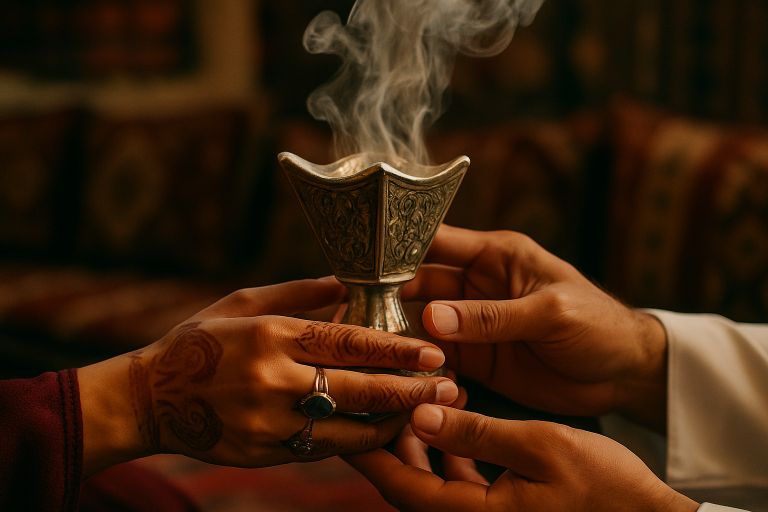
Picture this: You’re visiting an Emirati friend’s home for the first time. As the door opens, you’re greeted not just with warm smiles and kind words, but with something more powerful—an invisible embrace of fragrance. Thick, aromatic smoke rises from an ornate brass burner, carrying the deep, woody scent of oud through the air. Your host gently waves the smoke toward you, inviting you to let it perfume your hair and clothing. This isn’t just a pleasant smell. It’s a centuries-old tradition that says, “You are honored here. You are welcome. You matter.”
In Arab culture, hospitality isn’t just about providing food and shelter. It’s an art form, a spiritual practice, and a matter of personal honor. And at the heart of this tradition lies something surprising to many Westerners: perfume. The connection between Arabian perfume and hospitality runs so deep that you simply cannot separate one from the other. To understand Arab hospitality is to understand the sacred role of scent.
This guide will take you inside this beautiful tradition. Whether you’re planning to visit an Arab home, host guests using these customs, or simply want to understand this fascinating cultural practice, you’ll discover why perfume has been the ultimate symbol of Arabian generosity for over 4,000 years.
- Why Is Perfume Central to Arabian Hospitality?
- What Happens When You Visit an Arabian Home?
- Which Fragrances Are Used to Welcome Guests?
- How Does Perfume Use Change by Occasion?
- When and How Do You Gift Perfume to Guests?
- Does Perfume Hospitality Differ Across the Arab World?
- Who Manages Perfume Hospitality in Arabian Homes?
- How Is Perfume Used in Professional Settings?
- What Do Expats and Visitors Need to Know?
- Step-by-Step Guide to Traditional Hospitality Preparation
- What Are the Biggest Hospitality Perfume Mistakes?
- How Much Should You Spend on Hospitality Perfume?
- How Are Traditions Evolving?
- Conclusion
- Frequently Asked Questions
Why Is Perfume Central to Arabian Hospitality?
Have you ever wondered why Arabs take perfume so seriously? It’s not just about smelling nice. The relationship between scent and hospitality goes much deeper than that.
The Philosophy of Generosity (Karam)
In Arabic, there’s a word that captures the essence of hospitality: karam. It means generosity, but it’s more than just giving. It’s about giving abundantly, joyfully, and without expecting anything in return. This philosophy shapes every aspect of Arab life, especially how guests are treated.
Hospitality is considered one of the highest virtues in Islamic culture and Bedouin tradition. The Prophet Muhammad said that whoever believes in God and the Last Day should honor their guest. Throughout Arab history, even a stranger arriving at a tent in the desert would be fed, sheltered, and protected for three days without being asked a single question.
Perfume fits perfectly into this philosophy of karam. When you offer expensive oud or carefully prepared bakhoor to a guest, you’re not just freshening the air. You’re saying, “I’ve invested time, money, and thought into making you comfortable. You deserve the best I have to offer.” The more precious the scent, the greater the honor shown.
Perfume as a Symbol of Respect
Think about how you prepare for important guests in your own culture. You might clean your home, cook special food, or wear nice clothes. In Arab culture, all of those things happen too—but the preparation goes further. The home must not only look clean and welcoming, it must smell clean and welcoming.
This makes sense when you consider that smell is our most powerful sense for memory and emotion. A beautiful scent creates an immediate feeling of comfort and luxury. It tells guests that they’re entering a space that has been thoughtfully prepared for them. The lingering fragrance becomes a sensory memory they’ll carry with them—a reminder of your generosity long after they’ve left.
In traditional Arab culture, a home that doesn’t smell beautiful is seen as neglectful, regardless of how clean it might be. The absence of welcoming fragrance suggests the host didn’t care enough to prepare properly. That’s how central scent is to the entire concept of hospitality.
The Spiritual Dimension
There’s also a deeper, spiritual element to using perfume in hospitality. In Islamic tradition, cleanliness and pleasant scents are closely tied to purity and spirituality. The Prophet Muhammad loved fragrance and encouraged his followers to use it, especially before Friday prayers.
When you perfume your home and yourself before receiving guests, you’re not just following social custom. You’re creating a sacred space. You’re acknowledging that welcoming others into your home is a blessed act. The fragrance purifies the atmosphere and elevates the gathering from ordinary to meaningful.
Many Arabs believe that angels are attracted to pleasant scents, while negative energies are repelled by them. By filling your home with bakhoor or oud, you’re inviting divine blessings upon your household and your guests. This isn’t superstition—it’s a sincere spiritual practice that has guided Arab hospitality for generations.
What Happens When You Visit an Arabian Home?
Let me walk you through what actually happens when you’re welcomed as a guest in a traditional Arab home. Understanding this ritual will help you appreciate the thought and care behind every gesture.
Step 1: The Preparation (Before Guests Arrive)
The hospitality experience actually begins hours before you knock on the door. A good Arab host starts preparing early in the day—or even the night before for very important guests.
First comes the home scenting. The host burns bakhoor in every room, starting with the main sitting area where guests will be received. This isn’t a quick spray of air freshener. The bakhoor burns slowly on charcoal, releasing fragrant smoke that fills the space for 15-20 minutes per room. The windows are opened briefly to let the smoke dissipate, but the scent remains, embedded in curtains, carpets, and cushions.
Next, family members perfume themselves. Everyone takes time to apply attar oils to their pulse points and fumigate their clothing with bakhoor smoke. Even children participate in this preparation. It’s teaching them that honoring guests is a family responsibility.
The host also selects which bakhoor to use. For casual family visits, everyday bakhoor is fine. But for special guests, the premium stuff comes out—maybe a blend that cost $100 or more, made with aged oud and precious resins. The quality of the bakhoor communicates how much the host values the visit.
Step 2: The Greeting (At the Door)
When you arrive, the real experience begins. After the traditional greeting—usually “As-salamu alaykum” (peace be upon you)—something magical happens. The host or a family member brings out the mabkhara, the traditional incense burner.
This isn’t just passed by you. The host gently waves the smoke toward you, encouraging you to lean forward slightly. You’re meant to let the smoke reach your face, hair, and clothing. Many guests cup their hands and draw the smoke toward themselves, then gesture as if washing their faces with it.
This ritual typically lasts about 30 seconds to a minute. The host might circle around you with the burner, ensuring you’re thoroughly perfumed. Don’t rush this moment. Your patience and appreciation honor the host’s effort.
Here’s something important: never refuse the bakhoor. Even if you find the scent overwhelming or you have allergies (we’ll cover that situation later), refusing is considered quite rude. It’s like refusing to shake someone’s hand. The host has invested significant money and effort into this welcome, and declining rejects that generosity.
Step 3: The Seating Area Experience
Once you’re seated, the hospitality continues. Coffee is served—the famous Arabic coffee with cardamom—along with dates and sweets. But then comes another perfume experience: the perfume tray.
The host brings out a tray with multiple perfume bottles—maybe five to ten different options. These might include oud oils, musk, amber, rose attars, and other precious scents. You’re invited to try them, applying a small amount to your wrists or behind your ears.
This is actually a fascinating social moment. Choosing a perfume and wearing it shows you’re comfortable and accepting the intimacy of the visit. The host might offer suggestions: “This oud is from Cambodia, very smooth” or “This rose attar is from Taif, my favorite.” These aren’t sales pitches—they’re sharing something personal.
In traditional settings, men and women often gather separately, so the perfume offerings might differ. Women’s gatherings typically feature lighter florals alongside the heavier ouds, while men’s gatherings lean toward stronger, more intense fragrances.
The conversation flows naturally during this time. Asking about the fragrances, complimenting the host’s choices, and sharing your own perfume preferences are all part of building connection. In Arab culture, taking time to enjoy sensory pleasures together strengthens social bonds.
Step 4: Departure Rituals
As your visit ends, there’s often one final perfuming. The host brings out the bakhoor burner again, offering you a last embrace of fragrance before you leave. This serves a practical purpose—ensuring you carry the scent home with you—and a symbolic one—sending you off with blessings.
For very special guests or occasions, the host might present you with a perfume gift. This could be a small bottle of oud, a box of bakhoor, or an attar oil. Accepting this graciously is important. The gift is offered with the right hand (or both hands), and you should receive it the same way.
The lingering scent on your clothes becomes a beautiful reminder of the visit. Hours later, you might catch a whiff of oud on your sleeve and remember the warmth and generosity you experienced. That’s exactly the point—the perfume creates a lasting memory of the hospitality you received.
Which Fragrances Are Used to Welcome Guests?
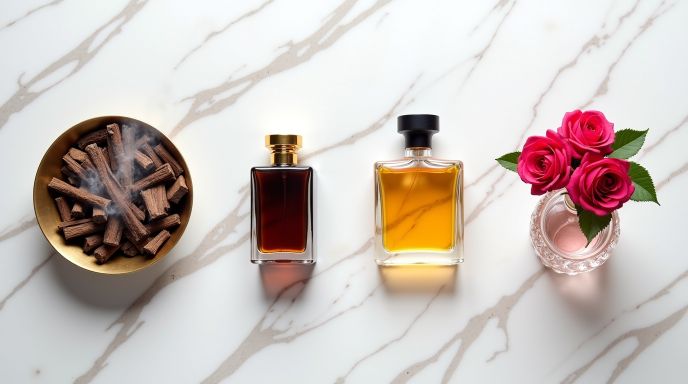
Not all perfumes are created equal when it comes to hospitality. Arabs have specific preferences for welcoming guests, and understanding these choices helps you appreciate the tradition even more.
Bakhoor – The Primary Welcoming Incense
Bakhoor (also spelled bukhoor) is the star of Arabian hospitality. It’s a blend of wood chips—often sandalwood or oud—soaked in fragrant oils and mixed with natural resins like frankincense and myrrh. When burned on charcoal or in an electric burner, it produces thick, aromatic smoke.
Why is bakhoor preferred over spray perfumes for welcoming guests? Several reasons. First, the smoke literally reaches everyone in the room. Unlike a spray that goes in one direction, smoke disperses and envelops everyone equally. Second, the ritual of burning incense feels more ceremonial and special than simply spraying something. Third, bakhoor creates an atmosphere that lasts for hours, not just minutes.
The quality of bakhoor varies enormously. Everyday bakhoor for casual use might cost $10-$20 for a box. Mid-range bakhoor for regular guests runs $40-$80. But premium bakhoor for VIP guests? That can easily cost $150-$300 or more per box. The difference is in the ingredients—premium versions use aged oud, pure essential oils, and high-grade resins.
Popular bakhoor varieties for hospitality include:
- Oud-based bakhoor: Deep, woody, intense—for important guests
- Rose bakhoor: Lighter, sweeter—for female gatherings
- Amber bakhoor: Warm, comforting—for family visits
- Mixed oriental bakhoor: Complex blends—for showing sophistication
Oud – The Luxury Welcome
If bakhoor is the standard, oud is the luxury upgrade. This is the “liquid gold” of Arabian perfumery—pure agarwood oil that can cost hundreds or even thousands of dollars per ounce.
Oud is reserved for the most honored guests. A business partner closing a major deal. A relative returning from Hajj. A government official visiting your home. Your child’s future in-laws. These occasions call for oud.
Sometimes oud chips (actual pieces of agarwood) are burned instead of mixed bakhoor. Other times, pure oud oil is offered on the perfume tray. Just a tiny drop behind the ears releases hours of fragrance. Guests recognize the extreme expense and rarity of pure oud, making it the ultimate statement of respect and honor.
Attar Oils – The Personal Touch
Attar oils are concentrated perfume oils, usually alcohol-free. The perfume tray typically includes several varieties:
- Oud attar
- Musk attar
- Rose attar
- Amber attar
- Saffron attar
These oils allow guests to choose their personal preference, making the hospitality more intimate and personalized. The act of selecting and applying attar creates a moment of connection between host and guest.
Rose Water – The Gentle Welcome
In some regions and situations, rose water offers a lighter alternative. The host might sprinkle rose water on guests as they enter, or offer scented towels infused with rose water.
This practice is especially common in hot climates where heavy perfumes can feel overwhelming. Rose water provides a refreshing, cooling welcome that’s less intense than oud or bakhoor but still honors the tradition of scenting guests.
It’s also the most budget-friendly option, making generous hospitality accessible even for families with limited means. A bottle of quality rose water costs $5-$15 and can be used for dozens of guests.
How Does Perfume Use Change by Occasion?
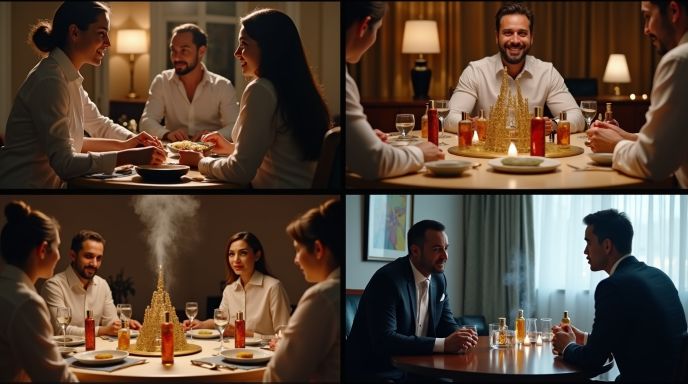
The type and intensity of perfume hospitality varies significantly depending on why guests are visiting. Understanding these differences shows how nuanced and thoughtful this tradition really is.
Casual Family Visits
When relatives drop by unexpectedly or friends come over for coffee, the perfume hospitality is present but relaxed. The host might burn everyday bakhoor for 10-15 minutes before guests arrive. The mabkhara might be passed once, quickly. The perfume tray might not even appear.
This lighter approach doesn’t mean the guests aren’t valued. It simply acknowledges the casual, comfortable nature of the relationship. Between close family and friends, the elaborate ritual isn’t necessary every time—the relationship itself is the honor.
The scent intensity is also kept moderate. Overpowering fragrance for a casual coffee visit would actually be inappropriate, suggesting the host is trying too hard or doesn’t understand proper social calibration.
Formal Guest Visits
Now the stakes rise. When guests are invited specifically for dinner or an important conversation, the full traditional hospitality comes out. Premium bakhoor is burned in every room, starting three hours before arrival. The host and family perfume themselves elaborately. Multiple perfume options are prepared.
The bakhoor burner is passed multiple times throughout the visit—once at arrival, perhaps again after the meal, and finally at departure. Guests are encouraged to perfume their clothing thoroughly. The perfume tray circulates, with the host actively encouraging guests to try different scents.
This level of attention requires significant time investment. A proper formal visit in Gulf Arab culture can easily last three to four hours, with perfume rituals woven throughout. Rushing would be disrespectful—both giving and receiving hospitality properly takes time.
Weddings and Celebrations
Wedding hospitality takes perfume traditions to their absolute peak. At Arabian weddings, you’ll often find:
Dedicated perfume stations where guests can apply multiple fragrances Hired perfume attendants who spray guests with luxury scents Custom family blend bakhoor burned continuously throughout the venue Perfume gift bags for all guests to take home Elaborate mabkhara displays as part of the décor
The bride herself might be perfumed in a special ceremony the night before the wedding, with female relatives applying different fragrances in layers. The groom’s preparation involves similar rituals.
Some wealthy families spend $10,000 or more just on perfumes and bakhoor for wedding guests. This isn’t showing off—it’s fulfilling the cultural expectation that weddings should showcase the family’s generosity to the entire community.
Religious Occasions (Eid, Ramadan)
During Ramadan, homes are perfumed more frequently and carefully. The evening iftar meal (breaking the fast) is often shared with guests, and bakhoor fills the home daily. Many families use special Ramadan-blend bakhoor, often lighter and more spiritual-smelling than everyday varieties.
On Eid (the celebration after Ramadan), perfume hospitality reaches special heights. New clothes are purchased and perfumed. Homes smell of fresh bakhoor. Visitors move from house to house, greeted with fragrance at each stop. Children are taught to participate in offering bakhoor to guests, learning the tradition.
The religious significance adds weight to these practices. You’re not just welcoming human guests—you’re creating an atmosphere worthy of divine blessing. The fragrance sanctifies the space and the occasion.
Business Meetings in Homes
When business discussions happen in someone’s home, there’s an interesting balance to strike. Traditional hospitality must be shown, but the perfume intensity might be moderated for international guests or those unfamiliar with Arab customs.
A savvy Arab host might burn bakhoor before international business guests arrive, then ventilate well so the scent is present but subtle. The bakhoor burner might be offered once, briefly, rather than multiple times. The perfume tray might be optional rather than insisted upon.
This adaptation shows cultural intelligence—maintaining tradition while being sensitive to guests’ comfort levels. The goal of hospitality is making guests feel honored and comfortable, not overwhelming them.
When and How Do You Gift Perfume to Guests?
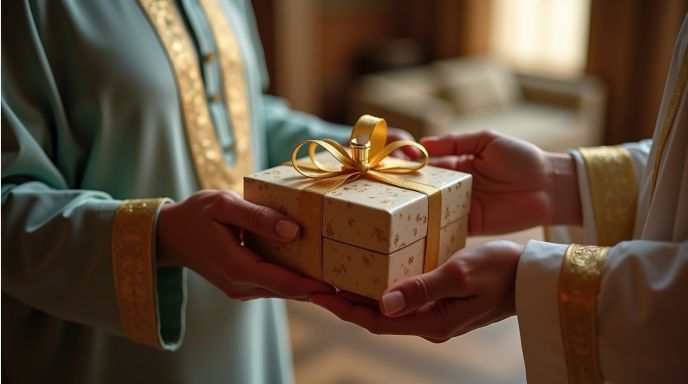
Perfume gifting is a beautiful extension of Arab hospitality, but it has its own set of customs and expectations.
Occasions for Perfume Gifting
Not every visit warrants a perfume gift, but certain occasions definitely do:
First-time visitors to your home often receive a small perfume gift—acknowledging the significance of them honoring you with their first visit.
Special celebrations like birthdays, graduations, or promotions call for perfume gifts. In Arab culture, perfume is considered one of the most appropriate gifts because it’s personal yet not too intimate.
Return from travel, especially Hajj or Umrah (pilgrimage), is a major gifting occasion. Pilgrims traditionally bring back gifts for family and friends, and perfume from Saudi Arabia is highly prized.
Business partnerships are often sealed with perfume gifts. When a contract is signed or a deal closes, exchanging quality perfumes symbolizes the sweetness and value of the partnership.
Wedding guests frequently receive perfume in their gift bags. This extends the hospitality beyond the event itself—guests carry the scent home as a memory.
Selecting Appropriate Gifts
Choosing the right perfume gift requires thought. Consider:
Age matters. Older guests might appreciate traditional oud or classic attars. Younger guests might prefer modern Arabian blends with Western notes mixed in.
Gender guidelines are important in conservative settings. Men typically gift perfume to men, women to women. However, in family contexts or modern settings, cross-gender gifting is acceptable if the relationship is appropriate.
Quality over quantity is the rule. A small bottle of excellent oud is far better than a large bottle of mediocre perfume. Arabs are very knowledgeable about fragrance quality—cheap perfumes are noticed and considered disrespectful.
Brand reputation counts. Well-known Arabian perfume houses like Ajmal, Abdul Samad Al Qurashi, or Swiss Arabian carry prestige. Local artisan perfumers can also be excellent choices if they have good reputations.
Budget guidance:
- Casual appreciation gift: $30-$50
- Thank you for hospitality: $50-$100
- Business or formal occasion: $100-$300
- Extraordinary occasions: $300+
Presentation Etiquette
How you give the gift matters as much as what you give.
Wrapping standards: The perfume should be beautifully wrapped. In Arab culture, presentation reflects the gift’s value. Stores typically offer elaborate gift wrapping services—use them.
Right hand rule: Always offer gifts with your right hand or both hands. The left hand alone is considered disrespectful in Islamic culture (it’s associated with cleanliness tasks). This rule applies throughout the Arab world.
Accompanying words: Say something meaningful when presenting the gift. “May this fragrance remind you of our friendship” or “May God bless you with sweetness as this perfume is sweet” are appropriate sentiments.
Timing during the visit: Gifts are usually presented early in the visit, not as you’re leaving. This allows the recipient to express gratitude properly and shows the gift wasn’t an afterthought.
Receiving Perfume Gifts
If someone gives you perfume, know the proper response:
Accept with your right hand or both hands, never with your left alone.
Express gratitude warmly and specifically. “This is so generous of you” or “What a beautiful scent you’ve chosen” shows appreciation for both the gift and the thought behind it.
Don’t open immediately unless specifically invited to. In many Arab cultures, gifts are opened privately later, not in front of the giver.
Reciprocation is expected for significant gifts, but not immediately. When you next visit that person’s home or have an appropriate occasion, a thoughtful gift in return maintains the relationship balance.
Does Perfume Hospitality Differ Across the Arab World?
The Arab world stretches from Morocco in the west to Oman in the east, covering 22 countries and diverse cultures. While perfume hospitality exists throughout, the practices vary.
Gulf States (Saudi Arabia, UAE, Kuwait, Qatar, Bahrain, Oman)
This region represents the most elaborate and expensive perfume hospitality traditions. The extreme wealth from oil has elevated these customs to almost art forms.
In Gulf homes, you’ll encounter:
- The heaviest, most expensive ouds and bakhoors
- Multiple daily perfumings of the home (not just for guests)
- The most formal and time-intensive welcoming rituals
- The highest expectations for quality and presentation
A Saudi or Emirati host might think nothing of burning $50 worth of premium bakhoor for a single important guest visit. The mabkhara itself might be an expensive antique or custom-made brass piece. The perfume tray might include oils costing $200+ per ounce.
This intensity isn’t showing off—it’s the cultural standard. In the Gulf, perfume hospitality reflects family honor and social standing in tangible ways.
Levant Region (Syria, Lebanon, Jordan, Palestine)
The Levant takes a lighter, more Mediterranean approach to perfume hospitality. Rose water features more prominently than in the Gulf. Floral and citrus notes are preferred over heavy oud.
These countries have significant Christian populations, which influences customs. The hospitality remains warm and generous, but the perfume element is less central and time-consuming. A host might spray guests with rose water or pass bakhoor once, but the elaborate multi-stage Gulf protocol is less common.
Economic factors also play a role. The Levant has experienced more conflict and economic challenges than the Gulf, making extremely expensive perfumes less accessible for everyday hospitality.
North Africa (Egypt, Morocco, Tunisia, Libya, Algeria)
North African perfume hospitality blends Arab, Berber, and Mediterranean influences.
Egypt maintains strong perfume traditions with a unique twist—amber-based incenses are particularly popular. Egyptian musk, a distinctive scent, is often offered to guests. The tourist perfume markets in Cairo and Luxor reflect the country’s long perfume history.
Morocco is famous for its rose valleys and orange blossom water. Moroccan hospitality often features these local scents alongside traditional oud and bakhoor. The beautiful brass and ceramic incense burners found in Moroccan souks are both functional and decorative.
In North Africa generally, the hospitality emphasis might be slightly more on food and tea (mint tea is central) than perfume, but scenting guests remains important and expected.
Yemen and Oman
These countries are source regions for many perfume ingredients, giving them special status in the perfume world.
Oman produces some of the world’s finest frankincense from Dhofar region. Omani hospitality prominently features frankincense burning, connecting guests to this ancient heritage.
Yemen has a long perfume history and maintained very traditional practices. Despite recent conflicts, Yemeni perfume customs remain deeply rooted in pre-Islamic and early Islamic traditions.
Both countries tend toward more traditional, less Westernized approaches to hospitality than the Gulf states. The perfume rituals here feel more connected to ancient roots than modern luxury.
Who Manages Perfume Hospitality in Arabian Homes?
Understanding gender roles in perfume hospitality helps you navigate these customs respectfully.
Women’s Traditional Role
Historically and in many traditional households today, women are the guardians of home fragrance. This responsibility includes:
Selecting and purchasing all bakhoor, oud, and perfume oils for the home. Women often have extensive knowledge of fragrance notes and quality, developed over years of experience.
Preparing the home by burning bakhoor hours before guests arrive, ensuring every room smells welcoming.
Welcoming female guests with the full perfume ritual. In gender-segregated gatherings, women handle all hospitality for female guests.
Teaching daughters the art of perfume hospitality, passing down family blend recipes and welcoming techniques.
This role carries significant prestige. A woman known for excellent hospitality and beautiful home fragrance earns respect in her community. Her choices reflect not just personal taste but family honor.
Men’s Responsibilities
Men traditionally handle:
Greeting male guests at the door with bakhoor, especially in gender-segregated settings.
Business-related hospitality when meetings happen at home. A man hosting business associates manages the perfume offerings himself or delegates to a male family member.
Purchasing premium ingredients for special occasions. While women handle daily perfume shopping, men might source expensive oud or rare bakhoor for important events.
Male-only gatherings like majlis sessions (traditional meeting assemblies). Men burn bakhoor and pass the mabkhara among themselves, discussing business and community matters.
Modern Evolution
Contemporary Arab households, especially in cities, show shifting patterns:
Shared responsibilities are increasingly common. Couples shop for perfumes together, both participate in home scenting, and both welcome guests regardless of gender.
Male hosts managing hospitality alone is acceptable and even common in modern UAE and Saudi Arabia. A single man hosting dinner might handle all perfume rituals himself.
Professional services have emerged in Gulf cities. For large events, families hire perfume attendants who bring premium bakhoors and manage all scenting throughout the occasion.
Younger generations are maintaining traditions while adapting them to modern schedules and sensibilities. They might use electric burners instead of charcoal for convenience, or opt for ready-made bakhoor instead of custom blends, but the core hospitality values remain strong.
How Is Perfume Used in Professional Settings?
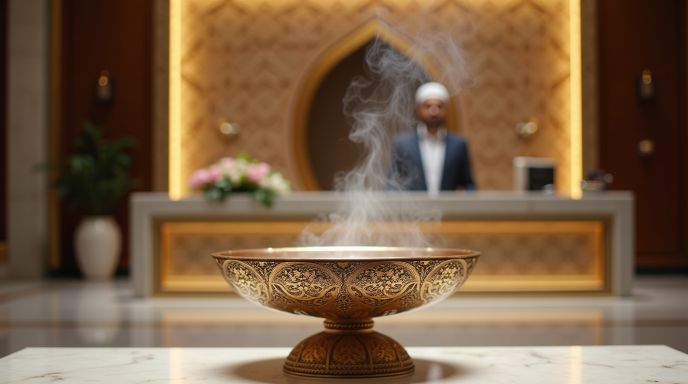
Arabian perfume hospitality has expanded beyond homes into the business world, creating unique corporate and commercial practices.
Hotels and Luxury Resorts
Walk into any high-end hotel in Dubai, Doha, or Abu Dhabi, and you’ll immediately smell the difference from hotels elsewhere in the world. Luxury Arabian hotels have adopted traditional perfume hospitality as a signature element.
Signature scents in lobbies: Hotels commission custom fragrances that pump through HVAC systems, creating an immediate sensory brand. These scents often blend traditional elements (oud, rose) with modern perfumery.
In-room bakhoor services: Many five-star hotels offer bakhoor upon request or as a turndown service. A staff member brings a traditional burner to perfume your room before you retire for the night.
Welcome amenities with perfume: VIP guests might receive welcome gifts including miniature bottles of the hotel’s signature scent or local artisan perfumes.
The Emirates Palace in Abu Dhabi famously uses oud extensively throughout the property, spending millions annually on perfume hospitality. The Burj Al Arab in Dubai has its own signature scent created by luxury perfume houses. These investments aren’t frivolous—they’re applying ancient hospitality traditions to create unforgettable guest experiences.
Corporate Offices in the Gulf
Business offices in Gulf countries often incorporate perfume hospitality:
Reception areas are discreetly scented, creating professional yet welcoming atmospheres.
Conference rooms might be perfumed before important meetings, especially with high-value clients.
Client meeting protocols at some companies include offering coffee and dates along with a quick pass of the bakhoor burner—traditional home hospitality translated to corporate settings.
Business deal celebrations frequently include perfume gifts. When major contracts are signed, exchanging premium perfumes between partners is common.
This practice bridges traditional values with modern business, showing that Arab companies can be globally competitive while maintaining cultural identity.
Restaurants and Cafes
High-end Arabian restaurants sometimes offer perfume hospitality:
Entrance rituals where guests are briefly perfumed as they arrive, particularly in traditional restaurants serving Arabic cuisine.
VIP customer treatment including perfume offerings for private dining room guests or regular high-value customers.
Balancing aromas is tricky—restaurants must ensure food fragrances dominate while adding subtle perfume elements without overwhelming diners’ ability to taste.
The key is restraint. While home hospitality uses generous amounts of perfume, commercial settings require careful calibration.
Retail and Shopping Experiences
Shopping in Arabian perfume souks or luxury boutiques is its own form of hospitality:
Traditional perfume shops invite customers to sit, offer coffee or tea, and spend extensive time trying fragrances. The sales process is relationship-building, not transaction-focused.
Luxury perfume boutiques in malls create spa-like experiences with perfume tasting bars, consultation services, and generous sampling.
Customer appreciation often includes perfume gifts for loyal customers or those making significant purchases.
Shopping becomes a hospitality experience rather than just a commercial exchange—another application of traditional values to modern contexts.
What Do Expats and Visitors Need to Know?
If you’re not from Arab culture, navigating perfume hospitality can feel confusing. Here’s practical advice for different situations.
For Western Visitors to Arab Homes
Accept graciously. When the bakhoor burner comes toward you, lean in slightly and allow the smoke to reach your hair and clothes. Smile and thank the host. This isn’t about whether you personally like the scent—it’s about respecting the gesture.
Ask questions respectfully. Most Arab hosts are happy to explain the tradition if you express genuine interest. “What kind of bakhoor is this?” or “Where does this oud come from?” are welcome questions.
Don’t make negative comments about the intensity or “strong smell.” Even if you find the fragrance overwhelming, keep that to yourself. Comments like “Wow, that’s strong!” can be hurtful.
If you have allergies or asthma, handle this delicately. Before arriving, if possible, let the host know: “I would love to experience your hospitality, but I have a severe allergy to smoke and fragrances. Is there any way to manage this?” Most hosts will accommodate by using lighter scents or perfuming before you arrive rather than during.
Show appreciation. Your comfort with the tradition honors your host’s effort. Taking time to smell different oils on the perfume tray, complimenting the fragrances, and allowing yourself to be perfumed multiple times shows respect.
The lingering scent is a compliment. When you leave smelling like oud and bakhoor, you’re carrying your host’s hospitality with you. Don’t rush to shower it off—let it linger as a memory of the connection you shared.
For Arab Hosts with International Guests
Consider intensity levels. International guests, especially from northern Europe or North America, may be sensitive to strong perfumes. Consider using lighter blends or perfuming the home before they arrive.
Brief explanation helps. Many Western guests don’t know what’s happening when you bring out the bakhoor burner. A quick explanation—”This is a traditional welcoming ritual using natural incense”—helps them relax and participate properly.
Watch for discomfort. If a guest looks uncomfortable, is coughing, or keeps moving away from the smoke, they may have genuine sensitivities. Offering gracefully to skip the ritual shows good hosting.
Provide alternatives. For guests with allergies, offering rose water or a single attar oil instead of smoking bakhoor maintains hospitality while accommodating needs.
Share the cultural meaning. International guests often appreciate learning why perfume matters in Arab hospitality. Sharing the philosophy of karam and the spiritual dimensions helps them understand they’re experiencing something meaningful, not just “the local custom.”
In Multicultural UAE/Gulf Cities
Modern Gulf cities are incredibly diverse, creating interesting situations:
Workplace considerations: Offices with international staff need to balance Arabian perfume culture with scent-sensitive workplace policies. Some companies designate “perfume-friendly” and “perfume-free” areas.
Apartment buildings: When you burn bakhoor in your apartment, smoke travels through ventilation systems to neighbors. Being considerate about timing and intensity helps maintain good community relations.
Mixed cultural gatherings: At parties with Arab and international guests, hosts might offer perfume optionally rather than insistently, allowing everyone to participate at their comfort level.
The key in multicultural settings is flexibility while maintaining cultural pride. You can honor traditions without imposing them on those from different backgrounds.
Step-by-Step Guide to Traditional Hospitality Preparation
Want to host guests using Arabian perfume hospitality? Here’s exactly how to prepare, even if you’re new to these traditions.
24 Hours Before: Shopping and Selection
Choose appropriate bakhoor based on your guest’s importance and your relationship:
- Casual family/friends: Quality affordable bakhoor ($15-$30)
- Important guests: Premium bakhoor ($50-$100)
- VIP occasions: Luxury bakhoor with oud ($100+)
Visit a reputable Arabian perfume shop (like Ajmal, Abdul Samad Al Qurashi, or local trusted vendors). Describe your situation: “I’m having important guests for dinner on Friday. What bakhoor would you recommend?” Staff will guide you to appropriate options.
Purchase backup perfumes for your perfume tray. Select 3-5 different attars representing variety:
- One oud-based option
- One floral (rose or jasmine)
- One musk or amber
- One lighter modern blend
Check your burner situation. If you’re using traditional charcoal, buy self-lighting charcoal discs. If using an electric burner, test it to ensure it works.
Get rose water if you want to offer that as well.
3 Hours Before: Home Scenting Begins
This is the most time-consuming but crucial step.
Start in the main guest area (living room or majlis). Light your charcoal (or turn on your electric burner) and place a piece of bakhoor on it. The smoke should rise steadily. Let it burn for 10-15 minutes.
Move systematically room by room: dining area, hallways, entryway, even bathrooms. Each room gets 10-15 minutes of bakhoor smoke.
Open windows briefly in each room after perfuming to let heavy smoke dissipate, but close them after 5-10 minutes to keep the scent contained.
Repeat the main guest area about 2 hours before guests arrive for extra intensity in the most important space.
The goal is rooms that smell beautiful but aren’t chokingly smoky. You want the scent embedded in fabrics and air, not clouds of visible smoke when guests arrive.
1 Hour Before: Personal Preparation
Now it’s your turn to be perfumed.
Family members should bathe and dress in clean clothes.
Apply attar oils to pulse points—wrists, behind ears, inner elbows.
Perfume your clothing by standing over a fresh bakhoor burner and letting smoke rise through your garments. This takes about 5 minutes per person. Traditional clothing (thobe, abaya, kandura) absorbs fragrance beautifully. Western clothing works fine too.
If you have children, include them in this preparation. It teaches them the tradition and makes them feel part of the hospitality.
Double-check your perfume tray is arranged attractively. Bottles should be clean, arranged by category, easy for guests to access.
Just Before Arrival: Final Touches
About 15 minutes before expected arrival time:
Burn fresh bakhoor in the entrance area specifically, so guests are greeted with active fragrance.
Have your mabkhara ready near the door with fresh, smoldering bakhoor.
Do a final smell check of each room. You might be nose-blind at this point, but trust your preparation.
Mentally prepare for the time investment ahead. Remember, proper hospitality isn’t rushed. You’re about to honor your guests with one of the oldest, most beautiful traditions in human culture.
What Are the Biggest Hospitality Perfume Mistakes?
Even with the best intentions, people make errors. Learning these common mistakes helps you avoid them.
Mistakes Hosts Make
Using cheap bakhoor for important guests. Your guests will notice. If budget is tight, burn less of something good rather than more of something cheap.
Over-perfuming rooms. More isn’t always better. If the smoke is so thick guests’ eyes water when they enter, you’ve overdone it. The scent should be present and pleasant, not overwhelming.
Ignoring allergies. If a guest mentions sensitivity, take it seriously. Insisting they “just tolerate” the bakhoor isn’t generous—it’s inconsiderate.
Rushing the ritual. The bakhoor isn’t just waved vaguely in a guest’s direction. Take 30-60 seconds per person, ensuring they’re properly perfumed.
Using old, stale bakhoor. Bakhoor loses potency over time. If your bakhoor is several years old and has been stored poorly, it won’t smell good. Fresher is better.
Not coordinating scents. If you burn heavy oud bakhoor and then serve a perfume tray with light florals, the mismatch is jarring. Keep your scent profile consistent.
Forgetting departure perfuming. The ritual isn’t complete if you don’t offer bakhoor again as guests leave.
Mistakes Guests Make
Refusing the bakhoor entirely. Unless you have a genuine medical reason, declining is rude. Even a brief acceptance is better than refusal.
Not knowing how to interact with the smoke. If you just stand there while the host waves the burner near you, they’ll wonder if you’re uncomfortable. Lean in slightly, cup your hands toward the smoke, gesture it toward your face and hair. Participate actively.
Declining perfume tray offerings. When a host offers their perfume collection, try at least one or two scents even if you’re not usually a perfume person.
Making Western comparison comments like “We just shake hands where I’m from” or “This is so different from home.” These comments, even if well-intentioned, can make hosts feel their traditions are strange.
Taking too much perfume when offered. One or two swipes of attar oil is enough. Drowning yourself in multiple heavy applications is excessive and shows you don’t understand proper use.
Rushing to leave. Arab hospitality requires time. Trying to leave immediately after coffee or rushing through the meal suggests you didn’t truly value the host’s efforts.
Cross-Cultural Misunderstandings
Interpreting intensity as “too much”. Western cultures tend toward subtle scents. Arabian perfume culture celebrates bold, lasting fragrance. Don’t judge one culture’s standards by another’s norms.
Not understanding the time investment. A proper hospitality visit takes hours, not minutes. This isn’t inefficiency—it’s the point. Building relationships requires time.
Missing the spiritual element. If you see perfume hospitality as just “smelling nice,” you’re missing its deeper meaning as a sacred practice of honoring guests.
Assuming it’s performance. Hosts aren’t showing off or performing for guests. They’re sincerely expressing values—generosity, honor, connection—through centuries-old traditions.
How Much Should You Spend on Hospitality Perfume?
Let’s talk practically about money. Perfume hospitality can be expensive, but it’s scalable to any budget.
Budget Tiers
Daily casual visits ($10-$30 bakhoor) For family dropping by or neighbors visiting briefly, basic quality bakhoor is fine. A $20 box might last a week of daily use.
Regular important guests ($50-$150) When hosting colleagues, friends for dinner, or regular social occasions, mid-range premium bakhoor is appropriate. This level smells noticeably better and shows you’ve made an effort.
Very special occasions ($200-$500+) Wedding guests, business partnerships, major celebrations—these call for top-tier bakhoor with aged oud, or even pure oud burning. Yes, it’s expensive, but these occasions are rare and meaningful.
Gift-giving ($30-$300+) The relationship determines the investment. Casual appreciation gifts can be $30-$50. Important personal or business relationships might warrant $100-$300. Extraordinary occasions (major business deal, close relative’s wedding) could go higher.
Making Quality Choices on Any Budget
You don’t need to be wealthy to offer good hospitality:
Buy from reputable sources. One $50 box from a trusted brand is better than three $20 boxes of unknown quality.
Focus on one premium element. Maybe you can’t afford expensive bakhoor AND premium attar oils. That’s okay—invest in good bakhoor for welcoming, and use affordable (but real) attar oils for the tray.
Build your collection gradually. Each time you have guests, try to add one new quality item to your perfume collection. Over time, you’ll build impressive options.
Buy in bulk for daily use. For everyday bakhoor, buying larger quantities from wholesalers often reduces per-use cost significantly.
Save luxury items for appropriate occasions. That $200 oud bakhoor doesn’t need to come out for casual family coffee. Reserve premium items for times that truly warrant them.
Quality over quantity every time. Better to offer two excellent perfume options than ten mediocre ones.
The amount you spend matters less than the sincerity and appropriateness of what you offer. A thoughtful, well-chosen $30 bakhoor given with genuine warmth beats a carelessly selected $100 option.
How Are Traditions Evolving?
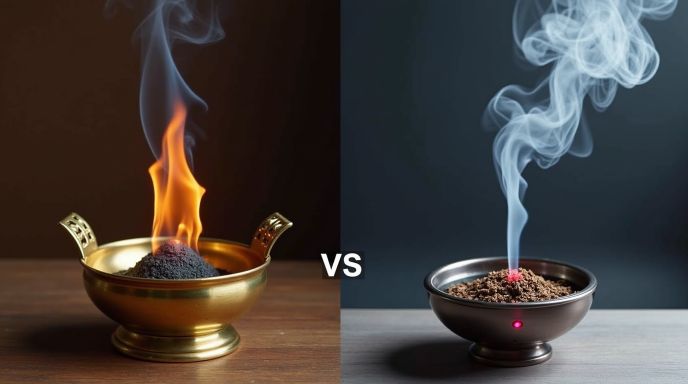
Like all living traditions, Arabian perfume hospitality is adapting to modern realities while maintaining its essential spirit.
Technology Integration
Electric burners have revolutionized bakhoor use. Instead of lighting charcoal and waiting 15 minutes, you plug in an electric burner and it’s ready in 2 minutes. Busy families love this convenience.
Smart home scenting systems are emerging in luxury Gulf homes. Automated diffusers can release fragrance on schedules or be controlled via smartphone. Some systems allow different scents in different rooms simultaneously.
Online perfume shopping has exploded. Traditional perfume buying involved visiting souks and spending hours testing scents. Now, reputable brands ship internationally, making authentic Arabian perfumes accessible worldwide.
Social media influence is strong. Instagram and TikTok are full of Arabian perfume content, teaching younger generations about traditions while also showcasing modern adaptations and products.
Sustainability Concerns
The environmental impact of perfume traditions is gaining attention:
Agarwood (oud) trees are endangered. Overharvesting has decimated wild populations. Some countries now regulate oud trade, and certification systems are emerging for sustainable sources.
Plantation-grown oud is increasing. While traditional perfume lovers debate whether farmed oud matches wild oud’s quality, it offers a sustainable alternative.
Synthetic oud is controversial. Some argue synthetic alternatives preserve wild trees. Others say nothing replaces authentic oud and synthetics disrespect tradition.
Eco-friendly packaging is appearing more in Arabian perfume brands, especially those targeting younger, environmentally conscious consumers.
The perfume community is wrestling with how to maintain beloved traditions while protecting the natural resources that make them possible.
Generational Changes
Younger Arabs maintain perfume hospitality but adapt it:
Time-saving shortcuts: Using electric burners, pre-made bakhoor instead of custom blends, sometimes perfuming only main rooms instead of the entire home.
Selective formality: Reserving elaborate rituals for truly special occasions rather than every guest visit.
Cross-cultural fusion: Incorporating Western perfume elements alongside traditional Arabian scents, creating hybrid preferences.
Maintained core values: Despite modifications, young Gulf Arabs still view perfume hospitality as essential to their cultural identity. They’re finding ways to honor tradition within modern lives rather than abandoning it.
Global Influence
Arabian perfume hospitality is spreading beyond Arab communities:
International hotels worldwide are adopting signature scenting practices inspired by Arabian traditions.
Luxury brands increasingly incorporate oud and Middle Eastern fragrance elements, bringing these scents to global audiences.
Expat communities in Gulf countries often adopt perfume hospitality practices, recognizing the cultural value and enjoying the sensory richness.
Western boutique hotels sometimes offer “Arabian-inspired” experiences including bakhoor scenting for guests.
The tradition that began in desert tents thousands of years ago now influences hospitality industries on every continent.
Conclusion
Arabian perfume hospitality isn’t just about smelling good. It’s about something far more profound—the sacred act of honoring another human being.
When an Arab host spends hours perfuming their home before you arrive, burns expensive bakhoor to welcome you, offers you precious oud to wear, and perfumes you again as you leave, they’re saying something that transcends words. They’re saying: “You matter. Your presence in my home is a blessing. I’ve invested my time, money, and care to create beauty for you. You are worthy of my very best.”
This is karam—the philosophy of generous hospitality that has defined Arab culture for millennia. It’s rooted in religious teachings, historical Bedouin survival practices, and a deeply held belief that welcoming the stranger and honoring the guest is one of life’s highest purposes.
For visitors experiencing this tradition, the appropriate response is simple: receive graciously. Allow yourself to be welcomed. Appreciate the effort. Carry the lingering scent home as a beautiful memory. And perhaps, in your own way, find opportunities to welcome others with such abundant generosity.
For those from Arab cultures, these traditions are precious inheritance. As life speeds up and modernizes, the temptation to cut corners grows. But perhaps the very pace of modern life makes these rituals more important, not less. Taking time to properly welcome guests becomes a radical act—choosing human connection and cultural continuity over efficiency.
The smoke rising from the bakhoor burner carries more than fragrance. It carries history, faith, generosity, and the beautiful message that has echoed through Arab homes for thousands of years: “Welcome. You are honored here. You belong.”
Frequently Asked Questions
1. What is the connection between Arabian perfume and hospitality?
In Arab culture, perfume is central to hospitality because it represents generosity, respect, and spiritual purity. Welcoming guests with bakhoor (incense) and offering them premium scents shows that you value them enough to share your best. The tradition goes back thousands of years to Bedouin customs where honoring guests was a sacred duty. Today, perfume remains the primary way Arabs create welcoming environments and demonstrate the cultural value of karam (generous hospitality).
2. How do you properly receive bakhoor as a guest?
When your host approaches with the bakhoor burner (mabkhara), lean forward slightly and allow the smoke to reach your face, hair, and clothing. Many guests cup their hands and draw the smoke toward themselves, then gesture as if washing their face with it. The process takes 30-60 seconds. Smile, make eye contact with your host, and show appreciation. Never refuse unless you have a serious medical reason—even brief acceptance is better than declining, which can be seen as rejecting your host’s generosity.
3. What if I’m allergic to strong perfumes but visiting an Arab home?
Contact your host before your visit if possible: “I’m so looking forward to experiencing your hospitality, but I have a severe allergy to smoke and strong fragrances. Is there any way we can manage this?” Most hosts will accommodate by using lighter scents, perfuming before you arrive rather than during your visit, or offering rose water instead of smoking bakhoor. Arabs value guest comfort—your host would rather adjust the tradition than make you physically uncomfortable.
4. How much should I spend on perfume to gift a host?
Budget $50-$100 for thanking someone for their hospitality. Business or formal occasions warrant $100-$300. The relationship matters more than the exact amount—a thoughtfully chosen $50 attar oil from a reputable brand like Ajmal or Abdul Samad Al Qurashi is better than a carelessly selected expensive option. Quality always trumps price. Presentation also matters—ensure beautiful wrapping and present with both hands or your right hand only.
5. Is it rude to refuse perfume offerings in Arab culture?
Yes, refusing can be quite rude unless you have a legitimate medical reason. The host has invested significant money and effort to welcome you with these fragrances. Declining suggests you’re rejecting their generosity and hospitality itself. Even if the scent isn’t your personal preference, accepting graciously honors your host’s cultural traditions. Think of it like refusing to shake someone’s hand—it’s technically possible but sends a negative message about the relationship.
6. Do all Arab countries use perfume in hospitality the same way?
No, significant regional variations exist. Gulf States (Saudi Arabia, UAE, Kuwait) practice the most elaborate and expensive perfume hospitality, with heavy oud emphasis. The Levant region (Lebanon, Syria, Jordan) uses lighter, more floral scents like rose water. North Africa blends Arab traditions with Berber influences, favoring amber and musk. Yemen and Oman emphasize frankincense due to being source regions. While the core concept of welcoming guests with fragrance exists throughout the Arab world, the intensity, cost, and specific fragrances vary by region.
7. Can women pass bakhoor to male guests?
This depends on the cultural context and conservatism of the setting. In traditional, gender-segregated environments, women typically welcome female guests and men welcome male guests. However, in family settings, a woman can certainly pass bakhoor to male relatives or close family friends. In modern, less conservative homes in cities like Dubai or Beirut, women hosting mixed gatherings might welcome all guests regardless of gender. When in doubt, observe the host family’s dynamics and follow their lead.
8. How long does the perfume hospitality ritual typically take?
For a casual family visit, perfume rituals add about 5-10 minutes total. For formal guest visits, expect 20-30 minutes across multiple perfuming moments (arrival, possibly after meals, departure). This doesn’t include the hours the host spent preparing the home beforehand. Remember, Arab hospitality isn’t meant to be quick—the time investment itself shows respect. A proper formal visit can easily last 3-4 hours total, with perfume rituals woven throughout. Rushing this process would be disrespectful to the tradition and the host’s efforts.
9. What’s the difference between using perfume for hospitality vs. personal use?
Personal perfume use in Arab culture is about individual expression, grooming, and religious observance. Hospitality perfume use is about honoring others and creating welcoming environments. The differences: hospitality fragrances are often more expensive and of higher quality; bakhoor (smoking incense) is used for hospitality but not typically for personal perfuming alone; hospitality involves sharing your perfume collection with guests, not just wearing it yourself; the spiritual dimension is even stronger—you’re creating sacred space for others, not just preparing yourself.
10. How are hotels in Dubai using traditional perfume hospitality?
Luxury Dubai hotels like the Burj Al Arab, Emirates Palace, and Atlantis The Palm have adopted traditional perfume hospitality as a signature element. They pump custom-created fragrances (often containing oud and rose notes) through HVAC systems in lobbies and common areas. They offer in-room bakhoor burning services, especially for VIP guests. Welcome amenities often include miniature bottles of the hotel’s signature scent. Some hotels station staff in traditional dress to offer perfume to guests at check-in. These practices blend ancient Arabian hospitality traditions with modern luxury hotel branding, creating memorable sensory experiences that distinguish Gulf hotels from properties elsewhere in the world.


