

Imagine stepping into a grand mosque just before Friday prayers. The air is thick with an exotic, woody fragrance that seems to wrap around you like a warm embrace. That scent—deep, mysterious, and somehow sacred—is oud. For thousands of years, Arabian perfumes have been more than just pleasant smells. They’ve been bridges to the divine, tools for worship, and essential parts of the most important moments in people’s lives.
Whether you’re curious about Islamic traditions, Christian practices, or simply want to understand why these ancient scents still matter today, this guide will take you on a journey through the fascinating world of Arabian perfume in religious ceremonies. You’ll discover how a simple fragrance can transform a space, elevate a prayer, and connect us to something greater than ourselves.
- Where Did Arabian Perfume Traditions Begin?
- Why Do These Fragrances Create Spiritual Experiences?
- What Makes Arabian Perfumes Special for Ceremonies?
- How Does Islam Honor Scent in Worship?
- How Do Christian Traditions Use Arabian Scents?
- Do Other Religions Use Arabian Perfumes?
- How Do You Properly Use Perfumes in Religious Ceremonies?
- How Do Practices Differ Across the Middle East?
- How Are Ancient Traditions Changing Today?
- What Are the Unspoken Rules?
- How Do You Choose Quality Ceremonial Perfumes?
- Can You Create Ceremonial Perfumes at Home?
- Conclusion
- Frequently Asked Questions
Where Did Arabian Perfume Traditions Begin?
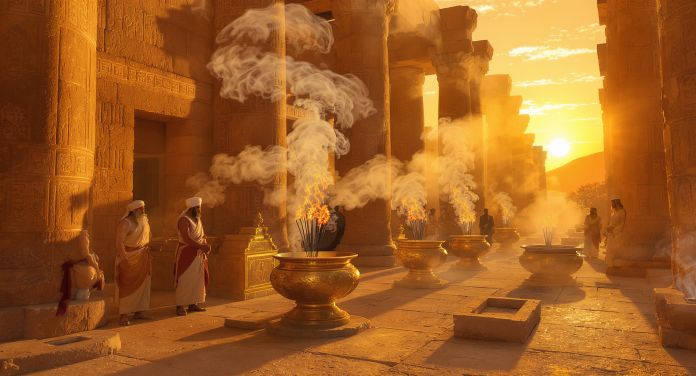
Have you ever wondered why perfume feels so sacred in Middle Eastern cultures? The answer lies buried in history, stretching back more than 3,000 years.
The Mesopotamian Connection
Long before smartphones and modern life, ancient civilizations in Mesopotamia (modern-day Iraq) were already masters of fragrance. Around 3,000 BCE, priests burned aromatic resins in temples to honor their gods. They believed the smoke carried their prayers upward to the heavens. Think about that—people have been using scent in worship for over five millennia!
These early perfume-makers created what we call the Incense Route, a network of trade paths that connected Arabia, Africa, and Asia. Merchants carried precious frankincense and myrrh across deserts and mountains, making these resins worth more than gold.
Egyptian Influence on Arabian Perfumery
The ancient Egyptians took perfumery to another level. They didn’t just burn incense—they made it a science. When preparing mummies for the afterlife, Egyptian priests used myrrh and frankincense extensively. They believed these scents would help the soul travel safely to the next world.
Egyptian temples always smelled divine (literally!). Priests burned frankincense during morning rituals to awaken the gods. They anointed statues with perfumed oils. Every religious moment had its own special scent. This tradition deeply influenced Arabian practices that came later.
The Arabian Peninsula as the Perfume Crossroads
Why did Arabia become the heart of perfume culture? Geography gave them a huge advantage. The Arabian Peninsula sits right between Africa, Asia, and Europe. It was the perfect meeting point for traders from all directions.
But there’s more. Arabia had something even better—the raw materials. Frankincense trees grew wild in Oman and Yemen. The climate created perfect conditions for producing oud. Arabia wasn’t just a place where perfumes passed through. It was where they were born.
Why Do These Fragrances Create Spiritual Experiences?
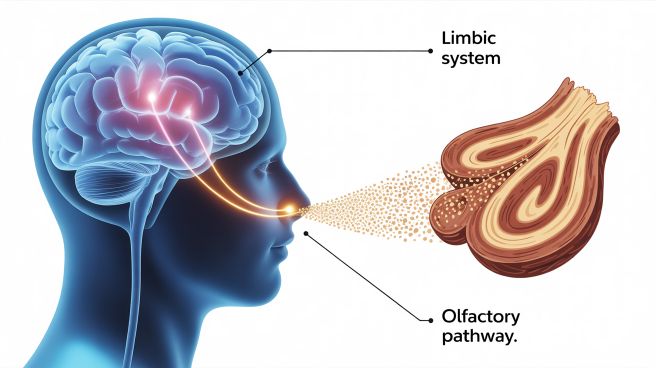
Here’s a question worth exploring: Why does smell affect us so differently from our other senses?
The Brain-Scent Connection
Scientists have discovered something amazing about how our brains work with smell. When you breathe in a fragrance, it travels directly to your limbic system—the part of your brain that controls emotions and memories. No other sense has this direct connection!
This explains why a certain smell can instantly transport you back to childhood, or why walking into a perfumed mosque can make you feel calm and centered. Your brain literally cannot separate smell from emotion. That’s not just poetry—it’s biology.
For religious practices, this connection is incredibly powerful. When you smell oud during prayer, your brain links that scent with spiritual feelings. Over time, just catching a whiff of oud can put you in a worshipful state of mind, even before you start praying.
Therapeutic Properties of Sacred Ingredients
Modern research backs up what ancient cultures knew instinctively. Frankincense contains compounds called boswellic acids that reduce stress and anxiety. Studies show it can actually change your brain waves, promoting the alpha waves associated with relaxation and meditation.
Oud has similar effects. Its complex chemical profile includes compounds that calm the nervous system. No wonder people feel more peaceful and focused when these scents fill the air during religious ceremonies!
What Makes Arabian Perfumes Special for Ceremonies?
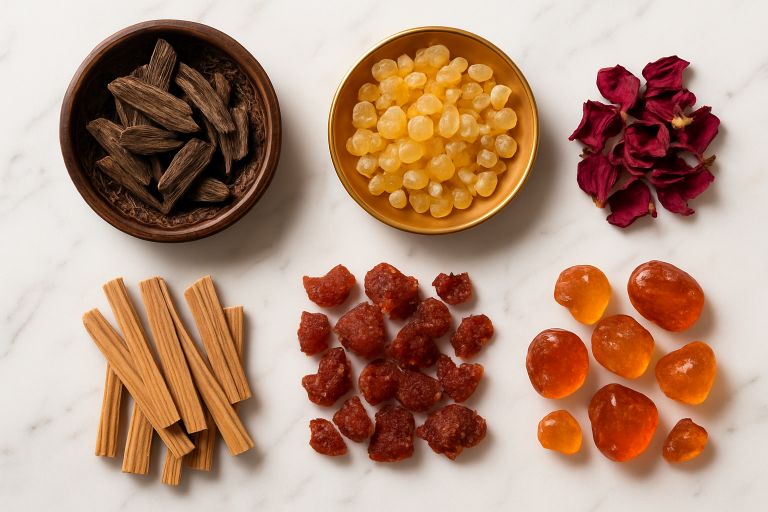
Not all perfumes are created equal. The Arabian perfume tradition uses specific ingredients, each with its own sacred role. Let’s break them down.
Oud (Agarwood) – The King of Scents
If Arabian perfume had royalty, oud would wear the crown. But what exactly is it?
Oud comes from a fascinating natural process. When certain trees in Southeast Asia get infected with a specific mold, they defend themselves by producing a dark, fragrant resin. This resin-saturated wood is agarwood, or oud. The process takes decades, making real oud incredibly rare and expensive.
In Islamic tradition, oud holds special significance. Prophet Muhammad reportedly said that oud was his favorite fragrance. Historical records show he used it regularly, especially before prayers. Today, the Kaaba in Mecca is perfumed with oud up to ten times daily—that’s how sacred this scent is considered.
The smell? Imagine walking through an ancient forest after rain. Oud is deep, woody, slightly sweet, and incredibly complex. It has an earthy richness that seems to anchor you to the moment. Good quality oud can cost anywhere from $100 to over $10,000, depending on its age and origin.
Bakhoor – The Ceremonial Incense
Walk into any Arabian home during a special occasion, and you’ll likely encounter bakhoor. But what is it?
Bakhoor is wood chips that have been soaked in fragrant oils and mixed with natural ingredients like sandalwood, resin, or essential oils. When burned on charcoal or in an electric burner, it releases thick, aromatic smoke.
What makes bakhoor special is personalization. Many families create their own signature blend, passed down through generations. Your grandmother might have her recipe, your mother might adjust it slightly, and one day you might add your own touch. It’s a living tradition.
There are bakhoor blends for every occasion—light florals for daily use, heavy oud-based blends for important guests, special formulations for Ramadan. In Gulf countries, burning bakhoor three times daily is completely normal!
Frankincense – The Divine Resin
Remember the story of the three wise men bringing gifts to baby Jesus? Frankincense was one of those gifts, and for good reason.
This golden resin comes from Boswellia trees in Oman, Yemen, and Somalia. When burned, it produces a clean, slightly lemony, pine-like smoke. Ancient texts describe it as the “sweat of the gods.”
Both Christianity and Islam revere frankincense. Christian churches burn it during high holy days like Christmas and Easter. The rising smoke symbolizes prayers ascending to heaven. In Islamic tradition, frankincense has been used in mosques for centuries, creating an atmosphere of purity and reverence.
Different grades exist, from the basic commercial variety to premium “silver” and “green” frankincense that can cost hundreds of dollars per pound.
Myrrh – The Anointing Oil
Myrrh has a darker history than frankincense—literally. This reddish-brown resin has long been associated with death, burial, and eternal life.
Ancient Egyptians used myrrh to embalm bodies. In Christian tradition, myrrh was brought to Jesus at his birth, foreshadowing his death. Nicodemus brought myrrh to anoint Jesus’s body after the crucifixion. This connection makes myrrh especially significant during Easter ceremonies.
The scent is earthy, slightly bitter, and deeply medicinal. It’s less commonly used alone but often blended with frankincense or oud to create complex ceremonial fragrances.
Rose, Musk, Amber & Sandalwood
These supporting players complete the Arabian perfume palette:
Rose: Damascus and Taif roses produce some of the world’s finest rose oils. Rose water is sprinkled on guests as a welcome gesture and used during weddings. Its sweet, floral scent represents love and celebration.
Musk: Originally from musk deer, today mostly synthetic for ethical reasons. It adds warmth and longevity to perfume blends. The Prophet Muhammad praised musk, saying it was the finest of fragrances.
Amber: Not from the fossilized tree resin you might think, but a warm, sweet blend usually containing ambergris. It adds richness and depth to perfumes, especially popular in winter months.
Sandalwood: This creamy, smooth scent has calming properties. It’s used across multiple religions—Islam, Hinduism, and Buddhism all incorporate sandalwood in worship.
How Does Islam Honor Scent in Worship?
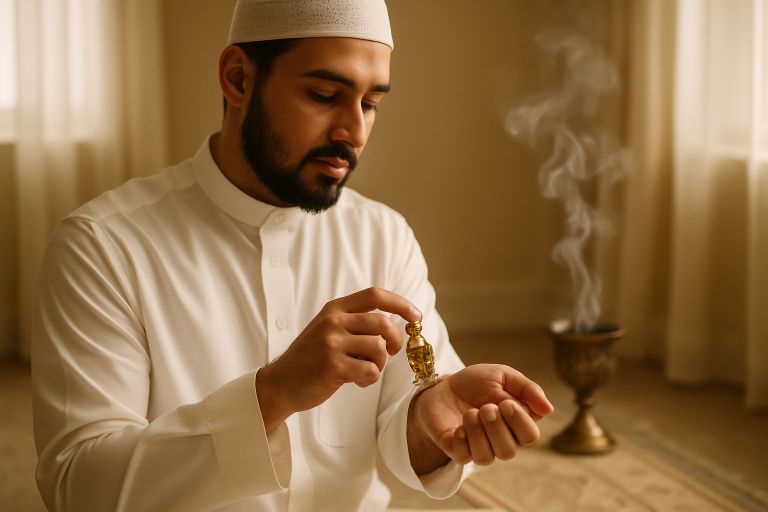
Islam has perhaps the most developed perfume culture of any religion. Let’s explore how fragrance weaves through Islamic life.
Daily Prayer Rituals (Salah)
Five times a day, Muslims worldwide stop to pray. And for many, perfume is an essential part of preparation.
The tradition of applying itr (perfume oil) before prayer goes back to Prophet Muhammad himself. He said that anyone who takes a bath on Friday, applies perfume, and goes to prayer will have their sins forgiven. That’s a powerful motivation!
The practice is simple but meaningful. After performing ablutions (wudu), many Muslims apply a small amount of attar oil to their wrists, neck, and behind the ears. The scent helps create mental separation from daily life and shift into a spiritual state.
Friday prayers (Jumu’ah) receive special attention. Men are specifically encouraged to wear their best fragrances. Walking into a mosque on Friday, you’ll notice a rich blend of oud, musk, and amber from hundreds of worshippers—it’s an olfactory symphony.
Ramadan and Eid Celebrations
During Ramadan, the holy month of fasting, perfume takes on extra significance. Bakhoor is burned more frequently to purify homes and create peaceful environments for prayer and Quran reading.
When the fast breaks each evening at iftar, families gather in fragrant homes. The combination of cooking aromas and bakhoor smoke creates powerful memories. Years later, those who grew up in Muslim households say they can still remember exactly how their home smelled during Ramadan.
Eid celebrations—both Eid al-Fitr (end of Ramadan) and Eid al-Adha (Festival of Sacrifice)—are perfume extravaganzas. Everyone wears their finest scents. Hosts burn expensive bakhoor blends. Perfume is gifted in beautifully wrapped bottles. It’s considered almost disrespectful to attend Eid prayers without wearing fragrance.
The Hajj Pilgrimage
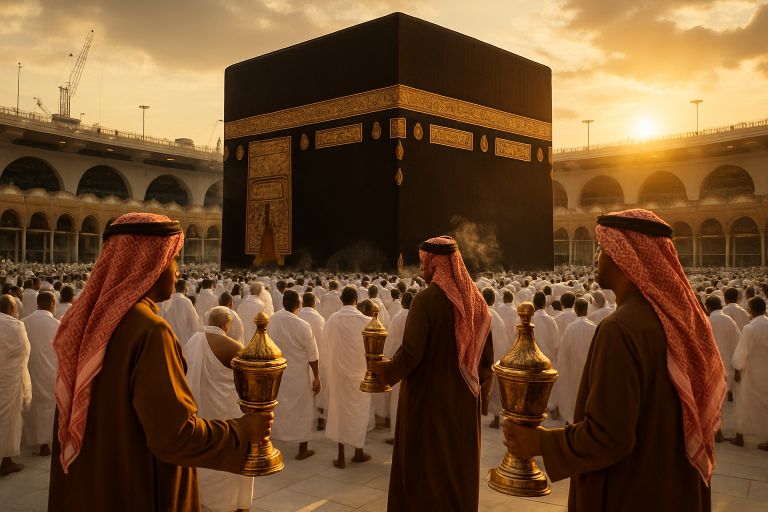
The annual pilgrimage to Mecca involves some interesting perfume rules. During the state of ihram (ritual purity), pilgrims are forbidden from wearing scented products. This includes perfume, scented soaps, and scented oils.
Why? The restriction creates equality. Rich or poor, everyone appears the same without personal fragrances. It’s a powerful symbol of standing equal before God.
But here’s the fascinating part—while pilgrims can’t wear perfume, the Kaaba itself is perfumed up to ten times daily with the finest oud and rose oils. The Grand Mosque employs dedicated teams just to maintain its fragrant atmosphere. Imagine that commitment to scent!
After completing the pilgrimage, wearing perfume again becomes a celebration. Many pilgrims purchase special Zamzam water perfumes or Meccan oud as souvenirs.
Weddings and Nikah Ceremonies
Arabian weddings are multi-day celebrations where perfume plays a starring role.
The henna night (the evening before the wedding) centers around the bride. Female relatives gather to apply intricate henna designs while bakhoor burns continuously. The smoke is waved over the bride’s clothing and hair, perfuming everything she’ll wear.
Some families have “perfume trays”—beautifully decorated displays with multiple fragrance options. Guests perfume themselves throughout the celebration. The bride often receives dozens of perfume bottles as gifts.
The groom’s preparations are equally fragrant. He applies layers of attar oils and has his thobe (traditional garment) fumigated with bakhoor. When the couple finally comes together, the mingling of their carefully chosen scents symbolizes their union.
Birth and Naming Ceremonies (Aqiqah)
When a baby arrives, perfume welcomes them to the world. Many families perfume the baby’s blankets and clothing with gentle, light fragrances. The nursery might have a subtle bakhoor blend burning to create a calm environment.
The aqiqah ceremony (held seven days after birth) includes perfuming the baby’s head after the traditional hair shaving. Rose water or diluted attar oils are common choices. It’s believed this practice brings blessings and protection.
Funeral Rites (Janazah)
Even in death, Muslims honor the importance of fragrance. The body is washed and sometimes anointed with rose water or diluted perfumes before burial. Camphor is traditionally used as well.
During memorial gatherings, light, respectful fragrances are appropriate. Heavy, celebratory scents would be considered disrespectful. The goal is to create an atmosphere of peace and reflection, not festivity.
How Do Christian Traditions Use Arabian Scents?
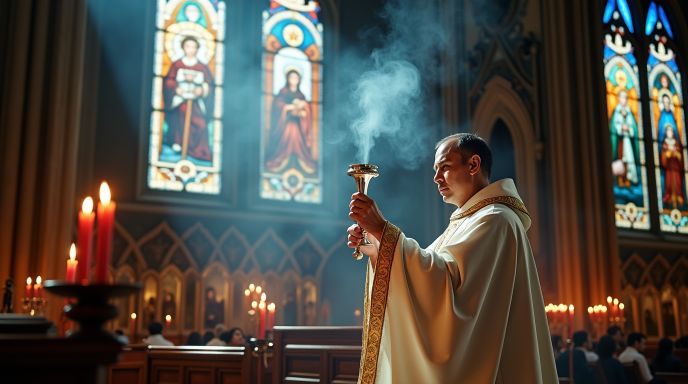
Christianity’s relationship with Arabian perfumes runs deep, starting with the religion’s very foundation.
Biblical Foundations
The most famous perfume story in Christianity? The three wise men presenting gold, frankincense, and myrrh to baby Jesus. Each gift held meaning: gold for kingship, frankincense for divinity, and myrrh for the sacrifice to come.
But Arabian perfumes appear throughout the Bible. The Old Testament describes elaborate recipes for temple incense, including frankincense and other aromatics. King Solomon received gifts of spices and perfumes. The Song of Songs is filled with fragrant imagery—myrrh, frankincense, and oud (called “aloes” in translation).
Catholic and Orthodox Practices
Walk into a Catholic or Orthodox church during high mass, and you’ll likely encounter thuribles—metal censers swinging from chains, releasing clouds of frankincense smoke.
This practice goes back centuries. The smoke serves multiple purposes: it symbolizes prayers rising to God, it purifies the sacred space, and it creates a mystical atmosphere that helps worshippers feel transported beyond the everyday world.
Christmas and Easter services use the most frankincense. On these holy days, priests might bless the congregation by waving the thurible over them, enveloping everyone in sacred smoke.
Myrrh appears in anointing oils used for baptism, confirmation, and ordination. When a Catholic priest makes the sign of the cross on a baby’s forehead during baptism, he’s using oil that likely contains myrrh—connecting that child to the same substance used to anoint Jesus.
Middle Eastern Christian Communities
Coptic Christians in Egypt and Maronite Christians in Lebanon maintain especially strong perfume traditions. Living in the same culture that gave birth to these practices, they never stopped using them.
Coptic churches burn massive amounts of frankincense during services. The liturgy itself contains passages about the significance of incense. Maronite Christians use rose water extensively, sprinkling it during celebrations and blessing ceremonies.
These communities show that Arabian perfume traditions aren’t exclusively Islamic—they’re deeply Middle Eastern, shared across faiths.
Do Other Religions Use Arabian Perfumes?
While Islam and Christianity dominate the Arabian perfume conversation, other faiths have their own connections.
Hindu Practices
Sandalwood plays a central role in Hindu worship. Ground into paste, it’s applied to foreheads during puja (worship). Sandalwood incense burns in temples constantly. The scent is believed to calm the mind and invite the divine.
Interestingly, much of the sandalwood trade historically moved through Arabian ports, connecting Hindu practices to Middle Eastern perfume culture.
Buddhist Meditation
Buddhist monks use incense to mark the beginning and end of meditation sessions. The scent helps practitioners enter mindful states. While traditionally East Asian varieties are most common, some Buddhist centers now incorporate Arabian incense like frankincense for its meditative properties.
How Do You Properly Use Perfumes in Religious Ceremonies?
Understanding the theory is one thing. But how do you actually do it? Let’s get practical.
The Traditional Layering Method
In Gulf countries, applying perfume isn’t a quick spray. It’s a ritual that can take 30 minutes or more.
Step 1: Apply attar oils to pulse points After showering, apply concentrated perfume oil (attar) to your wrists, behind your ears, and on your neck. These warm areas help the scent develop. Use just a drop or two—attar is incredibly concentrated.
Step 2: Fumigate clothing with bakhoor This is the most distinctive Arabian practice. Place your clothing (traditional thobe or abaya) over a special stand above a burning bakhoor burner. Let the smoke penetrate the fabric for 5-10 minutes. Your clothes will absorb the fragrance and release it slowly throughout the day.
Step 3: Apply alcohol-based perfume Finally, spray a traditional perfume over your clothing and body. The three layers work together—the oil provides depth and longevity, the bakhoor adds smokiness, and the spray adds freshness.
Burner Selection and Setup
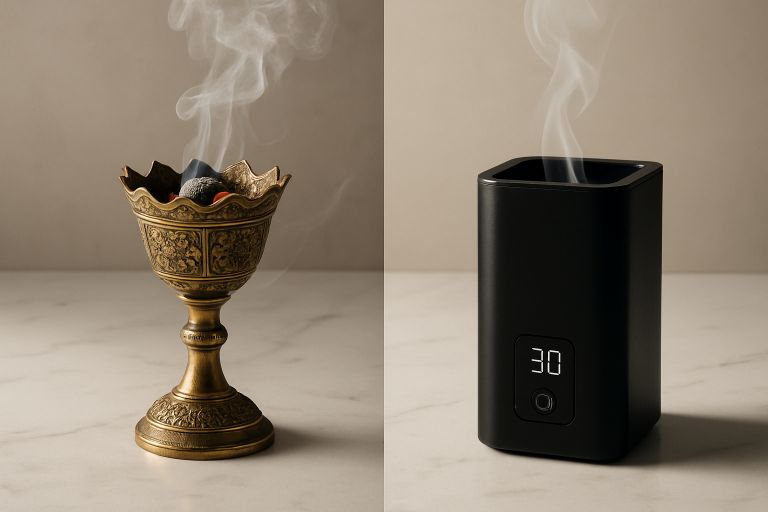
Traditional burners use charcoal discs. You light the charcoal, wait 10-15 minutes for it to glow red, then place bakhoor chips on top. The heat releases the fragrance without burning the wood itself.
Modern electric burners have changed the game. They heat up in 2 minutes and maintain consistent temperature. Many busy professionals now use electric burners because the old method is simply too time-consuming.
Safety tip: Never leave burners unattended. Use them on heat-resistant surfaces, away from curtains and fabrics.
Scenting Sacred Spaces
Before prayer time, many families burn bakhoor throughout their home. The practice serves practical and spiritual purposes—it freshens the air while creating an atmosphere conducive to worship.
In mosques, trained staff maintain the fragrance level carefully. Too much smoke can be overwhelming; too little loses the sacred atmosphere. It’s a delicate balance.
How Do Practices Differ Across the Middle East?
The Arabian world isn’t monolithic. Perfume preferences vary significantly by region.
Gulf States (Saudi Arabia, UAE, Kuwait)
These countries have the strongest perfume culture. Oud dominates everything. The heavier and more intense, the better. Three-times-daily bakhoor burning is standard.
Luxury matters here. People think nothing of spending thousands on rare aged oud. Perfume isn’t just about smelling nice—it’s a status symbol, a cultural statement, and a spiritual practice all rolled into one.
Levant Region (Syria, Lebanon, Jordan)
Lighter, fresher scents are preferred. Rose and citrus notes appear more frequently. The Christian population means practices blend Islamic and Christian traditions.
Damascus has been famous for its roses for centuries. Damascene rose water from Syria is considered the finest in the world (though production has been affected by recent conflicts).
North Africa (Egypt, Morocco)
Amber and musk are favorites here. Egyptian perfume traditions go back to ancient times, giving them a unique flavor. Moroccan attars often include local ingredients like orange blossom.
Burial customs in North Africa sometimes include wrapping the body in cloth infused with perfume—a practice with roots in ancient Egyptian mummification.
How Are Ancient Traditions Changing Today?
Tradition meets modernity in interesting ways.
Fast-Paced Modern Life
Nobody has 30 minutes for perfume application anymore—except on special occasions. Electric burners have become incredibly popular because they’re so convenient. Ready-made bakhoor blends have largely replaced custom family recipes for everyday use.
Travel-size attar bottles fit in pockets for quick reapplication throughout the day. Some companies now make scented wipes for on-the-go perfuming.
Western Muslim Communities
Muslims living in Europe, North America, and Australia face unique challenges. Where do you buy authentic oud in Minnesota? How do you explain bakhoor smoke to fire-sensitive building alarms?
Online shopping has helped tremendously. Specialized retailers now ship worldwide. YouTube tutorials teach second-generation Muslims traditional practices their parents never formally explained.
Some Western mosques have had to limit incense use due to fire codes and congregants with allergies. It’s an ongoing negotiation between tradition and practicality.
Sustainability Concerns
Here’s an uncomfortable truth: agarwood trees are endangered. Unsustainable harvesting has depleted wild populations. The Convention on International Trade in Endangered Species now regulates oud trade.
This has sparked important conversations. Do sustainable plantation-grown alternatives capture the same sacred quality? Are synthetic ouds acceptable for religious use? Opinions vary widely.
Forward-thinking perfume houses now emphasize sustainable sourcing, but premium wild oud remains available (at astronomical prices) for those who can afford it and don’t mind the ethical questions.
What Are the Unspoken Rules?
Every culture has unstated expectations. Here’s what you should know.
Do’s
Time your application correctly. Apply perfume after cleansing but before dressing. This shows you’ve made effort and consideration.
Match intensity to the occasion. Light, fresh scents for casual gatherings. Heavy, rich oud-based fragrances for important ceremonies.
Respect sensitivities. Some people have allergies or fragrance sensitivities. If someone politely mentions this, don’t take offense.
Don’ts
Never use alcohol-based perfumes during ihram. If you’re on Hajj, this is a serious violation of ritual purity rules.
Avoid overpowering scents. Yes, Arabian culture loves strong perfumes, but there’s still such a thing as too much. You should create a pleasant aura, not a choking cloud.
Women should be careful with strong perfumes in public. Islamic tradition encourages modesty, and this extends to scent. Wearing heavy perfumes outside the home can be considered inappropriate in conservative communities.
Common Mistakes to Avoid
Don’t use synthetic “oud” fragrances from Western brands for genuinely sacred occasions. They’re fine for everyday wear, but important ceremonies call for authentic ingredients.
Clean your burners regularly. Old residue creates unpleasant burned smells that ruin the fragrance of new bakhoor.
Don’t assume all Arabian perfume practices are religious. Some are cultural, some are social, some are just about smelling nice. Understanding the difference shows respect and awareness.
How Do You Choose Quality Ceremonial Perfumes?
Not all perfumes are created equal. Here’s how to spot quality.
Identifying Authentic Oud
Real oud is expensive—period. If someone offers you “pure oud oil” for $20, it’s fake. Genuine oud starts around $100 per gram and goes up from there.
Look for these signs:
- Dark color: Real oud oil is deep brown or black
- Thick consistency: It should be viscous, almost syrupy
- Complex smell: Cheap oud smells one-dimensional; real oud reveals different notes as it develops on your skin
- Longevity: Authentic oud lasts 12+ hours easily
Bakhoor Selection
Occasion matters. Daily use bakhoor should be pleasant but not overwhelming. Guest bakhoor should be impressive. Ramadan bakhoor is often specifically blended for long evening gatherings.
Store bakhoor in airtight containers away from direct sunlight. It can last years if properly stored.
Where to Buy
Traditional souks offer the full experience—bargaining, testing multiple options, learning from experts. But quality varies wildly, and tourists often get overcharged.
Online retailers like Swiss Arabian, Ajmal, and Abdul Samad Al Qurashi ship internationally. You lose the testing experience, but prices are often better.
Western alternatives exist for basic needs. Frankincense is available at many metaphysical shops. Some mainstream retailers now carry “oud-inspired” fragrances, though these are usually synthetic.
Can You Create Ceremonial Perfumes at Home?
Absolutely! Here’s a simple place to start.
Basic Bakhoor Recipe
Ingredients:
- 2 cups wood chips (sandalwood is ideal)
- 1/4 cup frankincense resin powder
- 2 tablespoons rose water
- 10 drops oud oil
- 5 drops rose essential oil
Instructions:
- Mix wood chips and frankincense powder in a bowl
- Add rose water slowly while mixing
- Add essential oils drop by drop
- Mix thoroughly until evenly distributed
- Spread on a tray and air dry for 24-48 hours
- Store in an airtight container
Burn a small piece on charcoal or in an electric burner. Adjust the recipe to your preference—more frankincense for a cleaner scent, more oud for heaviness.
Attar Oil Blending
Use jojoba oil or fractionated coconut oil as a carrier (about 90% of the mixture). Add your chosen essential oils—perhaps rose, sandalwood, and a touch of synthetic oud. Let the blend sit for at least a week before using. The oils will marry and mellow together.
Traditional attar making is much more complex, involving distillation and aging in special containers. But home blending can create beautiful, usable perfumes for personal ceremonies.
Conclusion
Arabian perfume in religious ceremonies isn’t just about pleasant smells. It’s about connection—to history, to faith, to community, to something greater than ourselves.
For thousands of years, humans have understood something profound: scent has power. It can transport us, transform spaces, and create bridges between the physical and spiritual worlds. Whether you’re Muslim preparing for Friday prayers, a Christian experiencing Christmas mass, or simply someone curious about these ancient traditions, the fragrances remain the same—oud, frankincense, myrrh, rose.
These scents have witnessed empires rise and fall. They’ve been present at births, weddings, deaths, and every sacred moment in between. They’ve carried prayers to heaven and welcomed souls to earth. And they continue doing so today, adapted for modern life but rooted in timeless tradition.
Maybe that’s the real miracle of Arabian perfume—in our fast-paced, digital world, these ancient scents still have the power to make us pause, breathe deeply, and remember there’s more to life than what we can see and touch.
The next time you catch a whiff of oud or frankincense, you’ll know you’re experiencing something truly sacred—a living tradition that connects you to billions of people across thousands of years, all seeking the same thing: a moment of peace, a touch of the divine, and a fragrance that lifts the soul.
Frequently Asked Questions
1. What is the difference between oud and bakhoor?
Oud is pure agarwood or agarwood oil—the raw material. Bakhoor is a blend of wood chips, oud, and other ingredients designed to be burned as incense. Think of oud as an ingredient and bakhoor as a recipe that might include oud along with other fragrances.
2. Can non-Muslims use Arabian perfumes for spiritual practices?
Absolutely! While many Arabian perfumes have special significance in Islam, they’re not exclusive to Muslims. Christians have used frankincense for centuries. Anyone can incorporate these scents into meditation, prayer, or personal rituals. The key is respectful use—understanding the cultural significance while adapting to your own practices.
3. How long does bakhoor smoke last in a room?
The visible smoke lasts about 15-30 minutes depending on how much you burn. But the fragrance lingers for hours—sometimes 6-8 hours or more. Fabrics especially absorb and hold the scent. This is why people fumigate their clothing rather than just perfuming the room.
4. Is it mandatory to wear perfume for Friday prayers?
Not mandatory, but strongly recommended in Islamic tradition. Prophet Muhammad encouraged men to apply their best fragrances before Friday prayers. It’s considered part of showing respect for the congregation and for worship. That said, if someone has allergies or sensitivities, that takes priority.
5. What did Prophet Muhammad say about perfume?
Several hadith (sayings) record his love of fragrance. He said, “He who takes a bath on Friday, applies perfume if he has any, wears the best of his clothes, then goes to the mosque… will have all his sins forgiven between that Friday and the next.” He specifically loved oud and musk, and he said he never refused a gift of perfume.
6. Are there any perfumes forbidden in Islam?
Alcohol-based perfumes present a gray area. During the state of ihram (Hajj pilgrimage), all perfumes are forbidden. Some scholars say alcohol-based perfumes are always impermissible; others say they’re fine since the alcohol isn’t being consumed. Most Muslims use alcohol-based perfumes without issue. Natural attars avoid this question entirely.
7. How do you store oud to preserve its quality?
Keep oud oil in dark glass bottles, tightly sealed, away from light and heat. Interestingly, oud actually improves with age when stored properly—like fine wine. Oud wood chips should be kept in airtight containers. Some collectors age their oud for years before using it, allowing the scent to mellow and deepen.
8. Can women wear strong perfumes outside the home in Islamic tradition?
This varies by culture and interpretation. Traditional Islamic guidance suggests women should avoid strong perfumes in public spaces to maintain modesty. However, practices differ widely. In many modern Muslim communities, women freely wear perfume. In more conservative areas, strong fragrances are reserved for home and women-only gatherings.
9. What’s the most sacred perfume in Christianity?
Frankincense holds the top position due to its biblical significance and continuous use in liturgy. The fact that it was given to Jesus as a baby, combined with its use in both Old Testament temple worship and modern church services, makes it Christianity’s most symbolically important scent.
10. How much should authentic oud cost?
Prepare for sticker shock! Real oud oil ranges from $100-$500 per gram for decent quality, up to several thousand dollars per gram for premium aged varieties. A 3ml bottle of genuine oud typically costs $50-$300. If the price seems too good to be true, it’s probably synthetic or heavily diluted. For ceremonial use, many people reserve expensive oud for special occasions and use more affordable alternatives daily.


