

Have you ever sat down to create something—a painting, a piece of writing, a new design—and felt completely stuck? Your mind feels foggy. Ideas won’t come. The blank page or canvas just stares back at you.
Then something shifts. Maybe you walk past a certain scent, or catch a whiff of perfume on your wrist. Suddenly, your mind opens up. Ideas start flowing. Your hands know what to do. You’re back in your creative zone.
This isn’t coincidence. For over a thousand years, Middle Eastern poets, scholars, calligraphers, and artists have used Arabian perfumes to unlock their creativity. Persian writers burned oud wood while composing poetry. Arabian calligraphers applied musk before creating sacred texts. Storytellers filled their gathering spaces with bakhoor incense to set the perfect creative atmosphere.
These weren’t just pleasant smells. They were tools—practical methods for accessing deeper creativity, sharper focus, and bolder artistic expression.
Today, we’re bringing those ancient methods into your modern creative practice. Whether you’re a visual artist, writer, musician, designer, or entrepreneur solving problems, Arabian perfumes offer something generic aromatherapy can’t match: natural complexity, cultural wisdom, and proven techniques passed down through generations.
In this guide, you’ll discover eight specific methods for using Arabian perfume to inspire your best creative work. Not vague advice like “smell something nice.” Real techniques you can use today—with specific scents, application methods, and creative situations where each works best.
Ready to unlock creativity you didn’t know you had? Let’s start with why Arabian perfumes work differently than everything else you’ve tried.
Why Arabian Perfumes Work Differently for Creativity
The Arabian Perfume Advantage
Walk into most stores and you’ll find alcohol-based perfumes. Spray them on, and within a few hours, they’re gone. That’s fine if you just want to smell nice for a meeting or date.
But creative work doesn’t happen in two hours. You need sustained focus for three, four, sometimes six hours straight. You need scent that evolves with you as your creative session deepens. You need something that doesn’t disappear right when you hit your flow state.
Arabian perfumes are oil-based. They sit on your skin, warm with your body heat, and release their scent slowly over 12 to 24 hours. This matches how creativity actually works—not in quick bursts, but in long, immersive sessions where you lose track of time.
Plus, the ingredients themselves are different. Oud contains over 300 aromatic molecules. Compare that to typical synthetic fragrances with 50 to 100 molecules. Your brain has more complexity to process, which means deeper engagement and longer-lasting sensory stimulation.
Think of it like the difference between a simple three-note melody and a full symphony. Both are music, but one gives your brain much more to work with.
And here’s what really matters: these methods come from actual cultural tradition. For centuries, creative people in the Middle East have used these exact techniques. We’re not making this up or guessing. We’re sharing what works.
Key Arabian Ingredients for Creativity
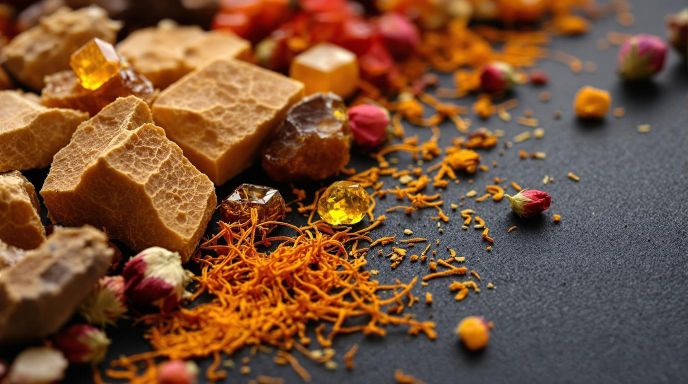
Let’s talk about what’s actually in Arabian perfumes and what each ingredient does for your creative brain.
Oud (Agarwood) is the deep, woody base you’ll find in almost all Arabian perfumes. It creates focus and emotional depth. When you wear oud, your mind settles into sustained attention. It’s perfect for work that requires going deep—writing complex scenes, composing music with layers, or solving problems that need hours of concentration.
Frankincense has been used by scholars and spiritual practitioners for thousands of years. Science now knows why: it contains sesquiterpenes, compounds that help deliver oxygen to your brain. More oxygen means clearer thinking, better memory, and improved cognitive function. If you’ve ever felt mentally sharp after a walk in fresh air, frankincense creates a similar effect.
Amber is warm and grounding. When anxiety or overwhelm threatens to derail your creative session, amber helps you stay steady. It’s like having a calm, supportive friend sitting with you while you work. Artists dealing with perfectionism or fear of failure often find amber incredibly helpful.
Musk boosts confidence and sensuality. It makes you feel bold enough to try new things, experiment with unusual ideas, and express yourself without holding back. Performers love musk. So do entrepreneurs pitching wild ideas. Anytime you need to be daring creatively, musk has your back.
Rose—specifically Arabian Ta’if rose—opens emotional access. If your creative work requires vulnerability (writing memoir, composing emotional music, creating personal art), rose helps you get there. It softens the protective walls we build around tender feelings and makes authentic expression easier.
Saffron is the luxury ingredient. It’s expensive, and wearing it makes you feel valuable. That might sound silly, but creative people often struggle with “who am I to make this art?” thoughts. Saffron shifts your mindset to “my creative work matters and deserves the best.” That psychological shift is powerful.
The Science Behind Arabian Perfume & Creativity
Here’s what happens in your brain when you smell Arabian perfume:
Scent molecules travel through your nose to your olfactory bulb, which connects directly to your limbic system—the part of your brain that controls emotions, memories, and motivation. This pathway bypasses your rational mind completely.
That’s why a single smell can instantly transport you to another time, shift your mood, or unlock a memory you forgot you had. No other sense works this directly.
Natural ingredients create stronger responses than synthetic ones. Your brain evolved over millions of years to recognize natural plant scents. Synthetic fragrances are only about 150 years old. Your nervous system knows the difference, even if you don’t consciously notice it.
The complexity of Arabian perfumes also matters. When your brain processes 300 different aromatic molecules (like in oud), it stays engaged longer. Simple scents get boring fast. Complex scents keep your attention—and attention is the foundation of all creative work.
Finally, there’s the ritual aspect. When you mindfully apply perfume before creative work, you’re telling your brain: “It’s time to create now.” After a few weeks, just smelling that scent will trigger your creative state. This is classical conditioning working in your favor.
The 8 Methods to Inspire Creativity with Arabian Perfume
Method #1: The Morning Creative Ignition Ritual
Purpose: Start your creative day with energized, optimistic inspiration.
Some mornings, you wake up ready to conquer the world. Other mornings, getting started feels like pushing a boulder uphill. This ritual makes every morning feel like the first kind.
The Scent Blend: Use oud combined with either citrus rose or light amber. You want something that’s both grounding (from the oud) and uplifting (from the rose or amber). This combination energizes without making you jittery.
Application Technique: Before you sit down to your creative workspace, apply one to two drops to your pulse points—wrists and neck. Rub your wrists together gently. Cup your hands over your nose (without touching your face) and take three deep, slow breaths.
As you breathe, state your creative intention for the day out loud or in your mind. Something simple: “Today I’ll finish the first draft of chapter three” or “Today I’ll sketch five new concepts” or “Today I’ll compose the bridge for my song.”
Then begin work immediately. Don’t check email, social media, or anything else. The scent and intention create momentum—use it right away.
Best For: Visual artists starting new projects, designers beginning concept work, writers opening a blank document. Anyone who struggles with morning creative energy.
Timing: Use this during your first two hours of the day, whenever that is for you. Night owl who creates at 2 PM? That’s your morning.
Real Example: A graphic designer in Dubai shared this: “I started using oud-rose every morning before opening my design software. After two weeks, just smelling it made me excited to create. My client work improved because I brought fresh energy to every project instead of dragging myself through the day.”
Notice she didn’t see results on day one. It took two weeks for the ritual to fully connect in her brain. Give any method at least seven to ten days before deciding if it works.
Method #2: The Deep Focus Flow State Entry
Purpose: Enter sustained concentration for complex creative work that demands hours of uninterrupted focus.
Flow state is that magical place where time disappears, you forget about everything else, and your best work pours out effortlessly. But getting there isn’t always easy. This method builds a scent bridge into flow.
The Scent Blend: Use oud combined with frankincense, or pure oud alone if you prefer simplicity. This combination creates deep mental clarity and sustained attention. The frankincense delivers oxygen to your brain (through those sesquiterpenes we mentioned), while oud’s complexity keeps you engaged.
Application Technique: Apply the perfume to your pulse points. Then wait five minutes before starting your creative work. Use those five minutes to prepare your space—close unnecessary browser tabs, silence your phone, get water, arrange your materials.
This waiting period matters. You’re letting the scent fill your awareness while your brain transitions from “regular life” to “creative work mode.”
When you’re ready to begin, take three deep breaths while noticing the scent. Then dive into your work.
If your creative session lasts more than three hours, you can reapply after two hours to maintain the scent connection.
Best For: Writers working on novels or long-form articles, composers creating complex pieces, programmers solving difficult problems, strategic thinkers developing business plans. Any work requiring sustained mental effort.
Why It Works: The frankincense literally improves your brain function by increasing oxygen. Meanwhile, oud’s 300+ molecules give your brain enough complexity to stay interested without getting distracted. It’s like background music for your nose—present but not demanding attention.
Real Example: An author in California told me: “I was struggling to write more than an hour before losing focus. I started applying oud-frankincense and waiting five minutes before writing. Now I regularly hit four-hour writing sessions. The scent became my signal: when I smell it, my brain knows it’s deep work time.”
That’s the power of consistent ritual. After several weeks, the scent itself helps trigger the flow state.
Method #3: The Creative Block Breakthrough

Purpose: Break through stuckness, mental blocks, and the frustrating feeling of “nothing’s working.”
You’ve been working on a project for days or weeks. You were making progress, but now you’re stuck. Every idea feels stale. Every attempt falls flat. You’re starting to wonder if you should just quit.
Don’t quit. Change your scent.
The Scent Switching Technique: This method works through contrast. If you usually wear oud-based perfumes, switch to a rose-musk blend. If you typically use rose, switch to heavy oud or oud-amber. The key is choosing something noticeably different from your regular creative scent.
Application: When you realize you’re stuck, stop working completely. Stand up, walk away from your workspace. Apply the new scent to your wrists and neck. Take a five-minute break—walk around, look out a window, stretch.
During this break, your brain gets two things: rest from the stuck problem, and new sensory input from the different scent. Both help break the mental loop you’ve been stuck in.
After five minutes, return to your work. Don’t force yourself to immediately solve the problem. Just show up and see what happens with this new scent accompanying you.
Best For: Any creative person facing blocks, whether you’re a painter staring at a canvas, a writer with paragraph you can’t get right, or an entrepreneur with a problem you’ve been circling for days.
The Science: Novel scents activate different regions of your brain. When you’ve been thinking about a problem the same way repeatedly, you’re using the same neural pathways over and over. A new scent literally engages different areas, which can help you see the problem from a fresh angle.
Real Example: A painter in London shared: “I spent three weeks trying to finish one painting and hating everything I did. Out of frustration, I switched from my usual oud perfume to a rose-amber blend my friend gave me. Within an hour, I saw exactly what the painting needed. It wasn’t the scent magically solving it—it was breaking my stuck mental pattern.”
That’s the perfect way to think about it. The scent doesn’t do the creative work for you. It shifts your state so you can do the work differently.
Method #4: The Emotional Depth Unlock
Purpose: Access vulnerable, authentic creative expression when your work requires emotional honesty.
Some creative work is intellectual—solving problems, designing systems, organizing information. But other creative work requires emotional truth. Writing memoir. Composing songs about real feelings. Painting from personal experience. Creating art that means something deeply personal.
For this kind of work, you need more than focus. You need to feel.
The Scent Blend: Use rose combined with either amber or oud. Rose opens emotional access—it softens the protective walls we build around tender feelings. Amber or oud provides grounding so you don’t get overwhelmed by what comes up.
Application Technique: This is the only method where application location matters differently. Apply one drop to your heart area (center of your chest, over your sternum) and one drop to each wrist.
Before starting your creative work, sit quietly for a minute. Place your hand over your heart and take three slow breaths. Notice the scent and any feelings that surface. Don’t judge them—just notice.
Then begin your creative work. If you’re writing, let yourself write without editing. If you’re creating visual art, let your hands move without questioning every choice. If you’re composing music, follow the emotional truth of the melody rather than trying to make it “correct.”
Best For: Songwriters working on emotional lyrics, poets writing about personal experience, memoir writers, painters creating from lived experience, any creative work where authenticity matters more than perfection.
Why It Works: Rose has been used for emotional opening for centuries across many cultures. Combined with the grounding effect of amber or oud, it creates a space where you can access deep feelings without drowning in them. You feel them, express them through your art, and remain functional.
Real Example: A musician in Nashville told me: “I was writing surface-level songs that didn’t mean anything. When I started using rose-amber before writing sessions, I could finally access the real emotions I’d been avoiding. The songs got honest. That’s when people started really connecting with my music.”
Vulnerability creates connection. If your creative work feels safe and surface-level, maybe it’s not a skill problem. Maybe you need help accessing the deeper material. Rose can provide that help.
Method #5: The Bold Confidence Booster
Purpose: Create daring, original, risk-taking work when you need courage to try something new.
Playing it safe might get you adequate results. But breakthrough creative work requires risk. You have to try the weird idea. Pitch the unusual concept. Create something that might fail spectacularly.
Fear holds most creative people back far more than lack of skill. This method helps you push past that fear.
The Scent Blend: Use musk combined with saffron, or heavy oud alone if you prefer. Musk directly affects your neurochemistry in ways that boost confidence. Saffron makes you feel valuable and worthy. Together, they create a “I can do this” mindset.
Application: This is the only method where I recommend slightly more perfume than usual. Instead of one drop, use two to three drops total across pulse points. You want to really smell it on yourself.
Apply before making creative decisions that scare you, before pitching ideas to others, before performing, or before working on art that feels risky or exposing.
Smell your wrists before each bold choice. The scent becomes your courage reminder: “I’m someone who takes creative risks.”
Best For: Entrepreneurs pitching wild business ideas, performers before going on stage, visual artists trying completely new styles, writers tackling difficult subjects, anyone creating something that feels scary because it’s so different from what you usually do.
Why It Works: Musk has been used as a confidence enhancer across cultures for good reason—it genuinely affects how you perceive yourself and how others perceive you. The olfactory impact combines with the psychological effect of wearing something rare and expensive (saffron), creating a compound confidence boost.
Real Example: An entrepreneur in New York shared: “I was terrified to pitch my startup idea to investors. It was so different from anything in the market. I wore musk-saffron to every pitch meeting. The scent made me feel like someone bold enough to build this company. I raised $2 million. Did the perfume raise the money? No. But it helped me show up with the confidence that did.”
That’s the perfect perspective. The perfume doesn’t replace skill, preparation, or talent. It helps you access the best version of yourself—the version that’s brave enough to share your real creative vision.
Method #6: Traditional Bakhoor Creative Atmosphere
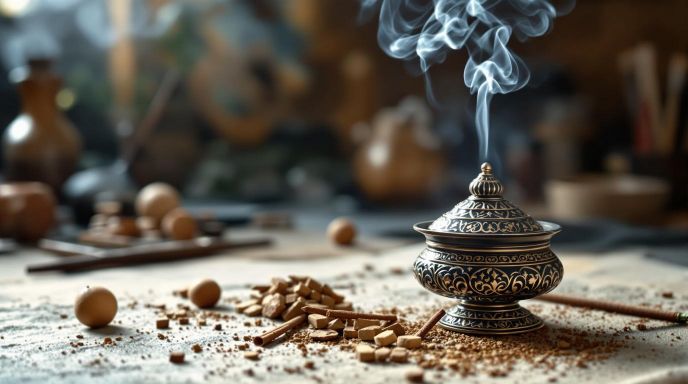
Purpose: Transform your entire workspace into a creative sanctuary using traditional Middle Eastern incense.
All the previous methods focus on applying perfume to your body. This method creates a scented environment that holds you in creative space for hours.
What Is Bakhoor: Bakhoor is wood chips (usually oud, sandalwood, or mixed woods) soaked in perfume oils and sometimes mixed with natural resins. You burn small pieces on a charcoal disk in a special burner called a mabkhara.
As it burns, fragrant smoke fills your space. The scent is richer and more atmospheric than body perfume—it literally changes how the air feels around you.
Technique: About 10 to 15 minutes before your creative session, light a charcoal disk in your bakhoor burner (follow all safety instructions!). Once the charcoal is glowing, place one or two small pieces of bakhoor on top.
Let the smoke fill your workspace. Once the space is scented, you can extinguish the bakhoor or let it burn out naturally.
Open a window slightly for ventilation. You want the scent, but you also want fresh air and oxygen for your brain.
Begin your creative work in this scented space. The atmospheric quality creates a sense of ritual and specialness—this isn’t regular time, this is creative time.
Best For: People with home studios or private creative spaces, artists who work for multiple hours at a time, anyone drawn to ritual and ceremony as part of their creative practice.
Cultural Context: For centuries, Middle Eastern scholars burned bakhoor while studying and writing. Poets used it during composition. Storytellers filled gathering spaces with it. This isn’t just nice smell—it’s a time-tested method for entering creative consciousness.
Safety Notes: Always use proper ventilation. Never leave burning bakhoor unattended. Keep away from flammable materials. Use appropriate burners designed for incense. If you have respiratory sensitivities, skip this method or use very small amounts.
Real Example: A visual artist in Dubai told me: “My studio used to feel like just another room in my house. Since I started burning bakhoor before painting sessions, the space feels sacred. The scent tells my brain ‘you’re here to create something meaningful.’ My work has more depth because I’m bringing more intention to the process.”
Notice the shift: the space itself becomes part of the creative ritual. When environment supports creativity, better work emerges naturally.
Method #7: Creative Project Phase Matching
Purpose: Use different scents for different phases of long creative projects to maintain freshness and match your brain’s needs to the task.
Here’s what nobody tells you about long creative projects: you need different mental states for different phases. Brainstorming requires open, energized thinking. Deep execution requires sustained focus. Refinement requires patient attention to detail. Completion requires confidence and celebration.
Using the same scent for every phase is like eating the same meal for breakfast, lunch, and dinner. It works, but you’ll get tired of it.
The Phase Matching System:
Brainstorming Phase (gathering ideas, exploring possibilities): Use light citrus-oud or rose-oud blends. You want energizing, uplifting scents that make your brain feel open and receptive to many ideas. Don’t worry about focus yet—worry about volume and variety of ideas.
Deep Work Phase (actual creation, sustained focus): Switch to pure oud or oud-frankincense. Now you need concentration and depth. The brainstorming energy would be distracting. You want something that helps you go deep and stay there for hours.
Refinement Phase (editing, polishing, perfecting): Use rose-amber or light amber blends. Refinement requires patience and gentle attention. You need to notice small details without getting frustrated. The grounding warmth of amber combined with rose’s softness creates the right mindset.
Completion Phase (finishing, releasing, sharing): Switch to musk-saffron or heavy oud. You need confidence now. You need to feel proud of what you made and brave enough to share it. This is celebration scent—you did the work, now you get to feel good about it.
Technique: At the beginning of each week, assess which phase you’re in. Use that phase’s scent consistently for the entire week. When you move to the next phase, consciously switch scents.
This creates clear mental markers: “Rose-amber means I’m in editing mode. My brain knows to look for details.”
Best For: Writers working on books or long articles, musicians recording albums, visual artists preparing exhibitions, entrepreneurs building products, anyone with creative projects lasting months.
Real Example: An author shared: “I used to wear the same oud perfume through my entire novel-writing process. Halfway through, I’d feel stale and bored. Now I rotate scents by phase. Brainstorming weeks smell like rose-oud. Deep writing weeks smell like pure oud. Editing weeks smell like amber. When I smell each scent, my brain already knows what kind of work we’re doing. My writing speed improved by 30% because I’m not fighting my brain to shift modes.”
That efficiency gain isn’t small. Over a six-month project, 30% faster means finishing two months earlier or having more energy for each session.
Method #8: The Weekly Creative Reset
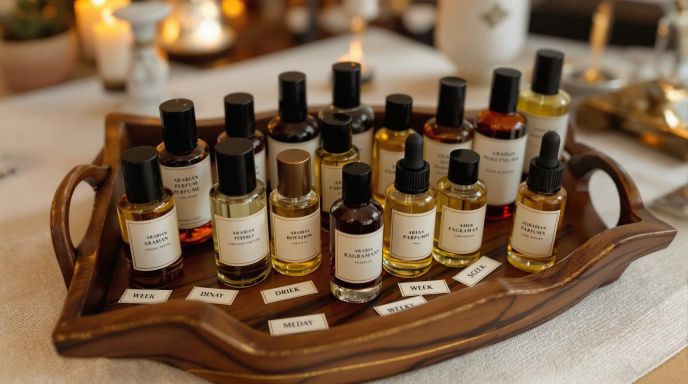
Purpose: Prevent creative stagnation and olfactory fatigue by rotating scents on a predictable schedule.
Even the best Arabian perfume stops working if you wear it every single day. Your nose adapts. Your brain stops noticing. The scent that used to inspire you becomes invisible background noise.
The solution? Plan variety into your creative practice from the start.
The Weekly Rotation Schedule:
Monday (fresh start energy): Oud-citrus or light rose-oud. You’re beginning the week. You want optimism and energy.
Wednesday (mid-week focus): Pure oud or oud-frankincense. The week’s momentum is established. Now you need sustained concentration for your hardest creative work.
Friday (depth before the weekend): Rose-amber or oud-amber. You’re tired but you have a few more hours of good work in you. You need something grounding and emotionally supportive.
Weekend (playful exploration): Saffron-musk or any scent that feels celebratory. Weekend creative time is often more playful, experimental, and fun. Choose scents that match that energy.
Technique: Set this schedule once and stick to it for at least four weeks. Your brain will start associating each day with its scent and the corresponding creative energy.
After four weeks, if you want to adjust, go ahead. But give the pattern time to establish first.
Best For: Professional creatives who work on creative projects every day, hobbyists maintaining regular creative practice, anyone who creates at the same times each week.
Why It Works: Predictable variety prevents olfactory fatigue while creating helpful associations. Mondays start to feel energized because Monday smells energized. Your brain learns the pattern and responds accordingly.
Real Example: A graphic designer shared: “I was wearing the same perfume daily and wondering why my creative energy felt flat. When I started the weekly rotation, everything shifted. Monday mornings don’t feel as hard because they smell like possibility. Wednesday deep work feels natural because that’s what Wednesday smells like. It sounds weird but it genuinely works.”
It’s not weird at all—it’s your brain doing what brains do best: recognizing patterns and responding to them. Use that ability intentionally.
How to Choose Your Arabian Perfume for Creativity
You’re probably wondering: which specific perfumes should I actually buy?
Let me help you match perfumes to your creative type and challenges.
Match Perfume to Your Creative Type
For Visual Artists (painters, designers, photographers): You need scents that enhance visual sensitivity and sustained focus. Try oud-rose blends for color work—rose sharpens emotional and visual sensitivity. Use amber for long studio sessions—it grounds you without dulling your senses. Choose musk when you’re making bold visual choices or trying new styles.
For Writers (authors, poets, journalists): Words require deep focus and emotional access. Start with oud-frankincense for your primary writing scent—this combination creates flow states better than anything else. Add rose-based blends for emotional or vulnerable writing. Keep pure heavy oud for deep character work or complex scenes requiring total immersion.
For Musicians (composers, performers): Music is both technical and emotional. Use musk for performance confidence—it helps you project and embody your music fully. Try oud-amber for composition sessions requiring hours of sustained attention. Choose rose for emotionally honest songwriting or lyrics that require vulnerability.
For Problem Solvers (entrepreneurs, strategists): Innovation requires both focus and expansive thinking. Frankincense-oud helps with analytical work and strategic planning. Oud-saffron creates the “anything is possible” mindset needed for breakthrough thinking. Amber grounds you during decision-making so you don’t get swept up in excitement and miss practical concerns.
Consider Your Creative Challenge
If you consistently struggle with certain obstacles, let that guide your choices:
If you have trouble starting: Get energizing blends—citrus-oud, light rose-oud, or anything with uplifting top notes that create momentum. Apply before you sit down, take three breaths, and begin immediately.
If you can’t sustain focus: Invest in heavy oud or oud-frankincense. These are the workhorses of creative perfumes. They help you go deep and stay there.
If emotional vulnerability is hard: Rose-based blends are your answer. Rose-amber for grounded emotional access. Rose-oud for deeper work. Pure rose if you need maximum emotional opening.
If confidence holds you back: Musk-saffron or heavy oud. Wear it when you’re creating something scary, sharing work publicly, or trying something completely new to you.
If you overthink everything: Amber. Amber. Amber. It grounds anxious thoughts and helps you stay present instead of spiraling into worry about whether your work is good enough.
Quality Matters—Start Here
Not all “Arabian perfumes” are created equal. The cheap stuff won’t deliver these benefits because it’s usually synthetic fragrance with maybe 5% real ingredients.
Real oud is expensive. Authentic amber takes time to cure. Natural musk alternatives cost more than synthetic versions. You get what you pay for.
Here’s my suggestion: Start with two or three high-quality Arabian perfumes instead of buying six cheap ones.
Beginner Kit (Choose 2-3):
- One oud-based blend (oud-frankincense or pure oud) for your primary creative focus work
- One rose blend (rose-amber or rose-oud) for emotional work
- One confidence blend (musk-saffron or heavy oud)
Buy from reputable Arabian perfume sources. Ask questions about ingredients. If it’s suspiciously cheap, it’s probably not authentic.
One authentic perfume that actually works beats ten synthetic “oud” perfumes that smell nice but do nothing for your creativity.
Traditional Wisdom: How Middle Eastern Creatives Used Scent
You might be thinking: “This all sounds great, but is it real? Or is it just modern marketing?”
These methods aren’t new. They’re ancient techniques adapted for modern creative practice.
Persian Poets & Scholars
Rumi, one of history’s most celebrated poets, wrote about perfume frequently. Persian scholars burned oud wood and used rose water during study sessions. The connection between scent and intellectual/creative work was understood and practiced widely.
In traditional Persian education, students preparing for exams would apply specific attars. Scholars writing important texts would ensure their workspace was scented. This wasn’t superstition—it was practical technique.
Arabian Calligraphers
Islamic calligraphy is considered one of the highest art forms in Middle Eastern culture. Creating sacred texts required purity of body and mind.
Calligraphers would perform ritual washing, then apply perfume before beginning work. The scent was part of the preparation—both practical (creating focus) and spiritual (honoring the sacredness of the work).
Many master calligraphers had specific perfumes they used only for their art. The scent became inseparable from the creative act itself.
Middle Eastern Storytellers
In traditional Arabian culture, storytellers were performers and artists. Before gatherings, they would burn bakhoor to create atmosphere.
The scent did multiple things: it marked the space as special, it helped the storyteller enter performance mode, and it signaled to the audience that something meaningful was about to happen.
Many modern performers still use this technique—scenting their space before going on stage or creating a scent ritual before performances.
The Takeaway
None of these methods came from modern science or corporate marketing. They emerged from centuries of creative practitioners noticing: “When I do this, my creative work improves.”
We’re just taking that accumulated wisdom and adapting it for modern creative challenges. The methods work because humans haven’t changed. Our brains still respond to scent the same way Persian poets’ brains did 800 years ago.
Common Mistakes & How to Avoid Them
Before you run out and buy Arabian perfumes, let me save you from the mistakes most people make when starting.
Mistake #1: Using Too Much
Arabian perfumes are concentrated oils. A little goes a long way. If you apply as much as you would alcohol-based perfume, you’ll overwhelm your nose within an hour. Then you won’t smell anything, and the method stops working.
Fix: Start with one drop. Actually one. Wait 15 minutes. If you can’t smell it anymore (and you’re not just adapted to it), add one more drop. Most people need only one to two drops total for effective creative scenting.
Mistake #2: Wearing the Same Scent Every Day
Remember olfactory fatigue? Your brain stops responding to scents it smells constantly. Even the most amazing oud perfume becomes invisible if you never give your nose a break.
Fix: Rotate at least three different scents weekly. Use the weekly rotation method from Method #8, or create your own variety system. The key is planned change, not random switching.
Mistake #3: Expecting Instant Magic
You’ll read these methods, try one for two days, and think “this doesn’t work for me.” But scent-creativity connections strengthen over time. Your brain needs to learn the associations.
Fix: Commit to 30 days with any method before judging results. Day one might feel subtle or even like nothing. Week two, you’ll notice small shifts. By week four, the scent-creativity connection will feel automatic and powerful.
Mistake #4: Ignoring Quality
Synthetic “oud” perfume costs $15. Real oud perfume costs $80-150. The cheap one smells vaguely woody. But it won’t deliver the creative benefits because it doesn’t contain the actual compounds your brain responds to.
Fix: Buy one authentic Arabian perfume instead of multiple cheap ones. Save up if needed. The real thing is an investment in your creative practice, not just a purchase.
Mistake #5: Forgetting the Ritual
If you mindlessly slap on perfume while scrolling your phone, you miss half the benefit. The application ritual is what connects scent to creative intention in your brain.
Fix: Make application deliberate. Even 30 seconds of mindful application—smelling the perfume, taking three breaths, stating your intention—makes a huge difference. The ritual matters as much as the scent itself.
Conclusion: Your Creative Scent Journey
You now have eight specific methods for using Arabian perfume to inspire creativity. Not vague advice. Real techniques with specific scents, application methods, and situations where each works best.
Let’s recap what you’ve learned:
Arabian perfumes offer unique advantages for creative work: oil-based delivery for long sessions, natural complexity your brain stays engaged with, and centuries of cultural wisdom about what actually works.
Different scents serve different creative needs. Oud for focus. Rose for emotional depth. Musk for confidence. Frankincense for mental clarity. Amber for grounding. Saffron for bold self-perception.
The eight methods cover different creative situations: morning energy, deep focus, breaking blocks, emotional vulnerability, bold confidence, atmospheric transformation, project phase matching, and weekly variety.
Now here’s what to do next:
Choose ONE method to experiment with for the next seven days. Don’t try all eight at once. Pick the one that addresses your biggest creative challenge right now.
Get one authentic Arabian perfume that fits that method. Start with quality over quantity.
Track your results. Notice changes in creative output, flow states, how long you can focus, and how you feel during creative work.
Adjust after 30 days. If the method works, keep using it or add another. If it doesn’t resonate, try a different method.
Your creative breakthrough might be waiting in a single drop of oud.
For centuries, Middle Eastern poets, scholars, and artists knew what modern neuroscience is now confirming: scent transforms consciousness. The creative state you’re searching for isn’t somewhere out there—it’s a shift in your own awareness, and Arabian perfume can help you access it.
The ancient wisdom and modern techniques are here. The methods are proven. The only question left is: which method will you try first?
